
How to Improve Software Engineering Management and Team Performance?

Dec 8, 2025

Dec 8, 2025

Managing engineering teams today is more complex than ever. Development cycles move faster, teams are distributed, and product expectations keep rising. Managers must balance visibility, quality, and delivery speed while keeping morale high.

Traditional management models based on oversight don’t work anymore. Modern software engineering management is about clarity, empowerment, and outcomes. Great leaders enable teams by removing friction, aligning goals, and using data to make smarter decisions.

This article explores what defines effective engineering management, common challenges, and how AI-driven visibility helps leaders make confident, data-backed decisions.

Key Takeaways

  • Modern software engineering management centers on clarity, empowerment, and measurable outcomes.

  • Great engineering managers lead through visibility, not control, they align teams around shared goals and clear metrics.

  • Data-driven insights help identify bottlenecks, track performance, and strengthen collaboration across roles.

  • AI tools now enable real-time visibility into progress, quality, and team health, freeing leaders to focus on growth instead of tracking.

  • The most successful teams combine autonomy with accountability, creating a culture that values both speed and stability.

What Is Software Engineering Management?

Software engineering management combines people, process, and technology to deliver high-quality products efficiently. It blends technical expertise with organizational leadership.

Strong engineering managers balance three areas:

  • People: Building and motivating teams.

  • Process: Streamlining workflows to reduce friction.

  • Product: Ensuring technical execution aligns with business goals.

It’s not about controlling how code is written, but about setting direction, enabling autonomy, and maintaining visibility into how work translates into outcomes.

Core Responsibilities of an Engineering Manager

Engineering management delivers the most value when it creates alignment, clarity, and sustained delivery performance. Here’s where strong managers make a measurable difference.
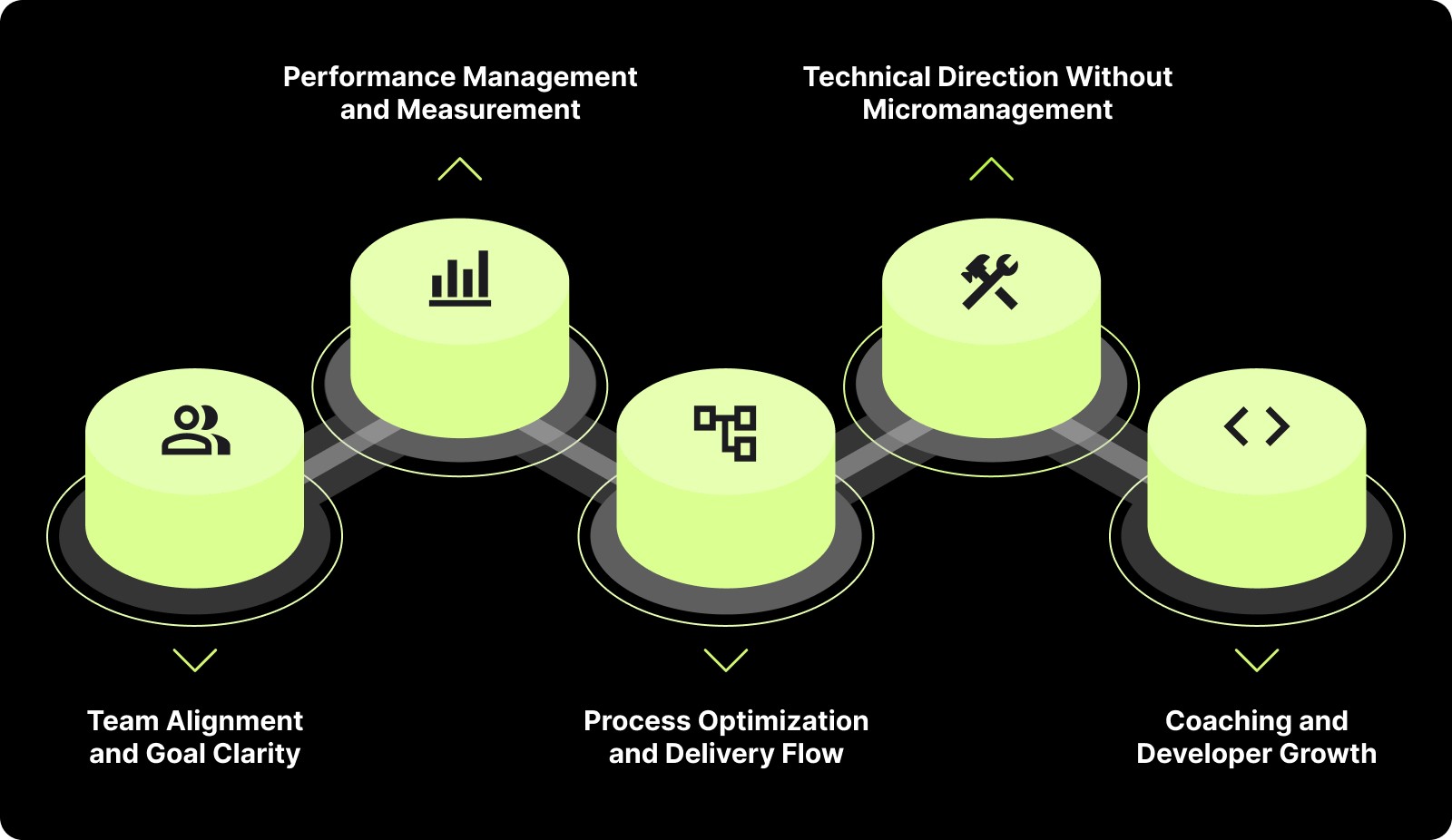
Core Responsibilities of an Engineering Manager

1. Team Alignment and Goal Clarity

Engineering teams often lose focus when product goals aren’t clearly translated into technical priorities. Misalignment leads to wasted effort and missed deadlines.

How great managers handle it:

  • Turn product goals into measurable engineering outcomes

  • Communicate priorities through sprint planning and one-on-ones

  • Ensure every task connects to customer or business value

Impact:

  • Increases delivery predictability and focus

  • Reduces friction between product and engineering

  • Builds shared ownership across teams

2. Performance Management and Measurement

Relying on subjective assessments can distort performance evaluations and harm morale. Without clear metrics, it’s hard to know what “good” looks like.

How great managers handle it:

  • Use data like DORA metrics, PR throughput, and cycle time to measure impact

  • Combine quantitative data with qualitative insights from retrospectives

  • Track trends over time instead of single data points

Impact:

  • Creates fair, data-informed performance evaluations

  • Highlights blockers early

  • Enables continuous improvement

3. Process Optimization and Delivery Flow

Slow feedback cycles and unstructured processes are common bottlenecks. Manual reporting and handoffs drain valuable engineering time.

How great managers handle it:

  • Streamline delivery with automation in CI/CD and PR reviews

  • Reduce dependencies that slow iteration

  • Continuously review and improve team processes

Impact:

  • Shorter release cycles

  • Higher code quality and fewer rollbacks

  • More time spent building instead of reporting

4. Technical Direction Without Micromanagement

Leaders who focus too much on implementation details often block progress. Developers thrive when they have autonomy within clear technical boundaries.

How great managers handle it:

  • Define architectural guardrails, not granular instructions

  • Encourage peer design reviews

  • Step in for guidance, not control

Impact:

  • Improves code consistency across projects

  • Boosts developer confidence and accountability

  • Balances speed with stability

5. Coaching and Developer Growth

High-performing teams don’t happen by accident. Without deliberate growth and feedback, skill gaps widen and motivation drops.

How great managers handle it:

  • Provide specific, regular feedback through one-on-ones

  • Create opportunities for mentorship and upskilling

  • Recognize progress publicly and address challenges privately

Impact:

  • Higher retention and engagement

  • Stronger technical depth within teams

  • A culture of trust and continuous learning
Tackling Common Software Engineering Management Challenges

Engineering management isn’t about control; it’s about visibility, clarity, and consistency. Yet even experienced leaders face recurring challenges that slow down progress and blur accountability. 

Here’s how to address them effectively:

1. Limited Visibility Into Progress

One of the biggest frustrations for engineering managers is not knowing what’s really happening across the team. Updates get buried in threads or scattered across tools. Without visibility, managers rely on gut feeling or delayed reports to assess progress. By the time a problem surfaces, it’s already blocking delivery.

Solution:

  • Use automated dashboards that bring together delivery, PR, and sprint data in real time.

  • Track both short-term metrics (like cycle time) and long-term indicators (like DORA trends).

  • Encourage developers to share blockers early instead of waiting for retrospectives.

2. Balancing Speed and Quality

Fast delivery is often mistaken for productivity. Teams under deadline pressure may skip reviews or testing, only to spend more time fixing issues later. The result is an invisible backlog of technical debt that undermines velocity and morale.

Solution:

  • Automate tests and reviews so speed doesn’t come at the expense of quality.

  • Define clear quality gates that apply to every PR and release.

  • Reinforce the idea that shipping quickly and maintaining stability are shared goals, not tradeoffs.

3. Managing Distributed or Hybrid Teams

Remote and hybrid teams can make collaboration harder to sustain. Communication breaks down, context gets lost, and visibility across time zones becomes inconsistent. Even small delays compound into bottlenecks over time.

Solution:

  • Standardize processes like sprint cadences and review schedules.

  • Use asynchronous tools for visibility so work continues smoothly across regions.

  • Hold short, structured syncs that focus on decision-making rather than updates.

4. Misalignment Between Product and Engineering

When product priorities shift without clear communication, engineering teams lose focus. Developers end up chasing new requests while existing work stalls. This misalignment erodes trust between teams and reduces delivery impact.

Solution:

  • Align on quarterly objectives through shared OKRs that tie technical work to business outcomes.

  • Translate product goals into measurable engineering milestones with clear ownership.

  • Keep communication loops tight between engineering leads and product managers.

5. Subjective Performance Evaluation

Without data, performance reviews can feel inconsistent or unfair. Managers rely on anecdotal impressions rather than measurable results. This creates tension, lowers engagement, and makes growth conversations harder.

Solution:

  • Use objective indicators like PR quality, review velocity, and reliability metrics.

  • Pair quantitative data with peer feedback to build a holistic view.

  • Keep reviews forward-looking, focusing on growth opportunities instead of fault-finding.

How AI Is Changing Software Engineering Management?

AI is reshaping how engineering leaders run teams and make decisions. Instead of relying on manual reports or fragmented tools, managers now get real-time insights into progress, blockers, and performance.
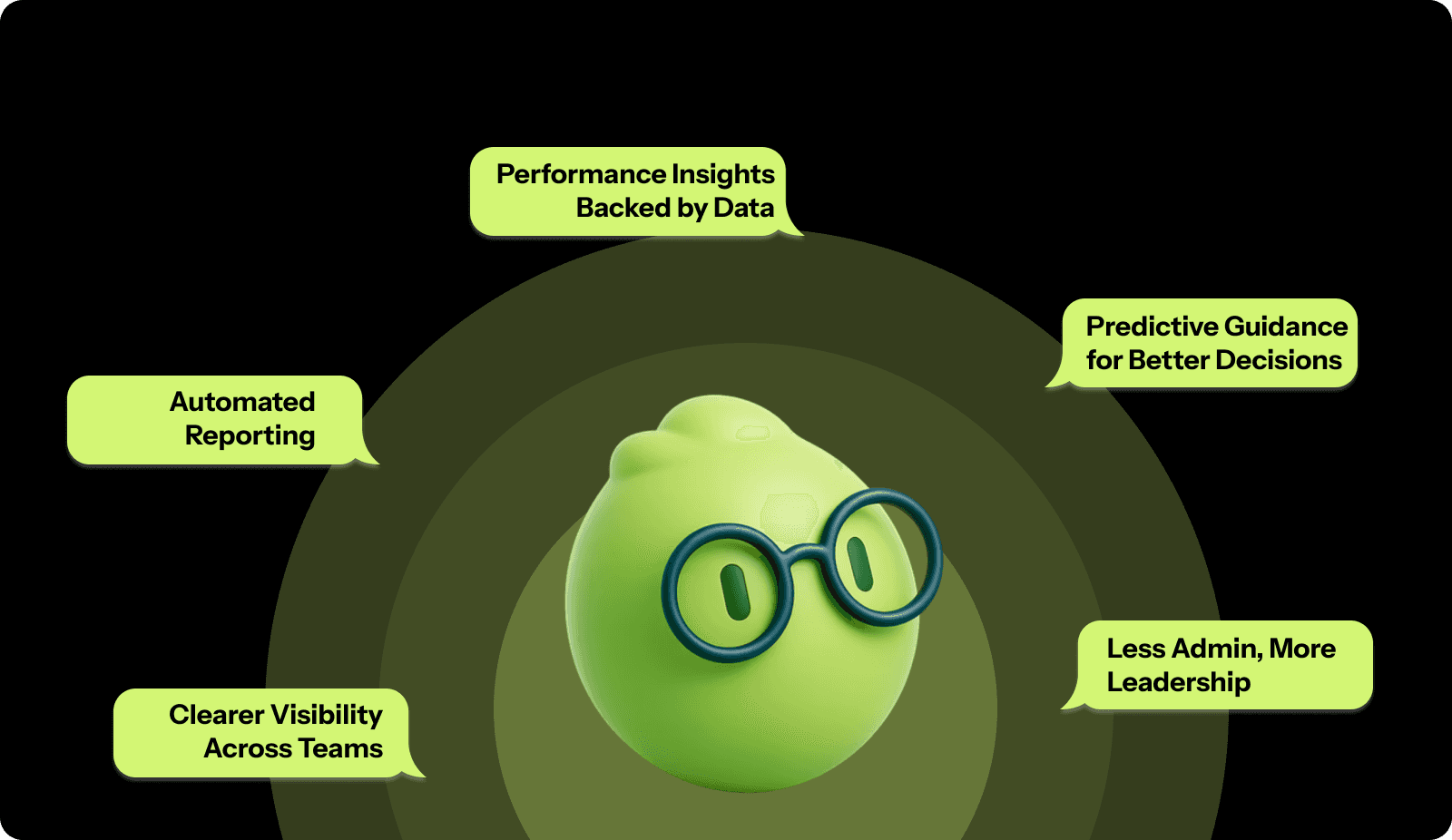
How AI Is Changing Software Engineering Management?

1. Clearer Visibility Across Teams

AI connects data from tools like GitHub, Jira, and CI/CD systems to give managers a single view of delivery speed, review health, and sprint progress. That visibility helps catch issues early and keep work on track.

2. Automated Reporting and Retrospectives

Compiling sprint reports and retrospectives takes time that could be spent improving processes. AI automates progress summaries and highlights recurring issues, turning reporting from a chore into a useful feedback loop.

3. Performance Insights Backed by Data

Performance reviews often rely on memory or perception. AI provides objective signals like cycle time, PR quality, and review activity, giving managers a fair, consistent view of performance and making coaching conversations more focused.

4. Predictive Guidance for Better Decisions

AI spots patterns in delivery speed, bug trends, and team workload. By flagging risks before they become blockers, it helps managers act early, whether adjusting priorities, rebalancing workload, or refining processes.

5. Less Admin, More Leadership

Routine tasks like PR checks, documentation, and progress tracking can pile up fast. AI automates these steps, freeing managers to focus on strategy, mentorship, and technical direction instead of daily status updates.
How Entelligence AI Supports Software Engineering Management

Entelligence AI helps engineering leaders manage performance, delivery, and collaboration more efficiently. By automating repetitive tasks and providing context-rich insights, it gives teams the clarity to focus on what matters most: building quality products faster.

  • Real-Time Dashboards: Entelligence AI centralizes metrics like sprint progress, delivery speed, and review activity into a single view. Managers gain instant visibility into blockers, performance trends, and team health without chasing multiple reports.

  • Automated Reports and Retrospectives: Weekly updates and retrospectives no longer require manual tracking. Entelligence AI automatically summarizes progress, highlights recurring issues, and identifies where teams can improve, saving hours of reporting time every sprint.

  • Context-Rich PR Reviews: PR reviews become faster and more consistent with Entelligence’s context-aware automation. It analyzes changes, flags potential issues, and suggests improvements, allowing reviewers to focus on logic and architecture instead of repetitive checks.

  • Org-Wide Performance Insights: Leaders get a clear picture of productivity and quality across all teams. Entelligence AI connects data from multiple sources to surface trends, pinpoint bottlenecks, and show how engineering work aligns with product goals.

  • Alignment Between Teams and Goals: By linking engineering metrics to business outcomes, Entelligence helps managers and product leaders make informed decisions that keep delivery on schedule and aligned with strategy.

Entelligence AI gives software engineering leaders the data, clarity, and automation they need to lead effectively without adding administrative overhead.

Conclusion

Strong software engineering management comes down to visibility, clarity, and consistent improvement. When teams understand goals, feedback flows freely, and performance is measured with data, delivery becomes faster and more predictable.

Modern leaders no longer need to rely on manual tracking or fragmented updates. With AI-driven insights, they can make informed decisions, remove friction, and give engineers more time to build.

Entelligence AI helps managers achieve this balance by combining automation, context, and real-time visibility. It turns scattered data into actionable insights, giving leaders the clarity to guide their teams with confidence.

Start your free trial today and see how Entelligence AI transforms the way engineering teams work, collaborate, and deliver.

Frequently Asked Questions

Q1. What does a software engineering manager do?

A software engineering manager oversees technical execution, team performance, and delivery processes. They align engineering efforts with business goals, ensure code quality, and support developers through mentorship, feedback, and clear direction.

Q2. What makes software engineering management challenging?

Managing multiple priorities, distributed teams, and complex workflows can make it difficult to maintain visibility and alignment. Balancing speed, quality, and team morale requires clear goals, real-time insights, and consistent communication.

Q3. How can AI improve software engineering management?

AI automates repetitive tasks like reporting and PR reviews while offering real-time visibility into performance trends. It helps managers make data-driven decisions, identify risks early, and focus on strategic leadership instead of administrative work.

Q4. What metrics should managers track to measure success?

Key metrics include DORA metrics (deployment frequency, lead time, change failure rate, and MTTR), sprint predictability, PR throughput, and developer experience indicators. These provide a balanced view of speed, quality, and team well-being.

Q5. How does Entelligence AI help engineering managers?

Entelligence AI provides automated reporting, context-aware code reviews, and real-time dashboards that connect engineering performance to product outcomes. It gives managers actionable insights without extra overhead, helping teams deliver faster and more consistently.

Managing engineering teams today is more complex than ever. Development cycles move faster, teams are distributed, and product expectations keep rising. Managers must balance visibility, quality, and delivery speed while keeping morale high.

Traditional management models based on oversight don’t work anymore. Modern software engineering management is about clarity, empowerment, and outcomes. Great leaders enable teams by removing friction, aligning goals, and using data to make smarter decisions.

This article explores what defines effective engineering management, common challenges, and how AI-driven visibility helps leaders make confident, data-backed decisions.

Key Takeaways

  • Modern software engineering management centers on clarity, empowerment, and measurable outcomes.

  • Great engineering managers lead through visibility, not control, they align teams around shared goals and clear metrics.

  • Data-driven insights help identify bottlenecks, track performance, and strengthen collaboration across roles.

  • AI tools now enable real-time visibility into progress, quality, and team health, freeing leaders to focus on growth instead of tracking.

  • The most successful teams combine autonomy with accountability, creating a culture that values both speed and stability.

What Is Software Engineering Management?

Software engineering management combines people, process, and technology to deliver high-quality products efficiently. It blends technical expertise with organizational leadership.

Strong engineering managers balance three areas:

  • People: Building and motivating teams.

  • Process: Streamlining workflows to reduce friction.

  • Product: Ensuring technical execution aligns with business goals.

It’s not about controlling how code is written, but about setting direction, enabling autonomy, and maintaining visibility into how work translates into outcomes.

Core Responsibilities of an Engineering Manager

Engineering management delivers the most value when it creates alignment, clarity, and sustained delivery performance. Here’s where strong managers make a measurable difference.

Core Responsibilities of an Engineering Manager

1. Team Alignment and Goal Clarity

Engineering teams often lose focus when product goals aren’t clearly translated into technical priorities. Misalignment leads to wasted effort and missed deadlines.

How great managers handle it:

  • Turn product goals into measurable engineering outcomes

  • Communicate priorities through sprint planning and one-on-ones

  • Ensure every task connects to customer or business value

Impact:

  • Increases delivery predictability and focus

  • Reduces friction between product and engineering

  • Builds shared ownership across teams

2. Performance Management and Measurement

Relying on subjective assessments can distort performance evaluations and harm morale. Without clear metrics, it’s hard to know what “good” looks like.

How great managers handle it:

  • Use data like DORA metrics, PR throughput, and cycle time to measure impact

  • Combine quantitative data with qualitative insights from retrospectives

  • Track trends over time instead of single data points

Impact:

  • Creates fair, data-informed performance evaluations

  • Highlights blockers early

  • Enables continuous improvement

3. Process Optimization and Delivery Flow

Slow feedback cycles and unstructured processes are common bottlenecks. Manual reporting and handoffs drain valuable engineering time.

How great managers handle it:

  • Streamline delivery with automation in CI/CD and PR reviews

  • Reduce dependencies that slow iteration

  • Continuously review and improve team processes

Impact:

  • Shorter release cycles

  • Higher code quality and fewer rollbacks

  • More time spent building instead of reporting

4. Technical Direction Without Micromanagement

Leaders who focus too much on implementation details often block progress. Developers thrive when they have autonomy within clear technical boundaries.

How great managers handle it:

  • Define architectural guardrails, not granular instructions

  • Encourage peer design reviews

  • Step in for guidance, not control

Impact:

  • Improves code consistency across projects

  • Boosts developer confidence and accountability

  • Balances speed with stability

5. Coaching and Developer Growth

High-performing teams don’t happen by accident. Without deliberate growth and feedback, skill gaps widen and motivation drops.

How great managers handle it:

  • Provide specific, regular feedback through one-on-ones

  • Create opportunities for mentorship and upskilling

  • Recognize progress publicly and address challenges privately

Impact:

  • Higher retention and engagement

  • Stronger technical depth within teams

  • A culture of trust and continuous learning

Tackling Common Software Engineering Management Challenges

Engineering management isn’t about control; it’s about visibility, clarity, and consistency. Yet even experienced leaders face recurring challenges that slow down progress and blur accountability. 

Here’s how to address them effectively:

1. Limited Visibility Into Progress

One of the biggest frustrations for engineering managers is not knowing what’s really happening across the team. Updates get buried in threads or scattered across tools. Without visibility, managers rely on gut feeling or delayed reports to assess progress. By the time a problem surfaces, it’s already blocking delivery.

Solution:

  • Use automated dashboards that bring together delivery, PR, and sprint data in real time.

  • Track both short-term metrics (like cycle time) and long-term indicators (like DORA trends).

  • Encourage developers to share blockers early instead of waiting for retrospectives.

2. Balancing Speed and Quality

Fast delivery is often mistaken for productivity. Teams under deadline pressure may skip reviews or testing, only to spend more time fixing issues later. The result is an invisible backlog of technical debt that undermines velocity and morale.

Solution:

  • Automate tests and reviews so speed doesn’t come at the expense of quality.

  • Define clear quality gates that apply to every PR and release.

  • Reinforce the idea that shipping quickly and maintaining stability are shared goals, not tradeoffs.

3. Managing Distributed or Hybrid Teams

Remote and hybrid teams can make collaboration harder to sustain. Communication breaks down, context gets lost, and visibility across time zones becomes inconsistent. Even small delays compound into bottlenecks over time.

Solution:

  • Standardize processes like sprint cadences and review schedules.

  • Use asynchronous tools for visibility so work continues smoothly across regions.

  • Hold short, structured syncs that focus on decision-making rather than updates.

4. Misalignment Between Product and Engineering

When product priorities shift without clear communication, engineering teams lose focus. Developers end up chasing new requests while existing work stalls. This misalignment erodes trust between teams and reduces delivery impact.

Solution:

  • Align on quarterly objectives through shared OKRs that tie technical work to business outcomes.

  • Translate product goals into measurable engineering milestones with clear ownership.

  • Keep communication loops tight between engineering leads and product managers.

5. Subjective Performance Evaluation

Without data, performance reviews can feel inconsistent or unfair. Managers rely on anecdotal impressions rather than measurable results. This creates tension, lowers engagement, and makes growth conversations harder.

Solution:

  • Use objective indicators like PR quality, review velocity, and reliability metrics.

  • Pair quantitative data with peer feedback to build a holistic view.

  • Keep reviews forward-looking, focusing on growth opportunities instead of fault-finding.

How AI Is Changing Software Engineering Management?

AI is reshaping how engineering leaders run teams and make decisions. Instead of relying on manual reports or fragmented tools, managers now get real-time insights into progress, blockers, and performance.

How AI Is Changing Software Engineering Management?

1. Clearer Visibility Across Teams

AI connects data from tools like GitHub, Jira, and CI/CD systems to give managers a single view of delivery speed, review health, and sprint progress. That visibility helps catch issues early and keep work on track.

2. Automated Reporting and Retrospectives

Compiling sprint reports and retrospectives takes time that could be spent improving processes. AI automates progress summaries and highlights recurring issues, turning reporting from a chore into a useful feedback loop.

3. Performance Insights Backed by Data

Performance reviews often rely on memory or perception. AI provides objective signals like cycle time, PR quality, and review activity, giving managers a fair, consistent view of performance and making coaching conversations more focused.

4. Predictive Guidance for Better Decisions

AI spots patterns in delivery speed, bug trends, and team workload. By flagging risks before they become blockers, it helps managers act early, whether adjusting priorities, rebalancing workload, or refining processes.

5. Less Admin, More Leadership

Routine tasks like PR checks, documentation, and progress tracking can pile up fast. AI automates these steps, freeing managers to focus on strategy, mentorship, and technical direction instead of daily status updates.

How Entelligence AI Supports Software Engineering Management

Entelligence AI helps engineering leaders manage performance, delivery, and collaboration more efficiently. By automating repetitive tasks and providing context-rich insights, it gives teams the clarity to focus on what matters most: building quality products faster.

  • Real-Time Dashboards: Entelligence AI centralizes metrics like sprint progress, delivery speed, and review activity into a single view. Managers gain instant visibility into blockers, performance trends, and team health without chasing multiple reports.

  • Automated Reports and Retrospectives: Weekly updates and retrospectives no longer require manual tracking. Entelligence AI automatically summarizes progress, highlights recurring issues, and identifies where teams can improve, saving hours of reporting time every sprint.

  • Context-Rich PR Reviews: PR reviews become faster and more consistent with Entelligence’s context-aware automation. It analyzes changes, flags potential issues, and suggests improvements, allowing reviewers to focus on logic and architecture instead of repetitive checks.

  • Org-Wide Performance Insights: Leaders get a clear picture of productivity and quality across all teams. Entelligence AI connects data from multiple sources to surface trends, pinpoint bottlenecks, and show how engineering work aligns with product goals.

  • Alignment Between Teams and Goals: By linking engineering metrics to business outcomes, Entelligence helps managers and product leaders make informed decisions that keep delivery on schedule and aligned with strategy.

Entelligence AI gives software engineering leaders the data, clarity, and automation they need to lead effectively without adding administrative overhead.

Conclusion

Strong software engineering management comes down to visibility, clarity, and consistent improvement. When teams understand goals, feedback flows freely, and performance is measured with data, delivery becomes faster and more predictable.

Modern leaders no longer need to rely on manual tracking or fragmented updates. With AI-driven insights, they can make informed decisions, remove friction, and give engineers more time to build.

Entelligence AI helps managers achieve this balance by combining automation, context, and real-time visibility. It turns scattered data into actionable insights, giving leaders the clarity to guide their teams with confidence.

Start your free trial today and see how Entelligence AI transforms the way engineering teams work, collaborate, and deliver.

Frequently Asked Questions

Q1. What does a software engineering manager do?

A software engineering manager oversees technical execution, team performance, and delivery processes. They align engineering efforts with business goals, ensure code quality, and support developers through mentorship, feedback, and clear direction.

Q2. What makes software engineering management challenging?

Managing multiple priorities, distributed teams, and complex workflows can make it difficult to maintain visibility and alignment. Balancing speed, quality, and team morale requires clear goals, real-time insights, and consistent communication.

Q3. How can AI improve software engineering management?

AI automates repetitive tasks like reporting and PR reviews while offering real-time visibility into performance trends. It helps managers make data-driven decisions, identify risks early, and focus on strategic leadership instead of administrative work.

Q4. What metrics should managers track to measure success?

Key metrics include DORA metrics (deployment frequency, lead time, change failure rate, and MTTR), sprint predictability, PR throughput, and developer experience indicators. These provide a balanced view of speed, quality, and team well-being.

Q5. How does Entelligence AI help engineering managers?

Entelligence AI provides automated reporting, context-aware code reviews, and real-time dashboards that connect engineering performance to product outcomes. It gives managers actionable insights without extra overhead, helping teams deliver faster and more consistently.

Your questions,

Your questions,

Decoded

Decoded

What makes Entelligence different?

Unlike tools that just flag issues, Entelligence understands context — detecting, explaining, and fixing problems while aligning with product goals and team standards.

Does it replace human reviewers?

No. It amplifies them. Entelligence handles repetitive checks so engineers can focus on architecture, logic, and innovation.

What tools does it integrate with?

It fits right into your workflow — GitHub, GitLab, Jira, Linear, Slack, and more. No setup friction, no context switching.

How secure is my code?

Your code never leaves your environment. Entelligence uses encrypted processing and complies with top industry standards like SOC 2 and HIPAA.

Who is it built for?

Fast-growing engineering teams that want to scale quality, security, and velocity without adding more manual reviews or overhead.

What makes Entelligence different?
Does it replace human reviewers?
What tools does it integrate with?
How secure is my code?
Who is it built for?

Drop your details

We’ll reach out before your next deploy hits production.

We’ll reach out before your next deploy hits production.