

Continuous Delivery Maturity Model: A Complete Guide

Feb 6, 2026

Feb 6, 2026

The "hero culture" trap is a major bottleneck for engineering teams. Releases depend on one or two key people working late nights, manually executing complex deployment scripts. This approach is unsustainable, error-prone, and creates massive single points of failure that stall innovation and increase organizational risk.

The path to predictable, low-stress software delivery is a structured Continuous Delivery Maturity Model. This framework acts as a roadmap, guiding teams from chaotic, manual processes to a state of reliable, automated excellence.

In this article, you will learn the five definitive levels of the Continuous Delivery Maturity Model, the key metrics to measure your progress, and the actionable steps to advance through each stage.

Overview

  • The Five Stages: Understand the transition from manual "Initial" processes to fully "Optimized" self-healing delivery pipelines.

  • The Cultural Balance: Learn why technical automation fails without a supporting culture of measurement, sharing, and shared accountability.

  • Visibility Requirements: Identify why org-wide visibility is the primary prerequisite for moving past the "Managed" stage of maturity.

  • Maturity Formulas: Access specific mathematical models to calculate your current automation ratio and deployment success rates.

  • Strategic Growth: Discover how to prioritize "small batch delivery" to reduce lead times and improve overall system stability.

  • AI-Driven Scaling: See how context-aware AI agents remove the manual documentation and review burdens that stall maturity progress.

What is a Continuous Delivery Maturity Model?

A continuous delivery maturity model is a formal framework used to evaluate an organization's ability to release software reliably and quickly. It assesses your capabilities across three core dimensions: your people’s skills, your operational processes, and your technical stack.

Continuous Integration (CI) focuses on regularly merging code, while Continuous Delivery (CD) ensures that code is always in a deployable state. Continuous Deployment takes this further by automatically pushing every validated change to production without human intervention.

Moving through this model requires a systematic look at your current bottlenecks to determine where automation can have the highest impact.

Also read: Understanding Velocity in Agile Software Development

How to Determine DevOps Maturity

Before you can master the technical nuances of a continuous delivery maturity model, you must evaluate the broader DevOps environment. DevOps maturity reflects the cultural and operational readiness of your entire organization to support high-speed delivery cycles and shared responsibility.
How to Determine DevOps Maturity

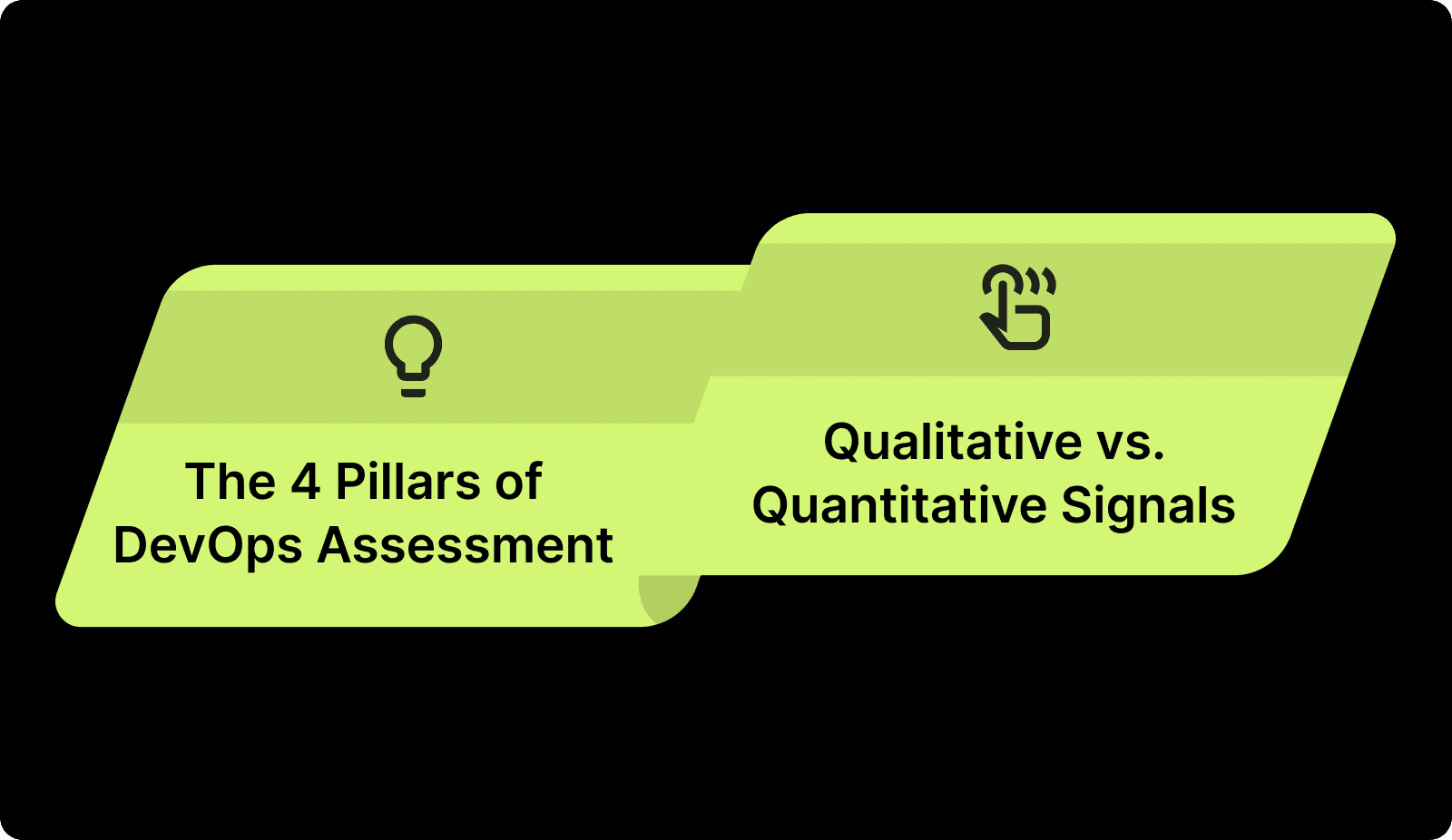
1. The 4 Pillars of DevOps Assessment

The CAMS framework serves as the standard for evaluating DevOps health across different departments. You must assess whether your team encourages:

  • Risk-taking (Culture)

  • Removes manual toil (Automation)

  • Tracks objective performance data (Measurement) &

  • Breaks down information silos (Sharing)

A high score in automation means little if your culture is still based on finger-pointing during production incidents.

2. Qualitative vs. Quantitative Signals

Quantitative signals include metrics like deployment frequency, while qualitative signals involve observing how developers and operations teams interact. You should look for "siloed" behaviors where developers "throw code over the wall" to a separate QA or Ops team.

In a collaborative environment, every team member shares the responsibility for the code's health from development through to production.

Determining your DevOps maturity requires an honest evaluation of these organizational traits:

Establishing a structured framework helps you bypass these roadblocks by creating a repeatable process for every team in your organization. Entelligence AI helps maintain this structure by providing the context needed to scale safely across thousands of repositories. Book a demo to see how to unify your engineering productivity.

Progressing through the maturity model is a journey that requires aligning your technical pipeline with your organizational culture.

Why is the Continuous Delivery Maturity Model Needed?

A lack of maturity in your delivery process acts as a permanent "tax" on every new feature your team tries to ship. Without a clear model, organizations often invest in expensive tools that fail to provide value because the underlying processes remain broken.

Understanding your maturity level transforms your engineering strategy by:

1. Reducing Rework and Technical Debt

Higher maturity levels prioritize automated quality gates that catch bugs and architectural anti-patterns early in the development cycle. This prevents the accumulation of technical debt that typically occurs when teams rush manual releases to meet deadlines.

2. Improving Developer Experience (DevEx)

Developers are most productive when they can focus on solving complex problems rather than fighting with fragile deployment scripts. A mature CD model provides a "Golden Path" that makes it easy for engineers to move code from their IDE to production.

3. Shortening Time-to-Market

In a competitive landscape, the ability to turn a customer request into a live feature in days rather than months is a significant advantage. Maturity models help you identify the "wait states" and manual approvals that prolong your lead time for changes.

Transitioning through the formal levels of maturity is the only way to achieve these strategic outcomes at scale.

Also read: How to Measure Developer Productivity Effectively

The 5 Levels of the Continuous Delivery Maturity Model

The transition from a manual process to an optimized one happens in five distinct stages, each requiring new technical capabilities. To move from one level to the next, teams must implement these specific workflows:

Level 1 - Initial (Manual and Ad-hoc)

At this level, there is no standardized process for builds or deployments, and success depends entirely on individual effort. Documentation is often missing, and the team lacks a central version control system or uses it inconsistently across different projects. 

Releases are infrequent and dangerous because they involve manual file transfers and undocumented configuration changes.

What happens here:

  • Deployments are performed via manual FTP or SSH commands to servers.

  • No automated tests exist to verify code quality before it reaches production.

  • Configuration settings are managed locally on developer machines rather than centrally.

  • Incident response relies on the "heroics" of a few people who understand the system.

Level 2 - Managed (Basic CI)

Organizations at this stage have adopted a central version control system and have basic Continuous Integration in place. Every commit triggers an automated build process that ensures the code compiles and passes basic linting checks.

While the build is automated, deployments remain largely manual or rely on scripts that still require human intervention and oversight.

What happens here:

  • All source code is stored in a central repository like GitHub or GitLab.

  • A build server automatically compiles the code whenever changes are merged.

  • The team uses basic unit tests, although coverage is often low or inconsistent.

  • Deployment scripts replace some manual steps but still require a human "trigger."

Level 3 - Defined (Automated Testing)

At Level 3, the organization has defined a standard pipeline that includes comprehensive automated testing for every change. Quality gates are integrated into the pipeline, preventing code from moving forward if it fails security or performance benchmarks.

The focus shifts from just "making it work" to ensuring that the code meets the team's rigorous quality standards.

What happens here:

  • Integration tests and end-to-end tests are part of the standard deployment pipeline.

  • Security scanning for vulnerabilities happens automatically during the build phase.

  • The team has a defined "Definition of Done" that includes automated verification.

  • Standardized environments exist for development, staging, and production to reduce drift.

Level 4 - Measured (Data-Driven CD)

Level 4 organizations use data to drive their delivery strategy, tracking key performance indicators like lead time and change failure rate. They have total visibility into where code stalls in the pipeline and use this data to identify and remove bottlenecks.

Automation covers almost the entire lifecycle, and the team uses metrics to prove the ROI of their engineering efforts.

What happens here:

  • DORA metrics are tracked automatically and reviewed during every sprint retrospective.

  • The team uses deployment data to identify which parts of the system are most fragile.

  • Automated rollbacks are implemented to restore service quickly if a deployment fails.

  • Engineering leaders use dashboards to monitor velocity and quality across all teams.

Level 5 - Optimized (Self-Healing Pipelines)

The final stage represents the pinnacle of engineering excellence, where the pipeline is self-healing and requires almost no manual intervention. Code that passes all automated checks is deployed directly to production, and the system monitors its own health.

If an issue is detected, the system automatically reverts to the last known stable version without human input.

What happens here:

  • Continuous Deployment is the standard for all services and microservices.

  • AI-driven monitoring detects anomalies in production logs and triggers rollbacks.

  • The system uses blue-green or canary deployments to minimize user impact during updates.

  • The team focuses on "experiments" and feature flags rather than managing releases.

Also read: Understanding Code Scanning for Vulnerabilities

Moving up the curve requires a disciplined approach to measurement and a willingness to address technical debt.

How to Measure Your CD Maturity: A Step-by-Step Guide

Measuring your current maturity level ensures that you are solving the right problems rather than chasing trendy tools. Use this assessment framework to baseline your team today:
How to Measure Your CD Maturity: A Step-by-Step Guide

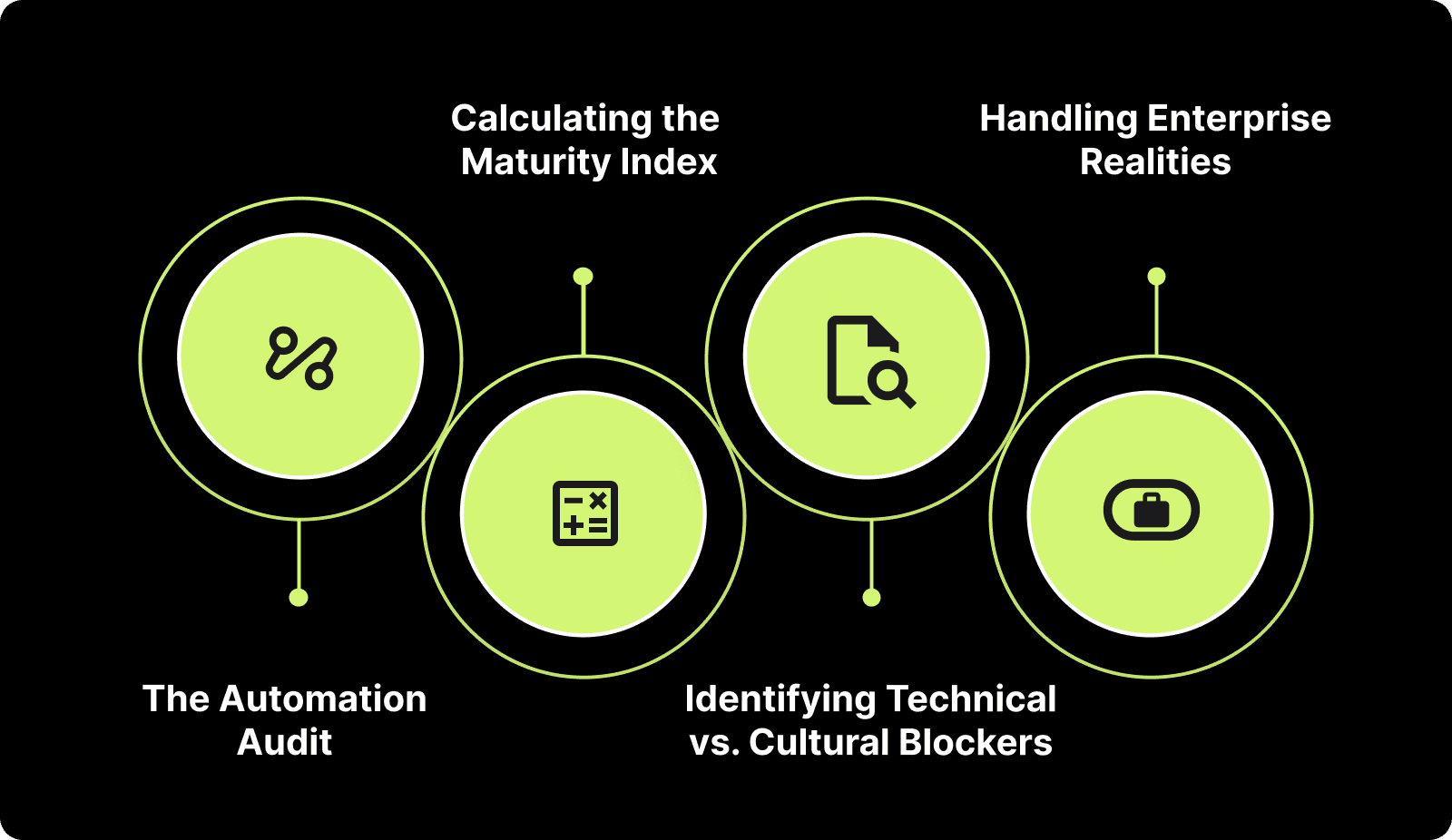
Step 1: The Automation Audit

You must map your entire "Value Stream" from the first commit to the final production deployment. This step identifies the hidden manual steps, such as a manager's Slack approval or a manual database migration, that are slowing you down

By the end of this audit, you will have a clear visual representation of every "wait state" in your pipeline.

Actions: Create a flowchart of your current release process and highlight every step that requires a human to click a button.

Step 2: Calculating the Maturity Index

Use objective formulas to quantify your current performance so you can track your progress over time. These numbers provide the evidence you need to justify further investments in automation to your stakeholders.

  • Automation Ratio: (Automated Steps) / (Total Pipeline Steps) * 100

  • Deployment Success Rate: (Successful Deploys) / (Total Attempts) * 100.

Expectation: You will likely find that your "Automation Ratio" is lower than you expected once you account for manual QA and approvals.

Step 3: Identifying Technical vs. Cultural Blockers

Determine whether your progress is stalled by outdated tools or by a team culture that fears breaking production. A team might have Level 4 tools but a Level 1 culture if they are afraid to deploy on Fridays or during peak hours.

This step helps you decide whether to invest in better software or in better team training and psychological safety.

Actions: Conduct an anonymous survey to ask developers why they feel a deployment might fail and where they feel most blocked.

Step 4: Handling Enterprise Realities

You must adapt the maturity model to handle complex "edge cases" like legacy monoliths or strict regulatory compliance requirements. High maturity in an enterprise doesn't mean ignoring rules; it means automating the audit trail so compliance happens as a byproduct of the pipeline.

Actions: Use "adapter" scripts to bring legacy code under basic version control and automate the generation of compliance reports for every release.

Flag PRs that lack documentation or tests before they are reviewed. This pre-review automation ensures that by the time a human opens the code, the routine violations have already been addressed. Entelligence AI supports this stage by providing context-aware feedback directly in the IDE. Book a demo to see how it works.

Once you have a baseline, you can apply best practices to begin moving toward the next level of maturity.

Best Practices for Moving Up the Maturity Curve

Reaching elite status requires a focus on small, sustainable improvements rather than a massive, one-time overhaul of your infrastructure. Sustainable progress relies on these foundational habits:

1. Shift Left on Security and Quality

Catching errors in the IDE before the pipeline even runs is the fastest way to improve your delivery speed. When developers receive instant feedback on security flaws or style violations, they can fix them immediately without waiting for a build failure. This practice reduces the "Change Failure Rate" and keeps your lead times short.

  • Impact: Dramatically lowers the cost of fixing bugs and prevents high-priority security incidents.

2. Standardize the Developer Environment

Using "Golden Paths" ensures that every developer is working in a consistent environment that mirrors production. This standardization reduces "configuration drift" and eliminates the "it works on my machine" excuses that often stall deployments. It makes it much easier to onboard new developers and scale your automated testing suite.

  • Impact: Increases deployment reliability and reduces the time spent debugging environment-specific issues.

3. Implement Small Batch Delivery

Reducing your pull request size is the secret driver of continuous delivery maturity. Small batches are easier to review, faster to test, and much safer to deploy than large, multi-feature releases. This habit creates a steady flow of value to your customers and makes it easier to identify the source of any production failure.

  • Impact: Improves almost every DORA metric, especially Lead Time and Change Failure Rate.

Also Read: High Velocity Engineering: Build Teams That Ship Faster

Common Mistakes in CD Maturity Journeys

Avoid these common traps to ensure that your move toward automation actually results in higher engineering velocity.

Avoid these pitfalls to ensure your investment leads to actual velocity:

1. Automating a Broken Process

If your manual code review process is inefficient because of poor communication, automating the handoff will only make those communication gaps happen faster. You must fix the underlying process and team dynamics before you invest heavily in automation scripts.

  • Solution: Conduct a process review to identify and fix manual inefficiencies before writing a single line of automation code.

2. Ignoring the Feedback Loop

Many leaders build complex pipelines that developers find difficult or frustrating to use, leading to workarounds and "shadow" processes. If your automated tests take three hours to run, developers will stop running them locally and wait for the build server to fail.

  • Solution: Survey your developers regularly to find out which parts of the CI/CD pipeline are most annoying or slow.

3. The "Tool-First" Fallacy

Buying expensive DevOps software will not solve your maturity problems if you haven't changed the team's culture and habits. Tools are meant to support a mature process, not replace one that doesn't exist yet. Focus on building the right habits, such as small PRs and peer reviews, before you look for a tool to automate them.

  • Solution: Prioritize cultural changes and process definitions before evaluating new enterprise software vendors.

Sustainable maturity comes from the synergy between your people and the tools they use to ship code.

Entelligence AI: Accelerating Your Path to CD Maturity

The main hurdle to reaching high maturity is a lack of visibility into where code actually stalls. Without knowing if delays occur during coding, reviews, or deployment, it is difficult to implement the data-driven improvements required for an optimized pipeline.

Entelligence AI unifies your engineering workflow to provide the clarity needed to resolve these bottlenecks. By integrating with your IDE and CI/CD tools, the platform automates the overhead that typically slows down your delivery cycle.

  • Automated Sprint Assessments: Identify blockers and bottlenecks in real-time to keep your sprints on track and your lead times low.

  • Context-Aware Reviews: Lower your change failure rate by catching architectural anti-patterns and bugs before they ever reach a human reviewer.

  • Centralized Performance Dashboards: Gain org-wide visibility into your DORA metrics to make informed, data-driven decisions about your maturity strategy.

Entelligence AI gives you the clarity to move from manual chaos to automated excellence, acting as a supportive partner in your team's growth.
Also Read: Sprint Velocity in Scrum: How to Measure and Calculate It Right?

Conclusion

Moving through the continuous delivery maturity model is a strategic necessity for any engineering organization that wants to scale without sacrificing quality. By transitioning from manual, ad-hoc processes to data-driven, optimized pipelines, you create a more resilient and predictable delivery engine.

This journey requires a balance of technical automation, cultural alignment, and a commitment to continuous measurement.

Entelligence AI serves as your companion in this transformation, providing the intelligence and visibility needed to navigate each stage of maturity. By automating repetitive tasks and surfacing deep insights, we help you build an elite engineering organization.

Ready to build a faster, more reliable engineering organization? Book a demo with Entelligence AI today.

FAQs

Q. How long does it take to move from Level 2 to Level 4?

The timeline depends on your team's size and current technical debt, but most organizations take six to eighteen months to make this transition. Moving from Level 2 (Basic CI) to Level 4 (Data-Driven CD) requires significant investments in automated testing and observability tools.

Q. Can we achieve high CD maturity with a legacy codebase?

Yes, but the approach is different from that of a greenfield project. You should start by wrapping the legacy monolith in basic automated tests and using "strangler" patterns to move new features into a more mature pipeline. High maturity for legacy code often involves automating the "manual toil" around deployments first, before focusing on more advanced self-healing capabilities.

Q. What is the most important metric for CD maturity?

While all DORA metrics are important, Lead Time for Changes is often the best indicator of overall maturity. A short lead time proves that your automated tests are reliable, your review process is efficient, and your deployment pipeline is strong. If your lead time is low while your Change Failure Rate remains stable, your organization has reached a high level of operational maturity.

Q. Does CD maturity require a microservices architecture?

No, you can achieve high levels of maturity with a well-structured monolith, although microservices often make it easier to isolate changes and automate deployments. The principles of the continuous delivery maturity model apply to any architecture as long as you prioritize automation, small batches, and fast feedback loops.

Q. How do I justify the cost of CD automation to the CFO?

Frame the discussion around "Opportunity Cost" and "Risk Mitigation" rather than just technical convenience. Show how much engineering time is currently wasted on manual deployments and fixing preventable production bugs. By improving your CD maturity, you are essentially buying back hundreds of engineering hours that can be redirected toward building revenue-generating features for the business.

The "hero culture" trap is a major bottleneck for engineering teams. Releases depend on one or two key people working late nights, manually executing complex deployment scripts. This approach is unsustainable, error-prone, and creates massive single points of failure that stall innovation and increase organizational risk.

The path to predictable, low-stress software delivery is a structured Continuous Delivery Maturity Model. This framework acts as a roadmap, guiding teams from chaotic, manual processes to a state of reliable, automated excellence.

In this article, you will learn the five definitive levels of the Continuous Delivery Maturity Model, the key metrics to measure your progress, and the actionable steps to advance through each stage.

Overview

  • The Five Stages: Understand the transition from manual "Initial" processes to fully "Optimized" self-healing delivery pipelines.

  • The Cultural Balance: Learn why technical automation fails without a supporting culture of measurement, sharing, and shared accountability.

  • Visibility Requirements: Identify why org-wide visibility is the primary prerequisite for moving past the "Managed" stage of maturity.

  • Maturity Formulas: Access specific mathematical models to calculate your current automation ratio and deployment success rates.

  • Strategic Growth: Discover how to prioritize "small batch delivery" to reduce lead times and improve overall system stability.

  • AI-Driven Scaling: See how context-aware AI agents remove the manual documentation and review burdens that stall maturity progress.

What is a Continuous Delivery Maturity Model?

A continuous delivery maturity model is a formal framework used to evaluate an organization's ability to release software reliably and quickly. It assesses your capabilities across three core dimensions: your people’s skills, your operational processes, and your technical stack.

Continuous Integration (CI) focuses on regularly merging code, while Continuous Delivery (CD) ensures that code is always in a deployable state. Continuous Deployment takes this further by automatically pushing every validated change to production without human intervention.

Moving through this model requires a systematic look at your current bottlenecks to determine where automation can have the highest impact.

Also read: Understanding Velocity in Agile Software Development

How to Determine DevOps Maturity

Before you can master the technical nuances of a continuous delivery maturity model, you must evaluate the broader DevOps environment. DevOps maturity reflects the cultural and operational readiness of your entire organization to support high-speed delivery cycles and shared responsibility.

How to Determine DevOps Maturity

1. The 4 Pillars of DevOps Assessment

The CAMS framework serves as the standard for evaluating DevOps health across different departments. You must assess whether your team encourages:

  • Risk-taking (Culture)

  • Removes manual toil (Automation)

  • Tracks objective performance data (Measurement) &

  • Breaks down information silos (Sharing)

A high score in automation means little if your culture is still based on finger-pointing during production incidents.

2. Qualitative vs. Quantitative Signals

Quantitative signals include metrics like deployment frequency, while qualitative signals involve observing how developers and operations teams interact. You should look for "siloed" behaviors where developers "throw code over the wall" to a separate QA or Ops team.

In a collaborative environment, every team member shares the responsibility for the code's health from development through to production.

Determining your DevOps maturity requires an honest evaluation of these organizational traits:

Establishing a structured framework helps you bypass these roadblocks by creating a repeatable process for every team in your organization. Entelligence AI helps maintain this structure by providing the context needed to scale safely across thousands of repositories. Book a demo to see how to unify your engineering productivity.

Progressing through the maturity model is a journey that requires aligning your technical pipeline with your organizational culture.

Why is the Continuous Delivery Maturity Model Needed?

A lack of maturity in your delivery process acts as a permanent "tax" on every new feature your team tries to ship. Without a clear model, organizations often invest in expensive tools that fail to provide value because the underlying processes remain broken.

Understanding your maturity level transforms your engineering strategy by:

1. Reducing Rework and Technical Debt

Higher maturity levels prioritize automated quality gates that catch bugs and architectural anti-patterns early in the development cycle. This prevents the accumulation of technical debt that typically occurs when teams rush manual releases to meet deadlines.

2. Improving Developer Experience (DevEx)

Developers are most productive when they can focus on solving complex problems rather than fighting with fragile deployment scripts. A mature CD model provides a "Golden Path" that makes it easy for engineers to move code from their IDE to production.

3. Shortening Time-to-Market

In a competitive landscape, the ability to turn a customer request into a live feature in days rather than months is a significant advantage. Maturity models help you identify the "wait states" and manual approvals that prolong your lead time for changes.

Transitioning through the formal levels of maturity is the only way to achieve these strategic outcomes at scale.

Also read: How to Measure Developer Productivity Effectively

The 5 Levels of the Continuous Delivery Maturity Model

The transition from a manual process to an optimized one happens in five distinct stages, each requiring new technical capabilities. To move from one level to the next, teams must implement these specific workflows:

Level 1 - Initial (Manual and Ad-hoc)

At this level, there is no standardized process for builds or deployments, and success depends entirely on individual effort. Documentation is often missing, and the team lacks a central version control system or uses it inconsistently across different projects. 

Releases are infrequent and dangerous because they involve manual file transfers and undocumented configuration changes.

What happens here:

  • Deployments are performed via manual FTP or SSH commands to servers.

  • No automated tests exist to verify code quality before it reaches production.

  • Configuration settings are managed locally on developer machines rather than centrally.

  • Incident response relies on the "heroics" of a few people who understand the system.

Level 2 - Managed (Basic CI)

Organizations at this stage have adopted a central version control system and have basic Continuous Integration in place. Every commit triggers an automated build process that ensures the code compiles and passes basic linting checks.

While the build is automated, deployments remain largely manual or rely on scripts that still require human intervention and oversight.

What happens here:

  • All source code is stored in a central repository like GitHub or GitLab.

  • A build server automatically compiles the code whenever changes are merged.

  • The team uses basic unit tests, although coverage is often low or inconsistent.

  • Deployment scripts replace some manual steps but still require a human "trigger."

Level 3 - Defined (Automated Testing)

At Level 3, the organization has defined a standard pipeline that includes comprehensive automated testing for every change. Quality gates are integrated into the pipeline, preventing code from moving forward if it fails security or performance benchmarks.

The focus shifts from just "making it work" to ensuring that the code meets the team's rigorous quality standards.

What happens here:

  • Integration tests and end-to-end tests are part of the standard deployment pipeline.

  • Security scanning for vulnerabilities happens automatically during the build phase.

  • The team has a defined "Definition of Done" that includes automated verification.

  • Standardized environments exist for development, staging, and production to reduce drift.

Level 4 - Measured (Data-Driven CD)

Level 4 organizations use data to drive their delivery strategy, tracking key performance indicators like lead time and change failure rate. They have total visibility into where code stalls in the pipeline and use this data to identify and remove bottlenecks.

Automation covers almost the entire lifecycle, and the team uses metrics to prove the ROI of their engineering efforts.

What happens here:

  • DORA metrics are tracked automatically and reviewed during every sprint retrospective.

  • The team uses deployment data to identify which parts of the system are most fragile.

  • Automated rollbacks are implemented to restore service quickly if a deployment fails.

  • Engineering leaders use dashboards to monitor velocity and quality across all teams.

Level 5 - Optimized (Self-Healing Pipelines)

The final stage represents the pinnacle of engineering excellence, where the pipeline is self-healing and requires almost no manual intervention. Code that passes all automated checks is deployed directly to production, and the system monitors its own health.

If an issue is detected, the system automatically reverts to the last known stable version without human input.

What happens here:

  • Continuous Deployment is the standard for all services and microservices.

  • AI-driven monitoring detects anomalies in production logs and triggers rollbacks.

  • The system uses blue-green or canary deployments to minimize user impact during updates.

  • The team focuses on "experiments" and feature flags rather than managing releases.

Also read: Understanding Code Scanning for Vulnerabilities

Moving up the curve requires a disciplined approach to measurement and a willingness to address technical debt.

How to Measure Your CD Maturity: A Step-by-Step Guide

Measuring your current maturity level ensures that you are solving the right problems rather than chasing trendy tools. Use this assessment framework to baseline your team today:

How to Measure Your CD Maturity: A Step-by-Step Guide

Step 1: The Automation Audit

You must map your entire "Value Stream" from the first commit to the final production deployment. This step identifies the hidden manual steps, such as a manager's Slack approval or a manual database migration, that are slowing you down

By the end of this audit, you will have a clear visual representation of every "wait state" in your pipeline.

Actions: Create a flowchart of your current release process and highlight every step that requires a human to click a button.

Step 2: Calculating the Maturity Index

Use objective formulas to quantify your current performance so you can track your progress over time. These numbers provide the evidence you need to justify further investments in automation to your stakeholders.

  • Automation Ratio: (Automated Steps) / (Total Pipeline Steps) * 100

  • Deployment Success Rate: (Successful Deploys) / (Total Attempts) * 100.

Expectation: You will likely find that your "Automation Ratio" is lower than you expected once you account for manual QA and approvals.

Step 3: Identifying Technical vs. Cultural Blockers

Determine whether your progress is stalled by outdated tools or by a team culture that fears breaking production. A team might have Level 4 tools but a Level 1 culture if they are afraid to deploy on Fridays or during peak hours.

This step helps you decide whether to invest in better software or in better team training and psychological safety.

Actions: Conduct an anonymous survey to ask developers why they feel a deployment might fail and where they feel most blocked.

Step 4: Handling Enterprise Realities

You must adapt the maturity model to handle complex "edge cases" like legacy monoliths or strict regulatory compliance requirements. High maturity in an enterprise doesn't mean ignoring rules; it means automating the audit trail so compliance happens as a byproduct of the pipeline.

Actions: Use "adapter" scripts to bring legacy code under basic version control and automate the generation of compliance reports for every release.

Flag PRs that lack documentation or tests before they are reviewed. This pre-review automation ensures that by the time a human opens the code, the routine violations have already been addressed. Entelligence AI supports this stage by providing context-aware feedback directly in the IDE. Book a demo to see how it works.

Once you have a baseline, you can apply best practices to begin moving toward the next level of maturity.

Best Practices for Moving Up the Maturity Curve

Reaching elite status requires a focus on small, sustainable improvements rather than a massive, one-time overhaul of your infrastructure. Sustainable progress relies on these foundational habits:

1. Shift Left on Security and Quality

Catching errors in the IDE before the pipeline even runs is the fastest way to improve your delivery speed. When developers receive instant feedback on security flaws or style violations, they can fix them immediately without waiting for a build failure. This practice reduces the "Change Failure Rate" and keeps your lead times short.

  • Impact: Dramatically lowers the cost of fixing bugs and prevents high-priority security incidents.

2. Standardize the Developer Environment

Using "Golden Paths" ensures that every developer is working in a consistent environment that mirrors production. This standardization reduces "configuration drift" and eliminates the "it works on my machine" excuses that often stall deployments. It makes it much easier to onboard new developers and scale your automated testing suite.

  • Impact: Increases deployment reliability and reduces the time spent debugging environment-specific issues.

3. Implement Small Batch Delivery

Reducing your pull request size is the secret driver of continuous delivery maturity. Small batches are easier to review, faster to test, and much safer to deploy than large, multi-feature releases. This habit creates a steady flow of value to your customers and makes it easier to identify the source of any production failure.

  • Impact: Improves almost every DORA metric, especially Lead Time and Change Failure Rate.

Also Read: High Velocity Engineering: Build Teams That Ship Faster

Common Mistakes in CD Maturity Journeys

Avoid these common traps to ensure that your move toward automation actually results in higher engineering velocity.

Avoid these pitfalls to ensure your investment leads to actual velocity:

1. Automating a Broken Process

If your manual code review process is inefficient because of poor communication, automating the handoff will only make those communication gaps happen faster. You must fix the underlying process and team dynamics before you invest heavily in automation scripts.

  • Solution: Conduct a process review to identify and fix manual inefficiencies before writing a single line of automation code.

2. Ignoring the Feedback Loop

Many leaders build complex pipelines that developers find difficult or frustrating to use, leading to workarounds and "shadow" processes. If your automated tests take three hours to run, developers will stop running them locally and wait for the build server to fail.

  • Solution: Survey your developers regularly to find out which parts of the CI/CD pipeline are most annoying or slow.

3. The "Tool-First" Fallacy

Buying expensive DevOps software will not solve your maturity problems if you haven't changed the team's culture and habits. Tools are meant to support a mature process, not replace one that doesn't exist yet. Focus on building the right habits, such as small PRs and peer reviews, before you look for a tool to automate them.

  • Solution: Prioritize cultural changes and process definitions before evaluating new enterprise software vendors.

Sustainable maturity comes from the synergy between your people and the tools they use to ship code.

Entelligence AI: Accelerating Your Path to CD Maturity

The main hurdle to reaching high maturity is a lack of visibility into where code actually stalls. Without knowing if delays occur during coding, reviews, or deployment, it is difficult to implement the data-driven improvements required for an optimized pipeline.

Entelligence AI unifies your engineering workflow to provide the clarity needed to resolve these bottlenecks. By integrating with your IDE and CI/CD tools, the platform automates the overhead that typically slows down your delivery cycle.

  • Automated Sprint Assessments: Identify blockers and bottlenecks in real-time to keep your sprints on track and your lead times low.

  • Context-Aware Reviews: Lower your change failure rate by catching architectural anti-patterns and bugs before they ever reach a human reviewer.

  • Centralized Performance Dashboards: Gain org-wide visibility into your DORA metrics to make informed, data-driven decisions about your maturity strategy.

Entelligence AI gives you the clarity to move from manual chaos to automated excellence, acting as a supportive partner in your team's growth.

Also Read: Sprint Velocity in Scrum: How to Measure and Calculate It Right?

Conclusion

Moving through the continuous delivery maturity model is a strategic necessity for any engineering organization that wants to scale without sacrificing quality. By transitioning from manual, ad-hoc processes to data-driven, optimized pipelines, you create a more resilient and predictable delivery engine.

This journey requires a balance of technical automation, cultural alignment, and a commitment to continuous measurement.

Entelligence AI serves as your companion in this transformation, providing the intelligence and visibility needed to navigate each stage of maturity. By automating repetitive tasks and surfacing deep insights, we help you build an elite engineering organization.

Ready to build a faster, more reliable engineering organization? Book a demo with Entelligence AI today.

FAQs

Q. How long does it take to move from Level 2 to Level 4?

The timeline depends on your team's size and current technical debt, but most organizations take six to eighteen months to make this transition. Moving from Level 2 (Basic CI) to Level 4 (Data-Driven CD) requires significant investments in automated testing and observability tools.

Q. Can we achieve high CD maturity with a legacy codebase?

Yes, but the approach is different from that of a greenfield project. You should start by wrapping the legacy monolith in basic automated tests and using "strangler" patterns to move new features into a more mature pipeline. High maturity for legacy code often involves automating the "manual toil" around deployments first, before focusing on more advanced self-healing capabilities.

Q. What is the most important metric for CD maturity?

While all DORA metrics are important, Lead Time for Changes is often the best indicator of overall maturity. A short lead time proves that your automated tests are reliable, your review process is efficient, and your deployment pipeline is strong. If your lead time is low while your Change Failure Rate remains stable, your organization has reached a high level of operational maturity.

Q. Does CD maturity require a microservices architecture?

No, you can achieve high levels of maturity with a well-structured monolith, although microservices often make it easier to isolate changes and automate deployments. The principles of the continuous delivery maturity model apply to any architecture as long as you prioritize automation, small batches, and fast feedback loops.

Q. How do I justify the cost of CD automation to the CFO?

Frame the discussion around "Opportunity Cost" and "Risk Mitigation" rather than just technical convenience. Show how much engineering time is currently wasted on manual deployments and fixing preventable production bugs. By improving your CD maturity, you are essentially buying back hundreds of engineering hours that can be redirected toward building revenue-generating features for the business.

We raised $5M to run your Engineering team on Autopilot

We raised $5M to run your Engineering team on Autopilot

Watch our launch video

Talk to Sales

Turn engineering signals into leadership decisions

Connect with our team to see how Entelliegnce helps engineering leaders with full visibility into sprint performance, Team insights & Product Delivery

Talk to Sales

Turn engineering signals into leadership decisions

Connect with our team to see how Entelliegnce helps engineering leaders with full visibility into sprint performance, Team insights & Product Delivery

Try Entelligence now