

Best Practices for Effective Sprint Planning Meetings

Dec 8, 2025

Dec 8, 2025

Sprint planning is a critical ritual in Agile software development. It sets the stage for the upcoming sprint by aligning the team on priorities, defining goals, and establishing actionable tasks. However, poorly planned sprint meetings can lead to confusion, missed deadlines, and decreased team morale.

Effective sprint planning ensures clarity, prevents overcommitment, and promotes efficient collaboration. In this article, we’ll share sprint planning best practices that help teams organize, prioritize, and execute work with confidence.

Key Takeaways

  • Allocate sufficient, uninterrupted time for sprint planning to fully discuss scope and tasks.

  • Prioritize the product backlog to focus on high-value work that aligns with business goals.

  • Define clear sprint goals to guide the team’s efforts and measure success.

  • Encourage team participation to leverage collective insights and improve ownership.

  • Use visual tools and story estimation techniques to improve clarity, alignment, and predictability.

What is Sprint Planning?

Effective sprint planning is more than just scheduling a meeting; it’s about setting your team up for success throughout the sprint. Poorly planned sprints can lead to missed deadlines, unclear priorities, and wasted effort.

To make the most of your sprint planning sessions, it’s important to focus on aligning goals, clarifying tasks, and managing team capacity. 

Here are some key pointers to ensure your sprint planning meetings are efficient, collaborative, and goal-oriented:

  • Review the Backlog Thoroughly: Start by evaluating the product backlog to identify high-priority tasks and user stories. This ensures the team focuses on what truly drives value.

  • Set Clear Sprint Goals: Define what success looks like for the sprint. Clear goals guide the team’s efforts and help measure progress effectively.

  • Assess Team Capacity: Understand how much work your team can realistically handle in the sprint. This prevents overcommitment and ensures achievable targets.

  • Break Down Tasks Clearly: Split user stories into actionable tasks with defined owners and deadlines. This improves accountability and reduces ambiguity.

  • Encourage Team Collaboration: Use the meeting to discuss dependencies, potential blockers, and approaches. Engaging the entire team ensures alignment and shared ownership.

Also Read: Sprint Review Guide: Definition, Goals, and Tips

With this foundation in place, the next step is identifying why many sprint planning meetings fail and how to avoid these common pitfalls.

Why Do Sprint Planning Meetings Often Fall Short?

Sprint planning meetings are designed to align teams, set priorities, and prepare for a successful sprint. Yet, many meetings fail to achieve these goals due to common pitfalls:

  • Unclear Sprint Objectives: When the team doesn’t have well-defined goals, it’s easy to lose focus. Ambiguity in priorities can lead to wasted effort, incomplete tasks, and misaligned expectations.

  • Overloaded Sprint Backlogs: Trying to fit too many tasks into a sprint overwhelms the team. This often results in missed deadlines, reduced quality, and unnecessary stress.

  • Ineffective Communication: Without clear discussion of dependencies, risks, and responsibilities, blockers can go unnoticed. This slows down progress and reduces team accountability.

When sprint planning is ineffective, it can impact delivery timelines, lower team morale, and create confusion around priorities.

Next, we’ll explore best practices to make sprint planning meetings structured, focused, and productive, helping your team start each sprint on the right track.

10 Effective Sprint Planning Best Practices for Meetings in 2026

To make sprint planning meetings productive and set your team up for a successful sprint, follow these proven best practices:
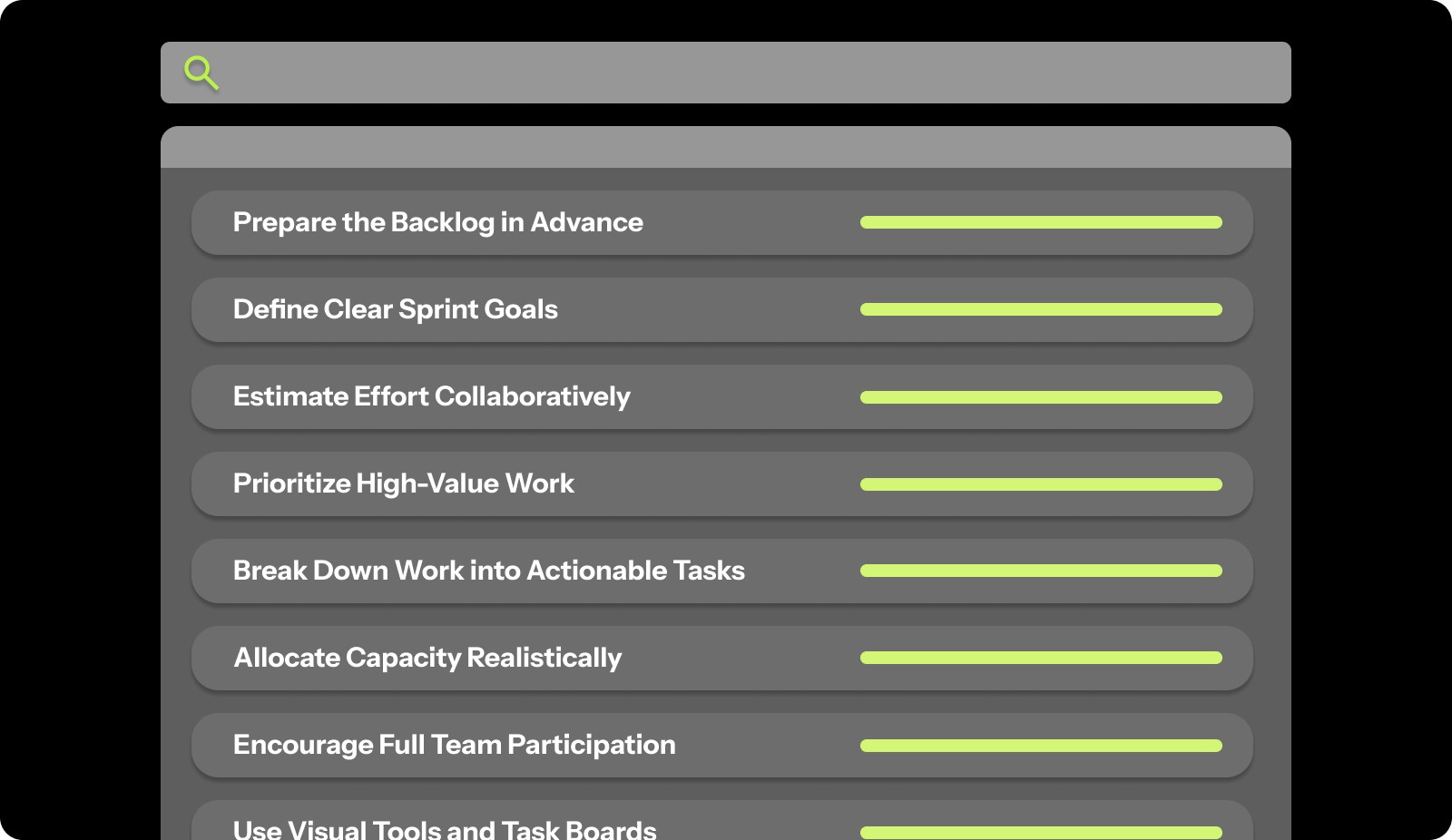
10 Effective Sprint Planning Best Practices for Meetings in 2026

1. Prepare the Backlog in Advance

Effective sprint planning starts with a well-groomed backlog. Product owners should ensure backlog items are clear, detailed, and prioritized before the meeting.

Rushing into planning without preparation can result in confusion, unclear priorities, and wasted time during discussions. Items that are ambiguous or incomplete can derail the meeting, forcing the team to spend valuable time clarifying tasks instead of focusing on commitment and strategy.

Pro Tip: Conduct backlog refinement sessions ahead of sprint planning. This ensures every task is ready for discussion, and the team can make decisions faster and more effectively.

With a properly prepared backlog, sprint planning becomes a focused session where the team can quickly understand scope, risks, and dependencies while aligning on priorities.

2. Define Clear Sprint Goals

A sprint without a clear goal risks becoming a checklist of unrelated tasks. Define a concise, achievable objective that guides the team’s efforts for the sprint.

Example: If you’re an engineering leader, it will help to, “Improve search performance by 20% and resolve the top three critical bugs reported by users.”

Clear goals provide context for task selection, encourage focus on delivering meaningful outcomes, and give the team a shared vision of success. Without this clarity, efforts can be misaligned, leading to wasted time and unmet expectations.

3. Estimate Effort Collaboratively

Accurate estimation is key to a realistic and achievable sprint. Use story points, T-shirt sizing, or other estimation methods to determine the effort required for each task. Collaborative estimation ensures all team members share ownership of commitments and understand the complexity involved.

Pro Tip: Discuss dependencies, potential blockers, and uncertainties openly. These conversations help the team anticipate challenges and create more accurate commitments.

Collaborative estimation not only improves accuracy but also promotes a sense of accountability and shared responsibility for the sprint outcome.

4. Prioritize High-Value Work

Not all tasks deliver equal value. Focus the sprint on work that brings the most impact to users and the business. Avoid overloading the sprint with low-priority tasks, which can dilute focus and reduce overall effectiveness.

Prioritization ensures the team’s efforts are aligned with strategic goals and helps deliver measurable value within the sprint, making progress visible to stakeholders.

5. Break Down Work into Actionable Tasks

Large backlog items can be overwhelming and difficult to track. Break each item into smaller, manageable tasks that are easy to assign, monitor, and complete.

Example: Instead of “Implement checkout feature,” divide it into tasks like “Design checkout UI,” “Integrate payment API,” and “Write unit tests for checkout flow.”

Smaller tasks make progress measurable, identify blockers early, and allow the team to adapt quickly if priorities change or issues arise.

6. Allocate Capacity Realistically

Plan the sprint based on the team’s actual capacity, considering vacations, public holidays, and other commitments. Overcommitting can lead to missed deadlines, burnout, and reduced quality.

Realistic allocation allows the team to maintain sustainable productivity while delivering high-quality results consistently. It also builds confidence in meeting sprint goals and ensures achievable commitments.

7. Encourage Full Team Participation

Sprint planning should involve all roles, like developers, testers, designers, and product owners. Diverse perspectives spot hidden risks, dependencies, and innovative solutions that might be overlooked otherwise.

Engaging the entire team ensures everyone understands the sprint scope, agrees on priorities, and feels ownership over deliverables.

8. Use Visual Tools and Task Boards

Visual productivity tools like Jira, Trello, or Asana make sprint items visible, track progress, and clearly communicate priorities.

A clear visual representation helps the team stay aligned, reduces misunderstandings, and allows stakeholders to monitor progress in real time. Visibility is crucial to maintaining focus and accountability throughout the sprint.

Also Read: Sprint Velocity in Scrum: How to Measure and Calculate It Right?

9. Address Dependencies Early

Identify inter-team dependencies, blockers, and external risks during sprint planning. Resolving these before work begins prevents delays and ensures smoother execution during the sprint.

Proactively managing dependencies minimizes surprises, allowing the team to maintain momentum and deliver value on time.

10. Keep Meetings Time-Boxed

Sprint planning should be focused and efficient. Time-box meetings (usually 1–2 hours for a 2-week sprint) to ensure discussions stay on track and decisions are made promptly.

Pro Tip: Prepare a clear agenda and stick to it. Efficient meetings save time, maintain energy, and create a disciplined, productive sprint planning culture.

With these best practices, sprint planning transforms from a routine meeting into a strategic session that aligns your team, prioritizes high-value work, and sets the foundation for a successful sprint.

Essential Sprint Planning Checklist

To ensure every sprint planning session is effective and sets the team up for success, follow a structured checklist. The checklist below helps keep priorities clear, aligns the team, and reduces surprises during the sprint.

Checklist Item

Description

Status

Set Clear Sprint Goals

Define achievable and measurable objectives so the team knows what to focus on and can track progress effectively.

☐ Done ☐ Not Done

Prioritize Backlog Tasks

Review and select backlog items based on value, dependencies, and team capacity to tackle the most important work first.

☐ Done ☐ Not Done

Estimate Work Effort

Assign realistic estimates to tasks (story points or hours) to prevent overcommitment and ensure balanced workloads.

☐ Done ☐ Not Done

Validate Sprint Scope

Confirm that the planned work can be completed within the sprint timeframe to avoid spillovers and maintain momentum.

☐ Done ☐ Not Done

Align the Team

Ensure everyone understands their responsibilities, potential blockers, and dependencies to promote clear communication and accountability.

☐ Done ☐ Not Done

Using this checklist ensures your sprint planning sessions are organized, aligned, and more productive. For teams using tools like Entelligence AI, this process can be further simplified with automated backlog prioritization and context-aware insights.

With a clear framework in place, the next step is to understand how to run an effective sprint planning session that keeps your team aligned and productive throughout the sprint.

How Can You Run an Effective Sprint Planning?

Efficient sprint planning is key to keeping your team aligned, focused, and consistently delivering value. By organizing sessions well, setting clear priorities, and managing the scope thoughtfully, you can reduce confusion, prevent wasted effort, and ensure timely delivery.

1. Define Clear Sprint Objectives

Begin each sprint by setting specific, measurable objectives. Clear goals help the team understand what success looks like for the sprint, align efforts, and avoid drifting into unplanned work.

2. Prioritize Tasks Strategically

Not every task holds the same value. Review your product backlog and rank items based on impact, dependencies, and team capacity. Prioritization ensures that high-value work gets attention first and keeps the team focused on what truly matters.

3. Estimate Work Accurately

Use consistent methods like story points or ideal hours to estimate the effort required for each task. Accurate estimates prevent overcommitment, reduce last-minute stress, and make sprint outcomes more predictable.

4. Manage Scope Realistically

Avoid overloading the sprint with too many tasks. Focus only on what the team can realistically complete while maintaining quality, ensuring successful delivery and reducing frustration.

5. Improve team Collaboration

Sprint planning should be a team activity, not just a managerial task. Encourage team members to provide input on priorities, estimates, and task assignments. Collaboration builds ownership, highlights potential challenges early, and strengthens commitment to achievable goals.

How Entelligence AI Simplifies Sprint Planning?

Sprint planning is critical for setting team priorities and ensuring smooth delivery, yet it can easily become time-consuming and misaligned. Teams often spend hours debating backlog priorities, clarifying tasks, and coordinating dependencies, which slows down execution and creates uncertainty about sprint goals.

Entelligence AI removes these hurdles by providing data-driven insights, automated backlog analysis, and actionable recommendations. 

Our platform ensures that every sprint planning session is focused, efficient, and aligned with business priorities, so teams spend less time in meetings and more time delivering value.

  • Automated Backlog Prioritization: Analyze and rank tasks based on impact, dependencies, and deadlines, reducing debate and manual effort.

  • Context-Aware Recommendations: Get insights into team capacity, past performance, and potential blockers to make informed planning decisions.

  • Consistency Across Sprints: Maintain structured, repeatable planning processes that improve predictability and team alignment.

  • Seamless Integration: Connect with Jira, Trello, and other project management tools so your planning workflows stay uninterrupted.

By combining automation with intelligence, Entelligence AI makes sprint planning a productivity driver rather than a routine scheduling task.

Conclusion

Effective sprint planning goes beyond simply scheduling meetings and assigning tasks; it requires careful preparation, clear communication, and structured processes. By following best practices like defining clear sprint goals, prioritizing backlog items, and promoting team collaboration, you can streamline workflows, reduce confusion, and improve delivery predictability. 

When combined with the right tools and data-driven insights, sprint planning transforms from a routine session into a strategic driver of team alignment, productivity, and continuous improvement.

Start your free trial today and apply these sprint planning best practices today and empower your team to plan smarter, execute efficiently, and achieve consistent results.

FAQs

1. What Should Be Covered in Sprint Planning?

During sprint planning, focus on defining the sprint goal, selecting high-priority backlog items, and breaking them into actionable tasks. Discuss dependencies, potential risks, and estimates to ensure the sprint is achievable and aligned with overall project objectives. Clear discussions prevent mid-sprint confusion and scope creep.

2. Who Needs to Participate in Sprint Planning?

The Scrum Master, Product Owner, and the full development team should attend. Involving all stakeholders ensures shared understanding, accurate estimates, and early identification of blockers, improvingzteam alignment and commitment.

3. How Long Should a Sprint Planning Meeting Last?

Time-box sprint planning to about 1–2 hours for a two-week sprint. A shorter session may skip critical discussions, while a longer one can exhaust the team. Maintaining a structured agenda ensures efficiency while giving enough space to cover goals, tasks, and dependencies thoroughly.

4. How Can Teams Estimate Work Accurately?

Use techniques like story points, T-shirt sizing, or ideal hours. Discuss task complexity, dependencies, and potential blockers collaboratively. Shared estimation helps teams set realistic commitments and reduces the risk of overloading or under-delivering during the sprint.

5. Why Is Sprint Planning Critical for Team Productivity?

Effective sprint planning ensures clarity on priorities, responsibilities, and expected outcomes. It minimizes mid-sprint disruptions, improves focus, and supports timely delivery of high-quality work. Teams stay aligned, motivated, and better equipped to meet project goals efficiently.

Sprint planning is a critical ritual in Agile software development. It sets the stage for the upcoming sprint by aligning the team on priorities, defining goals, and establishing actionable tasks. However, poorly planned sprint meetings can lead to confusion, missed deadlines, and decreased team morale.

Effective sprint planning ensures clarity, prevents overcommitment, and promotes efficient collaboration. In this article, we’ll share sprint planning best practices that help teams organize, prioritize, and execute work with confidence.

Key Takeaways

  • Allocate sufficient, uninterrupted time for sprint planning to fully discuss scope and tasks.

  • Prioritize the product backlog to focus on high-value work that aligns with business goals.

  • Define clear sprint goals to guide the team’s efforts and measure success.

  • Encourage team participation to leverage collective insights and improve ownership.

  • Use visual tools and story estimation techniques to improve clarity, alignment, and predictability.

What is Sprint Planning?

Effective sprint planning is more than just scheduling a meeting; it’s about setting your team up for success throughout the sprint. Poorly planned sprints can lead to missed deadlines, unclear priorities, and wasted effort.

To make the most of your sprint planning sessions, it’s important to focus on aligning goals, clarifying tasks, and managing team capacity. 

Here are some key pointers to ensure your sprint planning meetings are efficient, collaborative, and goal-oriented:

  • Review the Backlog Thoroughly: Start by evaluating the product backlog to identify high-priority tasks and user stories. This ensures the team focuses on what truly drives value.

  • Set Clear Sprint Goals: Define what success looks like for the sprint. Clear goals guide the team’s efforts and help measure progress effectively.

  • Assess Team Capacity: Understand how much work your team can realistically handle in the sprint. This prevents overcommitment and ensures achievable targets.

  • Break Down Tasks Clearly: Split user stories into actionable tasks with defined owners and deadlines. This improves accountability and reduces ambiguity.

  • Encourage Team Collaboration: Use the meeting to discuss dependencies, potential blockers, and approaches. Engaging the entire team ensures alignment and shared ownership.

Also Read: Sprint Review Guide: Definition, Goals, and Tips

With this foundation in place, the next step is identifying why many sprint planning meetings fail and how to avoid these common pitfalls.

Why Do Sprint Planning Meetings Often Fall Short?

Sprint planning meetings are designed to align teams, set priorities, and prepare for a successful sprint. Yet, many meetings fail to achieve these goals due to common pitfalls:

  • Unclear Sprint Objectives: When the team doesn’t have well-defined goals, it’s easy to lose focus. Ambiguity in priorities can lead to wasted effort, incomplete tasks, and misaligned expectations.

  • Overloaded Sprint Backlogs: Trying to fit too many tasks into a sprint overwhelms the team. This often results in missed deadlines, reduced quality, and unnecessary stress.

  • Ineffective Communication: Without clear discussion of dependencies, risks, and responsibilities, blockers can go unnoticed. This slows down progress and reduces team accountability.

When sprint planning is ineffective, it can impact delivery timelines, lower team morale, and create confusion around priorities.

Next, we’ll explore best practices to make sprint planning meetings structured, focused, and productive, helping your team start each sprint on the right track.

10 Effective Sprint Planning Best Practices for Meetings in 2026

To make sprint planning meetings productive and set your team up for a successful sprint, follow these proven best practices:

10 Effective Sprint Planning Best Practices for Meetings in 2026

1. Prepare the Backlog in Advance

Effective sprint planning starts with a well-groomed backlog. Product owners should ensure backlog items are clear, detailed, and prioritized before the meeting.

Rushing into planning without preparation can result in confusion, unclear priorities, and wasted time during discussions. Items that are ambiguous or incomplete can derail the meeting, forcing the team to spend valuable time clarifying tasks instead of focusing on commitment and strategy.

Pro Tip: Conduct backlog refinement sessions ahead of sprint planning. This ensures every task is ready for discussion, and the team can make decisions faster and more effectively.

With a properly prepared backlog, sprint planning becomes a focused session where the team can quickly understand scope, risks, and dependencies while aligning on priorities.

2. Define Clear Sprint Goals

A sprint without a clear goal risks becoming a checklist of unrelated tasks. Define a concise, achievable objective that guides the team’s efforts for the sprint.

Example: If you’re an engineering leader, it will help to, “Improve search performance by 20% and resolve the top three critical bugs reported by users.”

Clear goals provide context for task selection, encourage focus on delivering meaningful outcomes, and give the team a shared vision of success. Without this clarity, efforts can be misaligned, leading to wasted time and unmet expectations.

3. Estimate Effort Collaboratively

Accurate estimation is key to a realistic and achievable sprint. Use story points, T-shirt sizing, or other estimation methods to determine the effort required for each task. Collaborative estimation ensures all team members share ownership of commitments and understand the complexity involved.

Pro Tip: Discuss dependencies, potential blockers, and uncertainties openly. These conversations help the team anticipate challenges and create more accurate commitments.

Collaborative estimation not only improves accuracy but also promotes a sense of accountability and shared responsibility for the sprint outcome.

4. Prioritize High-Value Work

Not all tasks deliver equal value. Focus the sprint on work that brings the most impact to users and the business. Avoid overloading the sprint with low-priority tasks, which can dilute focus and reduce overall effectiveness.

Prioritization ensures the team’s efforts are aligned with strategic goals and helps deliver measurable value within the sprint, making progress visible to stakeholders.

5. Break Down Work into Actionable Tasks

Large backlog items can be overwhelming and difficult to track. Break each item into smaller, manageable tasks that are easy to assign, monitor, and complete.

Example: Instead of “Implement checkout feature,” divide it into tasks like “Design checkout UI,” “Integrate payment API,” and “Write unit tests for checkout flow.”

Smaller tasks make progress measurable, identify blockers early, and allow the team to adapt quickly if priorities change or issues arise.

6. Allocate Capacity Realistically

Plan the sprint based on the team’s actual capacity, considering vacations, public holidays, and other commitments. Overcommitting can lead to missed deadlines, burnout, and reduced quality.

Realistic allocation allows the team to maintain sustainable productivity while delivering high-quality results consistently. It also builds confidence in meeting sprint goals and ensures achievable commitments.

7. Encourage Full Team Participation

Sprint planning should involve all roles, like developers, testers, designers, and product owners. Diverse perspectives spot hidden risks, dependencies, and innovative solutions that might be overlooked otherwise.

Engaging the entire team ensures everyone understands the sprint scope, agrees on priorities, and feels ownership over deliverables.

8. Use Visual Tools and Task Boards

Visual productivity tools like Jira, Trello, or Asana make sprint items visible, track progress, and clearly communicate priorities.

A clear visual representation helps the team stay aligned, reduces misunderstandings, and allows stakeholders to monitor progress in real time. Visibility is crucial to maintaining focus and accountability throughout the sprint.

Also Read: Sprint Velocity in Scrum: How to Measure and Calculate It Right?

9. Address Dependencies Early

Identify inter-team dependencies, blockers, and external risks during sprint planning. Resolving these before work begins prevents delays and ensures smoother execution during the sprint.

Proactively managing dependencies minimizes surprises, allowing the team to maintain momentum and deliver value on time.

10. Keep Meetings Time-Boxed

Sprint planning should be focused and efficient. Time-box meetings (usually 1–2 hours for a 2-week sprint) to ensure discussions stay on track and decisions are made promptly.

Pro Tip: Prepare a clear agenda and stick to it. Efficient meetings save time, maintain energy, and create a disciplined, productive sprint planning culture.

With these best practices, sprint planning transforms from a routine meeting into a strategic session that aligns your team, prioritizes high-value work, and sets the foundation for a successful sprint.

Essential Sprint Planning Checklist

To ensure every sprint planning session is effective and sets the team up for success, follow a structured checklist. The checklist below helps keep priorities clear, aligns the team, and reduces surprises during the sprint.

Checklist Item

Description

Status

Set Clear Sprint Goals

Define achievable and measurable objectives so the team knows what to focus on and can track progress effectively.

☐ Done ☐ Not Done

Prioritize Backlog Tasks

Review and select backlog items based on value, dependencies, and team capacity to tackle the most important work first.

☐ Done ☐ Not Done

Estimate Work Effort

Assign realistic estimates to tasks (story points or hours) to prevent overcommitment and ensure balanced workloads.

☐ Done ☐ Not Done

Validate Sprint Scope

Confirm that the planned work can be completed within the sprint timeframe to avoid spillovers and maintain momentum.

☐ Done ☐ Not Done

Align the Team

Ensure everyone understands their responsibilities, potential blockers, and dependencies to promote clear communication and accountability.

☐ Done ☐ Not Done

Using this checklist ensures your sprint planning sessions are organized, aligned, and more productive. For teams using tools like Entelligence AI, this process can be further simplified with automated backlog prioritization and context-aware insights.

With a clear framework in place, the next step is to understand how to run an effective sprint planning session that keeps your team aligned and productive throughout the sprint.

How Can You Run an Effective Sprint Planning?

Efficient sprint planning is key to keeping your team aligned, focused, and consistently delivering value. By organizing sessions well, setting clear priorities, and managing the scope thoughtfully, you can reduce confusion, prevent wasted effort, and ensure timely delivery.

1. Define Clear Sprint Objectives

Begin each sprint by setting specific, measurable objectives. Clear goals help the team understand what success looks like for the sprint, align efforts, and avoid drifting into unplanned work.

2. Prioritize Tasks Strategically

Not every task holds the same value. Review your product backlog and rank items based on impact, dependencies, and team capacity. Prioritization ensures that high-value work gets attention first and keeps the team focused on what truly matters.

3. Estimate Work Accurately

Use consistent methods like story points or ideal hours to estimate the effort required for each task. Accurate estimates prevent overcommitment, reduce last-minute stress, and make sprint outcomes more predictable.

4. Manage Scope Realistically

Avoid overloading the sprint with too many tasks. Focus only on what the team can realistically complete while maintaining quality, ensuring successful delivery and reducing frustration.

5. Improve team Collaboration

Sprint planning should be a team activity, not just a managerial task. Encourage team members to provide input on priorities, estimates, and task assignments. Collaboration builds ownership, highlights potential challenges early, and strengthens commitment to achievable goals.

How Entelligence AI Simplifies Sprint Planning?

Sprint planning is critical for setting team priorities and ensuring smooth delivery, yet it can easily become time-consuming and misaligned. Teams often spend hours debating backlog priorities, clarifying tasks, and coordinating dependencies, which slows down execution and creates uncertainty about sprint goals.

Entelligence AI removes these hurdles by providing data-driven insights, automated backlog analysis, and actionable recommendations. 

Our platform ensures that every sprint planning session is focused, efficient, and aligned with business priorities, so teams spend less time in meetings and more time delivering value.

  • Automated Backlog Prioritization: Analyze and rank tasks based on impact, dependencies, and deadlines, reducing debate and manual effort.

  • Context-Aware Recommendations: Get insights into team capacity, past performance, and potential blockers to make informed planning decisions.

  • Consistency Across Sprints: Maintain structured, repeatable planning processes that improve predictability and team alignment.

  • Seamless Integration: Connect with Jira, Trello, and other project management tools so your planning workflows stay uninterrupted.

By combining automation with intelligence, Entelligence AI makes sprint planning a productivity driver rather than a routine scheduling task.

Conclusion

Effective sprint planning goes beyond simply scheduling meetings and assigning tasks; it requires careful preparation, clear communication, and structured processes. By following best practices like defining clear sprint goals, prioritizing backlog items, and promoting team collaboration, you can streamline workflows, reduce confusion, and improve delivery predictability. 

When combined with the right tools and data-driven insights, sprint planning transforms from a routine session into a strategic driver of team alignment, productivity, and continuous improvement.

Start your free trial today and apply these sprint planning best practices today and empower your team to plan smarter, execute efficiently, and achieve consistent results.

FAQs

1. What Should Be Covered in Sprint Planning?

During sprint planning, focus on defining the sprint goal, selecting high-priority backlog items, and breaking them into actionable tasks. Discuss dependencies, potential risks, and estimates to ensure the sprint is achievable and aligned with overall project objectives. Clear discussions prevent mid-sprint confusion and scope creep.

2. Who Needs to Participate in Sprint Planning?

The Scrum Master, Product Owner, and the full development team should attend. Involving all stakeholders ensures shared understanding, accurate estimates, and early identification of blockers, improvingzteam alignment and commitment.

3. How Long Should a Sprint Planning Meeting Last?

Time-box sprint planning to about 1–2 hours for a two-week sprint. A shorter session may skip critical discussions, while a longer one can exhaust the team. Maintaining a structured agenda ensures efficiency while giving enough space to cover goals, tasks, and dependencies thoroughly.

4. How Can Teams Estimate Work Accurately?

Use techniques like story points, T-shirt sizing, or ideal hours. Discuss task complexity, dependencies, and potential blockers collaboratively. Shared estimation helps teams set realistic commitments and reduces the risk of overloading or under-delivering during the sprint.

5. Why Is Sprint Planning Critical for Team Productivity?

Effective sprint planning ensures clarity on priorities, responsibilities, and expected outcomes. It minimizes mid-sprint disruptions, improves focus, and supports timely delivery of high-quality work. Teams stay aligned, motivated, and better equipped to meet project goals efficiently.

Your questions,

Your questions,

Decoded

Decoded

What makes Entelligence different?

Unlike tools that just flag issues, Entelligence understands context — detecting, explaining, and fixing problems while aligning with product goals and team standards.

Does it replace human reviewers?

No. It amplifies them. Entelligence handles repetitive checks so engineers can focus on architecture, logic, and innovation.

What tools does it integrate with?

It fits right into your workflow — GitHub, GitLab, Jira, Linear, Slack, and more. No setup friction, no context switching.

How secure is my code?

Your code never leaves your environment. Entelligence uses encrypted processing and complies with top industry standards like SOC 2 and HIPAA.

Who is it built for?

Fast-growing engineering teams that want to scale quality, security, and velocity without adding more manual reviews or overhead.

What makes Entelligence different?
Does it replace human reviewers?
What tools does it integrate with?
How secure is my code?
Who is it built for?

Drop your details

We’ll reach out before your next deploy hits production.

We’ll reach out before your next deploy hits production.