Software Engineering Burnout: Prevention and Solutions Guide
Nov 28, 2025
Nov 28, 2025
Burnout in software engineering is something you might be familiar with. As a developer, you’re likely juggling tight deadlines, long hours, and constant pressure to deliver top-quality work. This stress has become a serious concern in the industry, affecting not just individual well-being but also team performance.
More than half (52%) of developers attribute burnout as a primary reason for their peers leaving their jobs, signaling widespread concern. The consequences are far-reaching: affecting productivity, quality, and morale.
In this blog, we’ll discuss how you can spot burnout early, strategies to prevent it, and what both you and your organization can do to manage and reduce its impact.
Overview
Burnout in software engineering impacts mental health, productivity, and job satisfaction.
Overwork, lack of recognition, and toxic environments are major burnout causes.
Preventing burnout requires a supportive culture, realistic goals, and a mental health focus.
Early signs like reduced enthusiasm and performance can be detected with tools like Jira.
Recovery involves setting boundaries, taking breaks, and seeking professional help.
What is Software Engineering Burnout?
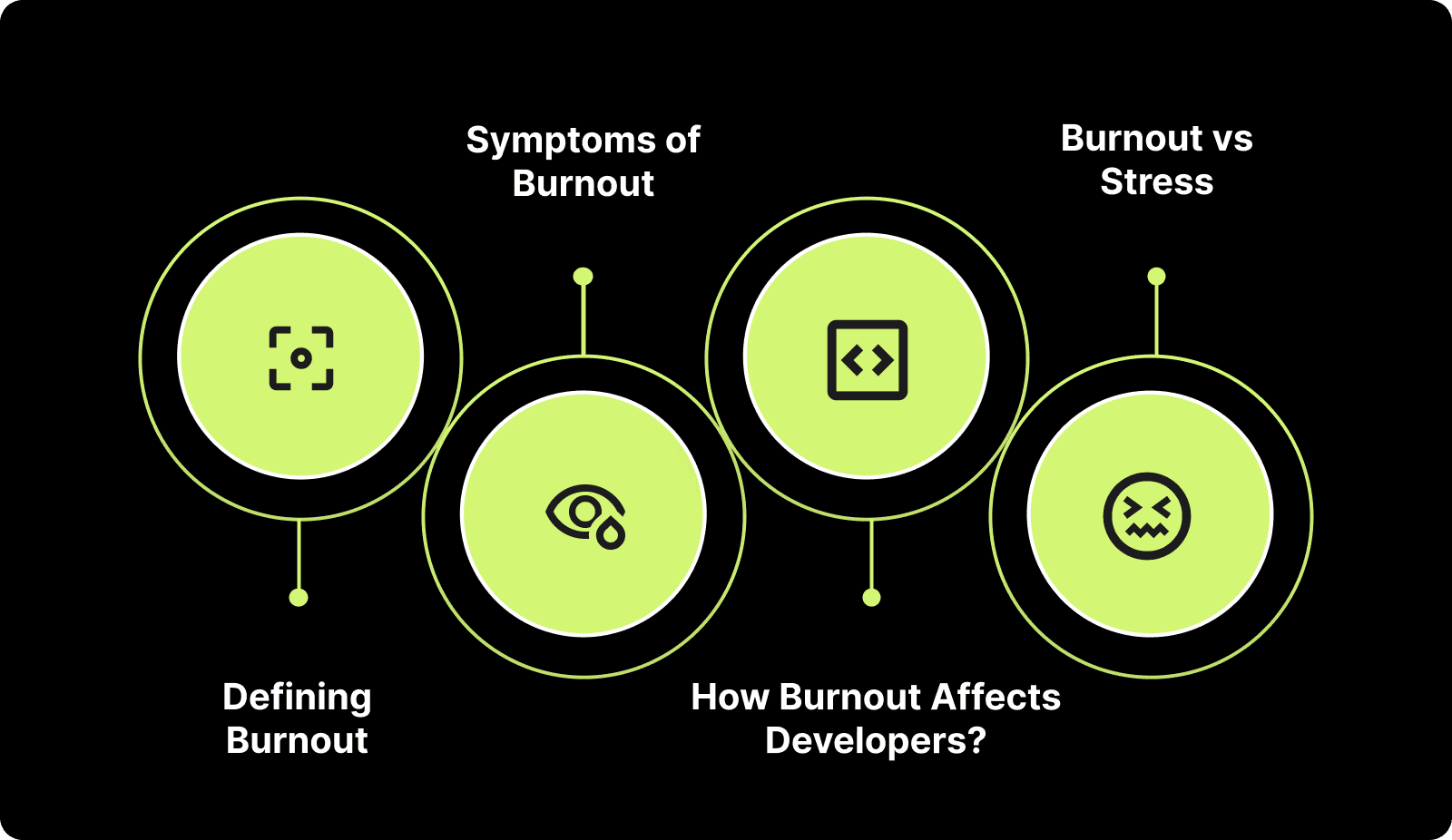
Burnout isn’t just about feeling tired or stressed. It’s a serious mental and emotional condition that can drain your energy and affect your performance in ways that are hard to recover from. In this section, we’ll break down the definition, symptoms, and the difference between stress and burnout.
Defining Burnout
According to the World Health Organization (WHO), burnout is a syndrome resulting from chronic workplace stress that hasn’t been successfully managed. It manifests as mental exhaustion, emotional fatigue, and a reduced sense of accomplishment.
Symptoms of Burnout
Burnout can impact your ability to work and your overall well-being. Here are the key symptoms:
Mental Exhaustion: Feeling drained and unable to concentrate, no matter how much you rest.
Emotional Fatigue: Losing interest in tasks you once enjoyed, feeling detached from work.
Decreased Performance: Despite working harder, your output and quality start to drop.
Depersonalization: A sense of detachment towards your work and colleagues.
How Burnout Affects Developers?
When burnout sets in, productivity drops. Code quality suffers, deadlines are missed, and the developer's mental health takes a severe hit. Burnout can also lead to poor decision-making and a decline in creativity, both of which are essential for effective problem-solving in software development.

Burnout vs Stress: Learn the Difference
Stress is common, but when it becomes overwhelming, it transitions into burnout, a much deeper issue that affects every aspect of work and well-being. Here’s how they both differ:
Stress | Burnout |
Short-term, manageable | Long-term, overwhelming exhaustion |
Can be alleviated with breaks or task changes | Requires systemic changes and recovery |
Usually temporary | Leads to detachment and reduced performance |
While stress can be controlled, burnout demands a deeper understanding. Let’s dive into the causes of burnout to address it at the root.
Also Read: Sprint Review Guide: Definition, Goals, and Tips
The Causes of Software Engineering Burnout
There are several factors that contribute to burnout in software engineers. In this section, we will explore the most common causes that lead to burnout and how they manifest in your day-to-day work.
1. Overwork and Unrealistic Deadlines
The pressure to meet tight deadlines, often at the expense of personal time, is a major contributor to burnout. Many developers work overtime regularly, trying to balance multiple projects, which leads to exhaustion and a loss of motivation.
2. Lack of Recognition and Reward
Not receiving the recognition or rewards you deserve can make you feel undervalued. When your hard work goes unacknowledged, it’s easy to lose enthusiasm for the job.
3. Monotony and Repetitive Tasks
Working on the same tasks day after day without any variety can lead to burnout. Developers need opportunities for skill development and challenges to keep them engaged and motivated.
4. Unclear Expectations
When project goals aren’t clear or expectations shift constantly, it becomes difficult to focus. The confusion leads to frustration and anxiety, ultimately contributing to burnout.
5. Toxic Work Culture
A lack of psychological safety, micromanagement, or negative peer pressure can make your work environment stressful and demoralizing. Feeling unsupported at work often results in emotional burnout.
6. Work-Life Imbalance
When the boundaries between work and personal life blur, particularly in remote work environments, it can lead to burnout. The inability to "switch off" from work can result in mental and emotional exhaustion.
7. Mismatch Between Job Role and Skills
Taking on roles or tasks that don’t align with your skills or career goals can cause frustration. If you feel out of depth or like your work isn't meaningful, it’s only a matter of time before burnout sets in.
8. Competitor Insights
Compared to the general workforce, software engineers are particularly vulnerable to burnout due to the nature of their work. The constant need for problem-solving, tight deadlines, and lack of breaks during intense work hours creates a perfect storm for burnout.
Now that we've explored the causes of burnout, it's important to understand just how widespread it is in the software engineering field.
How Common is Developer Burnout?
Developer burnout is alarmingly common, with many software engineers experiencing it during their careers. The constant pressure to meet deadlines, handle complex tasks, and maintain high performance makes burnout a widespread issue across the industry.
Startups, high-growth tech companies, and fast-paced environments are most affected, as the demanding culture and limited resources heighten stress levels. However, even established companies with clear roles and structured workflows are not immune.
Burnout leads to significant impacts, including lower productivity, diminished software quality, and higher turnover rates. The resulting stress and disengagement can also escalate recruitment costs and hurt long-term team performance.
Regardless, identifying burnout early can be of great help if you spot the signs and take proactive measures.
Also Read: Decoding Source Code Management Tools: Types, Benefits, & Top Picks
Spotting the Signs of Developer Burnout
Early detection of burnout is key to preventing long-term damage. Here, we’ll discuss the signs to look for and how data-driven tools can help you identify burnout in your team.
How to Identify Burnout Early?
The earlier you spot burnout, the sooner you can address it. Look out for these early warning signs:
Decreased enthusiasm: You may notice a loss of passion for projects you once loved.
Deteriorating performance: Despite working harder, your productivity decreases.
Increased absences: Regular absenteeism due to fatigue or mental health issues.
Isolation: A sense of disconnection from your colleagues or the team.
Data-Driven Signs
Metrics can be an invaluable tool in spotting burnout early. Tools like Jira, GitHub, and Slack can provide data on how much time you are spending on tasks, how often you and your teammates are involved in code reviews, or whether you are disengaging from meetings. For example, a sudden drop in PR review activity could indicate burnout.
Preventing yourself from getting burned out at work is thus extremely important. In the following sections, we will discuss ways to prevent yourself from burnout.

How to Prevent Software Engineering Burnout?
Preventing burnout starts with a healthy work culture and the right strategies in place. In this section, we’ll cover both organizational and individual strategies for preventing burnout.
Organizational Strategies
Building a healthy work culture is a vital strategy for preventing burnout. Let's explore organizational practices that not only help reduce your stress but also promote long-term well-being and developer productivity.
1. Creating a Healthy Work Culture
A supportive and respectful work culture is the foundation of burnout prevention. When your developers feel safe, heard, and valued, it significantly reduces stress and increases engagement. Let’s explore practical steps to build such a culture:
Promote psychological safety where developers like you can express concerns without fear of judgment. Encourage open discussions around mental health and workload management.
Regularly communicate team priorities and individual roles to avoid confusion and overload. Clear, transparent communication ensures everyone is aligned and stress is minimized.
Cultivate an environment where feedback is constructive, frequent, and balanced, promoting growth without causing overwhelm or fear of failure.
Actively listen to developers when they express burnout signs or stress. Implement an open-door policy, ensuring they feel comfortable raising concerns before they reach a breaking point.
2. Setting Realistic Expectations and Goals
Setting realistic, achievable goals for developers is required to reduce burnout. Overwhelming workloads and unclear expectations are key burnout drivers. Here's how to set the right pace:
Define clear, achievable objectives for your developers, breaking them into manageable milestones. This prevents overwhelming them with large, undefined tasks.
Communicate realistic deadlines and involve developers in discussions around timeframes to ensure everyone’s input is considered.
Encourage "smart" goal setting (Specific, Measurable, Achievable, Relevant, Time-bound) for better tracking and transparency.
Regularly reassess team capacity, adjusting goals if needed to reflect evolving priorities or unexpected challenges.
3. Encouraging Breaks and Time Off
Promoting regular breaks and time off helps maintain mental sharpness and overall well-being. A culture that values rest is essential for preventing burnout and maintaining productivity over time:
Normalize taking breaks throughout the day, especially during intense coding sessions. Short, frequent pauses help maintain focus and energy.
Encourage "offline" time by setting expectations that emails or messages can wait, allowing your developers to recharge.
Implement flexible vacation policies and actively encourage time off to ensure developers disconnect from work completely.
Promote mental health days or wellness initiatives as part of the company culture, making it clear that self-care is integral to long-term productivity.
4. Recognition and Reward
Recognizing and rewarding your developers for their hard work creates a sense of accomplishment and reduces the likelihood of burnout. Recognition not only drives motivation but also helps reinforce positive behavior. Here’s how to recognize your employees:
Celebrate both small and large achievements publicly, ensuring that contributions are recognized consistently.
Offer tailored rewards, such as career development opportunities, bonuses, or extra time off, that align with individual preferences.
Create peer-to-peer recognition programs that allow your team members to acknowledge each other's efforts, promoting a supportive team environment.
Implement a regular feedback loop where developers receive constructive praise and growth opportunities, helping them feel valued and motivated.
By implementing these organizational strategies, you’re laying the foundation for a healthier, more engaged, high-performing team. Now, let’s dive into the individual strategies developers can use to safeguard their own well-being.
Individual Strategies for Developers
To maintain your well-being as a developer, it’s essential to take proactive steps that prevent burnout. Let's discuss effective individual strategies you can use to safeguard your mental and physical health.
1. Establishing Boundaries
Setting clear boundaries between your work and personal life is essential to preventing burnout. As a developer, it’s important to protect your time outside of work to maintain a healthy balance and recharge. Here’s how to establish boundaries:
Turn off work-related notifications after hours to avoid feeling constantly “on-call.” This helps you mentally disconnect from work at the end of your day.
Politely refuse work calls or emails during personal time, especially during weekends or evenings, to maintain your work-life separation.
Schedule regular "offline" times during your workday to focus on personal interests or relaxation, ensuring you recharge before jumping back into tasks.
Set specific working hours, and communicate them clearly to your team to manage expectations about availability, reducing stress and creating predictable work-life rhythms.
2. Physical and Mental Health
Taking care of both your physical and mental health is important for maintaining energy and focus in the long term. Incorporating small habits into your day can prevent burnout and increase productivity. Here’s how to take care of your health:
Incorporate physical activities like walking, stretching, or yoga into your daily routine. Physical movement reduces stress and boosts overall well-being.
Use short mental health breaks throughout the day to reset. Practice mindfulness, deep breathing, or quick meditation exercises to refresh your mind.
Try journaling or engaging in creative hobbies after work to release any stress and help your mind unwind before bed.
Focus on maintaining healthy eating and sleeping habits. Consistent sleep schedules and balanced meals can significantly improve your mental clarity and emotional stability.
3. Switching Projects or Jobs
When burnout becomes overwhelming, sometimes the best solution is a fresh perspective. A change of pace, whether through a different project or job, can often help you regain passion and motivation:
If you’re feeling stuck or uninspired, explore different projects within your organization that align more with your interests or offer new challenges.
Talk to your manager about redistributing tasks or responsibilities to refresh your daily routine, giving you a mental reset without a complete role change.
If the burnout is too severe and your role no longer feels fulfilling, it might be time to consider changing jobs. A new environment can provide a much-needed reset.
Take time to assess what you really want from your career. Sometimes, a shift in direction, whether in terms of responsibilities, technology, or company culture, can reignite your enthusiasm.
4. Utilize AI to Avoid Overwork
AI tools can play a significant role in reducing the manual workload that contributes to burnout. By automating repetitive tasks, your developers can focus on high-impact, creative work, avoiding overwork. Follow the tips below to use AI in your workflow:
Utilize AI-driven platforms like Entelligence AI to automate time-consuming tasks like code reviews, documentation, and security checks, freeing up time for more meaningful work.
Implement smart workflows and task management tools that prioritize critical tasks and reduce unnecessary workload, keeping your focus on what truly matters.
Integrate AI-powered solutions into your development environment to simplify debugging, testing, and issue tracking, eliminating the mental load of repetitive tasks.
Allow AI tools to track project progress, identify bottlenecks, and provide actionable insights so you can focus on high-priority tasks without the stress of manual tracking.
By setting boundaries, prioritizing your health, and using AI tools to reduce workload, you can protect yourself from burnout. Now, let’s explore how to build a healthier, more sustainable work culture within your team.
Work-Life Balance: Can Hybrid/Remote Work Help Prevent Burnout?
Work-life balance is important for preventing burnout. However, it comes with both benefits and challenges. To get the most out of it, you need to know how to balance both.
Benefits of Hybrid Models:
You can choose when and where to work, enhancing productivity and reducing stress.
With control over your schedule, you can better balance personal and professional responsibilities.
Hybrid models allow you to recharge by working in environments that suit your needs, promoting long-term well-being.
Challenges of Remote Work:
Without clear work hours, it's easy to overwork, leading to burnout.
Remote work can lead to feelings of loneliness and detachment from your team.
Without structured breaks or time off, personal and professional life often overlap, increasing stress.
How to Achieve Work-Life Balance:
Define specific work hours and stick to them, ensuring personal time is respected.
Use apps and calendars to manage tasks, prioritize work, and plan personal activities.
Schedule regular breaks and time away from screens to recharge and maintain mental clarity.
While achieving work-life balance is important for preventing burnout, managers play a key role in building a supportive environment. Let’s now explore how, being a manager, you can spot and prevent burnout in your teams.
How Managers Can Help Prevent Burnout in Their Teams?
As a manager, it’s your responsibility to spot the signs of burnout and take action to prevent it. In this section, we’ll discuss how managers can prevent burnout in their teams.
1. Spotting Burnout in Your Team
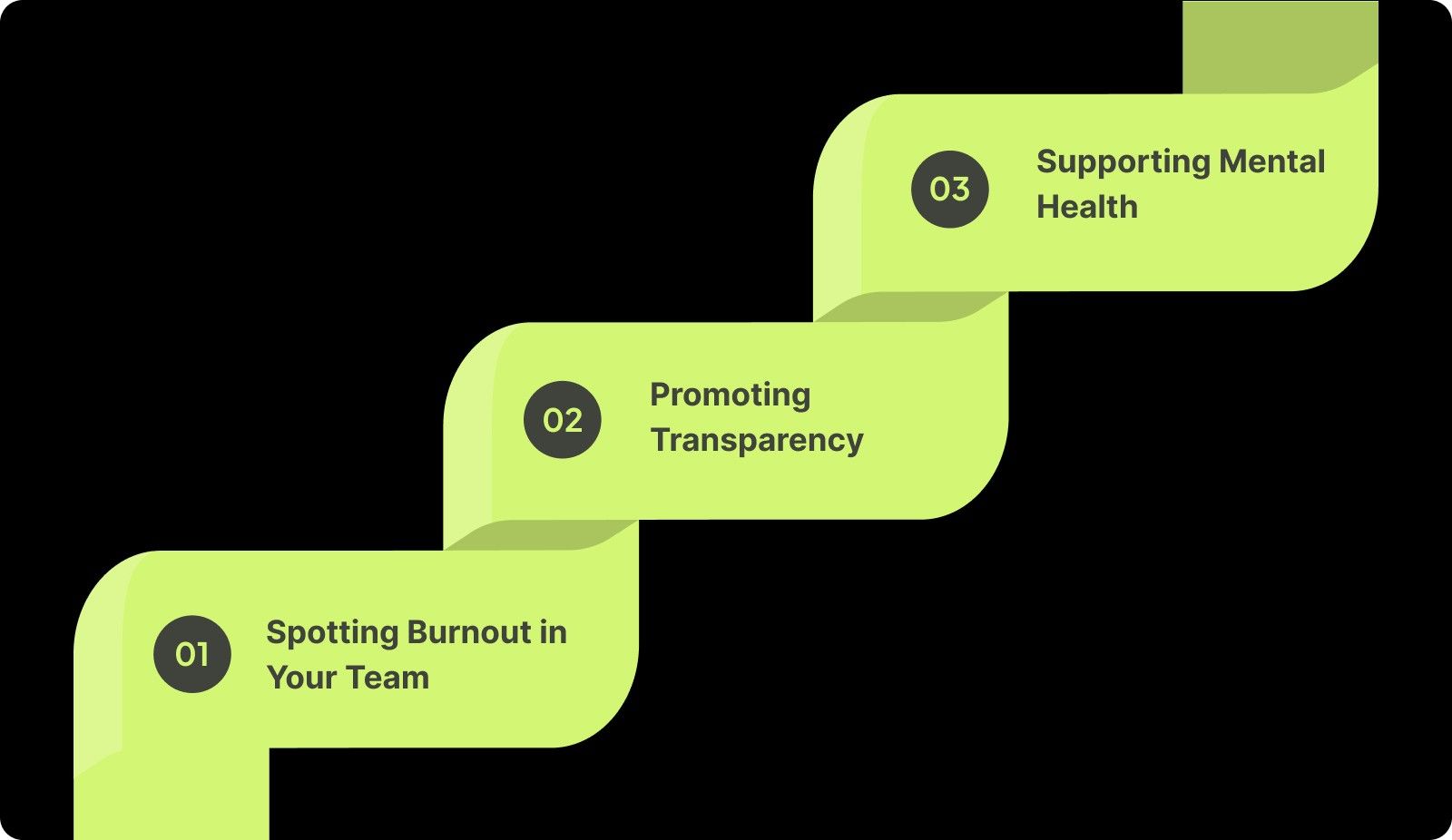
As a manager, early detection of burnout is key. Look for signs like disengagement, decreased performance, or lack of enthusiasm. Regular check-ins and conversations about workloads and mental well-being will help you identify early signs of burnout and take timely action.
2. Promoting Transparency and Open Communication
Create an environment where your team members feel safe discussing stress, workloads, and mental health. Encouraging transparency leads to a better understanding of team challenges, making it easier to prevent burnout and address issues before they escalate.
3. Supporting Mental Health and Building Resilience
Provide access to mental health resources and create a supportive atmosphere where breaks and self-care are encouraged. Helping your team build resilience through time management, boundaries, and self-care practices strengthens their ability to handle stress and prevent burnout in the long run.
While managers play an essential role in preventing burnout, individuals also need to take control when burnout strikes. Let’s explore how to get back on track if you’re feeling overwhelmed and need to reset.
Also Read: How Entelligence.AI is Redefining the Developer Experience
How to Get Back on Track if You Feel Burned Out?
If you’re already feeling burned out, it’s important to take immediate action. Here’s a step-by-step guide to help you get back on track.
Step-by-Step Action Plan
Acknowledge the Burnout: Recognize burnout without guilt. Understanding it’s a natural response to stress, and accepting it is the first step toward recovery and self-care.
Stop and Take a Break: Permit yourself to step away from work. Taking time to rest, even briefly, helps recharge your energy and gain a fresh perspective.
Set Boundaries and Prioritize: Focus on key tasks and delegate others. Setting clear boundaries with your workload ensures you can manage responsibilities without overburdening yourself.
Shift Focus: A change in project or role can provide a mental reset. New challenges may reignite your enthusiasm, helping you rediscover motivation and reduce burnout.
Seek Professional Help: If burnout is overwhelming, seek guidance from a therapist or counselor. Professional support can help you develop coping strategies for managing stress and emotional fatigue.
By taking these steps, you can begin to recover from burnout. Additionally, Entelligence AI can further assist by simplifying workflows and reducing manual tasks. It also helps you maintain balance and prevent future burnout.
How Entelligence AI Prevents Developer Burnout and Boosts Productivity?
Managing software development projects comes with its challenges. Developers often juggle multiple tasks, writing code, ensuring quality, and meeting deadlines, while leaders struggle to maintain visibility into team progress. This pressure can lead to burnout, missed deadlines, and decreased productivity. Without the right tools, it’s hard to stay on top of it all, and both individual developers and teams end up overwhelmed.
Entelligence AI solves these problems by unifying everything from code quality to team performance in one platform. It simplifies workflows, reduces manual tasks, and provides clear insights into how your team is performing. This not only helps developers focus on what matters but also allows leaders to make informed decisions quickly.
Key Features of Entelligence AI include:
Contextual Code Reviews: AI-driven code reviews that save time and maintain high-quality standards.
Security Insights: Continuous scanning for vulnerabilities is integrated into the development process.
Team Performance Dashboards: Real-time insights into team progress, with alerts on any bottlenecks.
Sprint Assessments: Automated health checks that help teams stay on track.
Individual Insights: Metrics to track progress and ensure developers are supported.
With Entelligence AI, you can prevent burnout and keep your team’s productivity and morale high. This way, you can ensure that everyone is aligned and working efficiently.
Conclusion
Burnout is a serious issue in software engineering, but it’s not something you have to accept as inevitable. By understanding the signs of burnout, identifying its root causes, and taking proactive steps, both individually and within your team, you can protect your mental well-being and maintain long-term productivity.
Besides, Entelligence AI is here to help. By organizing your workflows, automating repetitive tasks, and providing real-time insights, you reduce the mental load on developers. The platform enables your team to focus on meaningful work and stay engaged while making sure repetitive tasks are taken care of.
Ready to see how Entelligence AI can help you reduce burnout and boost your team's productivity? Book a demo today and learn how our AI-driven platform can transform your work environment.
FAQs
Q. Is burnout common in software engineering?
Yes, burnout is quite common in software engineering. Studies show that nearly three-quarters of developers report experiencing burnout at some point, often due to high workloads, stress, and long hours.
Q. What is it like to be burned out or prematurely burned out as a software engineer?
Burnout in software engineering manifests as exhaustion, lack of motivation, and emotional detachment from work. Developers may feel mentally drained, less productive, and struggle to meet deadlines despite putting in more hours.
Q. Usually, after how much time do software engineers start experiencing burnout?
Burnout can occur within 6 months to a few years of continuous high-pressure work. Factors such as unrealistic deadlines, lack of breaks, and monotonous tasks accelerate the onset of burnout.
Q. Is taking time off an effective way to prevent burnout in the tech/programming/software engineering field?
Taking time off can help alleviate burnout temporarily, but it’s not a long-term solution. Regular breaks, work-life balance, and proactive stress management are essential to preventing burnout effectively in the tech field.
Burnout in software engineering is something you might be familiar with. As a developer, you’re likely juggling tight deadlines, long hours, and constant pressure to deliver top-quality work. This stress has become a serious concern in the industry, affecting not just individual well-being but also team performance.
More than half (52%) of developers attribute burnout as a primary reason for their peers leaving their jobs, signaling widespread concern. The consequences are far-reaching: affecting productivity, quality, and morale.
In this blog, we’ll discuss how you can spot burnout early, strategies to prevent it, and what both you and your organization can do to manage and reduce its impact.
Overview
Burnout in software engineering impacts mental health, productivity, and job satisfaction.
Overwork, lack of recognition, and toxic environments are major burnout causes.
Preventing burnout requires a supportive culture, realistic goals, and a mental health focus.
Early signs like reduced enthusiasm and performance can be detected with tools like Jira.
Recovery involves setting boundaries, taking breaks, and seeking professional help.
What is Software Engineering Burnout?
Burnout isn’t just about feeling tired or stressed. It’s a serious mental and emotional condition that can drain your energy and affect your performance in ways that are hard to recover from. In this section, we’ll break down the definition, symptoms, and the difference between stress and burnout.

Defining Burnout
According to the World Health Organization (WHO), burnout is a syndrome resulting from chronic workplace stress that hasn’t been successfully managed. It manifests as mental exhaustion, emotional fatigue, and a reduced sense of accomplishment.
Symptoms of Burnout
Burnout can impact your ability to work and your overall well-being. Here are the key symptoms:
Mental Exhaustion: Feeling drained and unable to concentrate, no matter how much you rest.
Emotional Fatigue: Losing interest in tasks you once enjoyed, feeling detached from work.
Decreased Performance: Despite working harder, your output and quality start to drop.
Depersonalization: A sense of detachment towards your work and colleagues.
How Burnout Affects Developers?
When burnout sets in, productivity drops. Code quality suffers, deadlines are missed, and the developer's mental health takes a severe hit. Burnout can also lead to poor decision-making and a decline in creativity, both of which are essential for effective problem-solving in software development.

Burnout vs Stress: Learn the Difference
Stress is common, but when it becomes overwhelming, it transitions into burnout, a much deeper issue that affects every aspect of work and well-being. Here’s how they both differ:
Stress | Burnout |
Short-term, manageable | Long-term, overwhelming exhaustion |
Can be alleviated with breaks or task changes | Requires systemic changes and recovery |
Usually temporary | Leads to detachment and reduced performance |
While stress can be controlled, burnout demands a deeper understanding. Let’s dive into the causes of burnout to address it at the root.
Also Read: Sprint Review Guide: Definition, Goals, and Tips
The Causes of Software Engineering Burnout
There are several factors that contribute to burnout in software engineers. In this section, we will explore the most common causes that lead to burnout and how they manifest in your day-to-day work.
1. Overwork and Unrealistic Deadlines
The pressure to meet tight deadlines, often at the expense of personal time, is a major contributor to burnout. Many developers work overtime regularly, trying to balance multiple projects, which leads to exhaustion and a loss of motivation.
2. Lack of Recognition and Reward
Not receiving the recognition or rewards you deserve can make you feel undervalued. When your hard work goes unacknowledged, it’s easy to lose enthusiasm for the job.
3. Monotony and Repetitive Tasks
Working on the same tasks day after day without any variety can lead to burnout. Developers need opportunities for skill development and challenges to keep them engaged and motivated.
4. Unclear Expectations
When project goals aren’t clear or expectations shift constantly, it becomes difficult to focus. The confusion leads to frustration and anxiety, ultimately contributing to burnout.
5. Toxic Work Culture
A lack of psychological safety, micromanagement, or negative peer pressure can make your work environment stressful and demoralizing. Feeling unsupported at work often results in emotional burnout.
6. Work-Life Imbalance
When the boundaries between work and personal life blur, particularly in remote work environments, it can lead to burnout. The inability to "switch off" from work can result in mental and emotional exhaustion.
7. Mismatch Between Job Role and Skills
Taking on roles or tasks that don’t align with your skills or career goals can cause frustration. If you feel out of depth or like your work isn't meaningful, it’s only a matter of time before burnout sets in.
8. Competitor Insights
Compared to the general workforce, software engineers are particularly vulnerable to burnout due to the nature of their work. The constant need for problem-solving, tight deadlines, and lack of breaks during intense work hours creates a perfect storm for burnout.
Now that we've explored the causes of burnout, it's important to understand just how widespread it is in the software engineering field.
How Common is Developer Burnout?
Developer burnout is alarmingly common, with many software engineers experiencing it during their careers. The constant pressure to meet deadlines, handle complex tasks, and maintain high performance makes burnout a widespread issue across the industry.
Startups, high-growth tech companies, and fast-paced environments are most affected, as the demanding culture and limited resources heighten stress levels. However, even established companies with clear roles and structured workflows are not immune.
Burnout leads to significant impacts, including lower productivity, diminished software quality, and higher turnover rates. The resulting stress and disengagement can also escalate recruitment costs and hurt long-term team performance.
Regardless, identifying burnout early can be of great help if you spot the signs and take proactive measures.
Also Read: Decoding Source Code Management Tools: Types, Benefits, & Top Picks
Spotting the Signs of Developer Burnout
Early detection of burnout is key to preventing long-term damage. Here, we’ll discuss the signs to look for and how data-driven tools can help you identify burnout in your team.
How to Identify Burnout Early?
The earlier you spot burnout, the sooner you can address it. Look out for these early warning signs:
Decreased enthusiasm: You may notice a loss of passion for projects you once loved.
Deteriorating performance: Despite working harder, your productivity decreases.
Increased absences: Regular absenteeism due to fatigue or mental health issues.
Isolation: A sense of disconnection from your colleagues or the team.
Data-Driven Signs
Metrics can be an invaluable tool in spotting burnout early. Tools like Jira, GitHub, and Slack can provide data on how much time you are spending on tasks, how often you and your teammates are involved in code reviews, or whether you are disengaging from meetings. For example, a sudden drop in PR review activity could indicate burnout.
Preventing yourself from getting burned out at work is thus extremely important. In the following sections, we will discuss ways to prevent yourself from burnout.

How to Prevent Software Engineering Burnout?
Preventing burnout starts with a healthy work culture and the right strategies in place. In this section, we’ll cover both organizational and individual strategies for preventing burnout.
Organizational Strategies
Building a healthy work culture is a vital strategy for preventing burnout. Let's explore organizational practices that not only help reduce your stress but also promote long-term well-being and developer productivity.
1. Creating a Healthy Work Culture
A supportive and respectful work culture is the foundation of burnout prevention. When your developers feel safe, heard, and valued, it significantly reduces stress and increases engagement. Let’s explore practical steps to build such a culture:
Promote psychological safety where developers like you can express concerns without fear of judgment. Encourage open discussions around mental health and workload management.
Regularly communicate team priorities and individual roles to avoid confusion and overload. Clear, transparent communication ensures everyone is aligned and stress is minimized.
Cultivate an environment where feedback is constructive, frequent, and balanced, promoting growth without causing overwhelm or fear of failure.
Actively listen to developers when they express burnout signs or stress. Implement an open-door policy, ensuring they feel comfortable raising concerns before they reach a breaking point.
2. Setting Realistic Expectations and Goals
Setting realistic, achievable goals for developers is required to reduce burnout. Overwhelming workloads and unclear expectations are key burnout drivers. Here's how to set the right pace:
Define clear, achievable objectives for your developers, breaking them into manageable milestones. This prevents overwhelming them with large, undefined tasks.
Communicate realistic deadlines and involve developers in discussions around timeframes to ensure everyone’s input is considered.
Encourage "smart" goal setting (Specific, Measurable, Achievable, Relevant, Time-bound) for better tracking and transparency.
Regularly reassess team capacity, adjusting goals if needed to reflect evolving priorities or unexpected challenges.
3. Encouraging Breaks and Time Off
Promoting regular breaks and time off helps maintain mental sharpness and overall well-being. A culture that values rest is essential for preventing burnout and maintaining productivity over time:
Normalize taking breaks throughout the day, especially during intense coding sessions. Short, frequent pauses help maintain focus and energy.
Encourage "offline" time by setting expectations that emails or messages can wait, allowing your developers to recharge.
Implement flexible vacation policies and actively encourage time off to ensure developers disconnect from work completely.
Promote mental health days or wellness initiatives as part of the company culture, making it clear that self-care is integral to long-term productivity.
4. Recognition and Reward
Recognizing and rewarding your developers for their hard work creates a sense of accomplishment and reduces the likelihood of burnout. Recognition not only drives motivation but also helps reinforce positive behavior. Here’s how to recognize your employees:
Celebrate both small and large achievements publicly, ensuring that contributions are recognized consistently.
Offer tailored rewards, such as career development opportunities, bonuses, or extra time off, that align with individual preferences.
Create peer-to-peer recognition programs that allow your team members to acknowledge each other's efforts, promoting a supportive team environment.
Implement a regular feedback loop where developers receive constructive praise and growth opportunities, helping them feel valued and motivated.
By implementing these organizational strategies, you’re laying the foundation for a healthier, more engaged, high-performing team. Now, let’s dive into the individual strategies developers can use to safeguard their own well-being.
Individual Strategies for Developers
To maintain your well-being as a developer, it’s essential to take proactive steps that prevent burnout. Let's discuss effective individual strategies you can use to safeguard your mental and physical health.
1. Establishing Boundaries
Setting clear boundaries between your work and personal life is essential to preventing burnout. As a developer, it’s important to protect your time outside of work to maintain a healthy balance and recharge. Here’s how to establish boundaries:
Turn off work-related notifications after hours to avoid feeling constantly “on-call.” This helps you mentally disconnect from work at the end of your day.
Politely refuse work calls or emails during personal time, especially during weekends or evenings, to maintain your work-life separation.
Schedule regular "offline" times during your workday to focus on personal interests or relaxation, ensuring you recharge before jumping back into tasks.
Set specific working hours, and communicate them clearly to your team to manage expectations about availability, reducing stress and creating predictable work-life rhythms.
2. Physical and Mental Health
Taking care of both your physical and mental health is important for maintaining energy and focus in the long term. Incorporating small habits into your day can prevent burnout and increase productivity. Here’s how to take care of your health:
Incorporate physical activities like walking, stretching, or yoga into your daily routine. Physical movement reduces stress and boosts overall well-being.
Use short mental health breaks throughout the day to reset. Practice mindfulness, deep breathing, or quick meditation exercises to refresh your mind.
Try journaling or engaging in creative hobbies after work to release any stress and help your mind unwind before bed.
Focus on maintaining healthy eating and sleeping habits. Consistent sleep schedules and balanced meals can significantly improve your mental clarity and emotional stability.
3. Switching Projects or Jobs
When burnout becomes overwhelming, sometimes the best solution is a fresh perspective. A change of pace, whether through a different project or job, can often help you regain passion and motivation:
If you’re feeling stuck or uninspired, explore different projects within your organization that align more with your interests or offer new challenges.
Talk to your manager about redistributing tasks or responsibilities to refresh your daily routine, giving you a mental reset without a complete role change.
If the burnout is too severe and your role no longer feels fulfilling, it might be time to consider changing jobs. A new environment can provide a much-needed reset.
Take time to assess what you really want from your career. Sometimes, a shift in direction, whether in terms of responsibilities, technology, or company culture, can reignite your enthusiasm.
4. Utilize AI to Avoid Overwork
AI tools can play a significant role in reducing the manual workload that contributes to burnout. By automating repetitive tasks, your developers can focus on high-impact, creative work, avoiding overwork. Follow the tips below to use AI in your workflow:
Utilize AI-driven platforms like Entelligence AI to automate time-consuming tasks like code reviews, documentation, and security checks, freeing up time for more meaningful work.
Implement smart workflows and task management tools that prioritize critical tasks and reduce unnecessary workload, keeping your focus on what truly matters.
Integrate AI-powered solutions into your development environment to simplify debugging, testing, and issue tracking, eliminating the mental load of repetitive tasks.
Allow AI tools to track project progress, identify bottlenecks, and provide actionable insights so you can focus on high-priority tasks without the stress of manual tracking.
By setting boundaries, prioritizing your health, and using AI tools to reduce workload, you can protect yourself from burnout. Now, let’s explore how to build a healthier, more sustainable work culture within your team.
Work-Life Balance: Can Hybrid/Remote Work Help Prevent Burnout?
Work-life balance is important for preventing burnout. However, it comes with both benefits and challenges. To get the most out of it, you need to know how to balance both.
Benefits of Hybrid Models:
You can choose when and where to work, enhancing productivity and reducing stress.
With control over your schedule, you can better balance personal and professional responsibilities.
Hybrid models allow you to recharge by working in environments that suit your needs, promoting long-term well-being.
Challenges of Remote Work:
Without clear work hours, it's easy to overwork, leading to burnout.
Remote work can lead to feelings of loneliness and detachment from your team.
Without structured breaks or time off, personal and professional life often overlap, increasing stress.
How to Achieve Work-Life Balance:
Define specific work hours and stick to them, ensuring personal time is respected.
Use apps and calendars to manage tasks, prioritize work, and plan personal activities.
Schedule regular breaks and time away from screens to recharge and maintain mental clarity.
While achieving work-life balance is important for preventing burnout, managers play a key role in building a supportive environment. Let’s now explore how, being a manager, you can spot and prevent burnout in your teams.
How Managers Can Help Prevent Burnout in Their Teams?
As a manager, it’s your responsibility to spot the signs of burnout and take action to prevent it. In this section, we’ll discuss how managers can prevent burnout in their teams.

1. Spotting Burnout in Your Team
As a manager, early detection of burnout is key. Look for signs like disengagement, decreased performance, or lack of enthusiasm. Regular check-ins and conversations about workloads and mental well-being will help you identify early signs of burnout and take timely action.
2. Promoting Transparency and Open Communication
Create an environment where your team members feel safe discussing stress, workloads, and mental health. Encouraging transparency leads to a better understanding of team challenges, making it easier to prevent burnout and address issues before they escalate.
3. Supporting Mental Health and Building Resilience
Provide access to mental health resources and create a supportive atmosphere where breaks and self-care are encouraged. Helping your team build resilience through time management, boundaries, and self-care practices strengthens their ability to handle stress and prevent burnout in the long run.
While managers play an essential role in preventing burnout, individuals also need to take control when burnout strikes. Let’s explore how to get back on track if you’re feeling overwhelmed and need to reset.
Also Read: How Entelligence.AI is Redefining the Developer Experience
How to Get Back on Track if You Feel Burned Out?
If you’re already feeling burned out, it’s important to take immediate action. Here’s a step-by-step guide to help you get back on track.
Step-by-Step Action Plan
Acknowledge the Burnout: Recognize burnout without guilt. Understanding it’s a natural response to stress, and accepting it is the first step toward recovery and self-care.
Stop and Take a Break: Permit yourself to step away from work. Taking time to rest, even briefly, helps recharge your energy and gain a fresh perspective.
Set Boundaries and Prioritize: Focus on key tasks and delegate others. Setting clear boundaries with your workload ensures you can manage responsibilities without overburdening yourself.
Shift Focus: A change in project or role can provide a mental reset. New challenges may reignite your enthusiasm, helping you rediscover motivation and reduce burnout.
Seek Professional Help: If burnout is overwhelming, seek guidance from a therapist or counselor. Professional support can help you develop coping strategies for managing stress and emotional fatigue.
By taking these steps, you can begin to recover from burnout. Additionally, Entelligence AI can further assist by simplifying workflows and reducing manual tasks. It also helps you maintain balance and prevent future burnout.

How Entelligence AI Prevents Developer Burnout and Boosts Productivity?
Managing software development projects comes with its challenges. Developers often juggle multiple tasks, writing code, ensuring quality, and meeting deadlines, while leaders struggle to maintain visibility into team progress. This pressure can lead to burnout, missed deadlines, and decreased productivity. Without the right tools, it’s hard to stay on top of it all, and both individual developers and teams end up overwhelmed.
Entelligence AI solves these problems by unifying everything from code quality to team performance in one platform. It simplifies workflows, reduces manual tasks, and provides clear insights into how your team is performing. This not only helps developers focus on what matters but also allows leaders to make informed decisions quickly.
Key Features of Entelligence AI include:
Contextual Code Reviews: AI-driven code reviews that save time and maintain high-quality standards.
Security Insights: Continuous scanning for vulnerabilities is integrated into the development process.
Team Performance Dashboards: Real-time insights into team progress, with alerts on any bottlenecks.
Sprint Assessments: Automated health checks that help teams stay on track.
Individual Insights: Metrics to track progress and ensure developers are supported.
With Entelligence AI, you can prevent burnout and keep your team’s productivity and morale high. This way, you can ensure that everyone is aligned and working efficiently.
Conclusion
Burnout is a serious issue in software engineering, but it’s not something you have to accept as inevitable. By understanding the signs of burnout, identifying its root causes, and taking proactive steps, both individually and within your team, you can protect your mental well-being and maintain long-term productivity.
Besides, Entelligence AI is here to help. By organizing your workflows, automating repetitive tasks, and providing real-time insights, you reduce the mental load on developers. The platform enables your team to focus on meaningful work and stay engaged while making sure repetitive tasks are taken care of.
Ready to see how Entelligence AI can help you reduce burnout and boost your team's productivity? Book a demo today and learn how our AI-driven platform can transform your work environment.
FAQs
Q. Is burnout common in software engineering?
Yes, burnout is quite common in software engineering. Studies show that nearly three-quarters of developers report experiencing burnout at some point, often due to high workloads, stress, and long hours.
Q. What is it like to be burned out or prematurely burned out as a software engineer?
Burnout in software engineering manifests as exhaustion, lack of motivation, and emotional detachment from work. Developers may feel mentally drained, less productive, and struggle to meet deadlines despite putting in more hours.
Q. Usually, after how much time do software engineers start experiencing burnout?
Burnout can occur within 6 months to a few years of continuous high-pressure work. Factors such as unrealistic deadlines, lack of breaks, and monotonous tasks accelerate the onset of burnout.
Q. Is taking time off an effective way to prevent burnout in the tech/programming/software engineering field?
Taking time off can help alleviate burnout temporarily, but it’s not a long-term solution. Regular breaks, work-life balance, and proactive stress management are essential to preventing burnout effectively in the tech field.
Your questions,
Your questions,
Decoded
Decoded
What makes Entelligence different?
Unlike tools that just flag issues, Entelligence understands context — detecting, explaining, and fixing problems while aligning with product goals and team standards.
Does it replace human reviewers?
No. It amplifies them. Entelligence handles repetitive checks so engineers can focus on architecture, logic, and innovation.
What tools does it integrate with?
It fits right into your workflow — GitHub, GitLab, Jira, Linear, Slack, and more. No setup friction, no context switching.
How secure is my code?
Your code never leaves your environment. Entelligence uses encrypted processing and complies with top industry standards like SOC 2 and HIPAA.
Who is it built for?
Fast-growing engineering teams that want to scale quality, security, and velocity without adding more manual reviews or overhead.

What makes Entelligence different?
Does it replace human reviewers?
What tools does it integrate with?
How secure is my code?
Who is it built for?