Backlog Grooming vs Sprint Planning: Key Differences Explained

Nov 28, 2025

Nov 28, 2025

In Agile development, backlog grooming and sprint planning are both essential to ensuring that tasks are prioritized and your team stays aligned. These processes help clarify goals, prevent confusion, and set a clear direction for the sprint ahead. 

Interestingly, teams that strongly agree they have sprint retrospectives report being 24% more responsive and achieving 42% higher quality with less variability. This demonstrates how consistent, well-organized Agile practices, like grooming and planning, directly improve team performance and deliverables.

In this blog, we’ll break down the key differences between backlog grooming and sprint planning. We will also explain how optimizing both can make your sprints more effective, efficient, and successful.

Overview

  • Backlog grooming keeps tasks prioritized and ready for sprint planning, minimizing confusion and maximizing focus.

  • Sprint planning sets clear goals and tasks for the sprint, aligning your team and ensuring accountability.

  • Backlog grooming is ongoing, while sprint planning happens at the start of each sprint to define scope and priorities.

  • Regular grooming ensures a clean, actionable backlog, making sprint planning more efficient and focused.

  • Tools like Jira and Entelligence AI integrate workflows for smooth grooming and planning. They offer insights for better decision-making.

What is Backlog Grooming?

Backlog grooming is the ongoing process of refining and updating the product backlog. The goal is to ensure that the backlog is ready for future sprints by prioritizing tasks, removing outdated items, and ensuring clarity around each user story. It’s an important part of keeping your project organized, minimizing confusion, and ensuring that your development team works on the right tasks at the right time.

What Happens During Backlog Grooming?

During backlog grooming, the product backlog is reviewed and refined. This can include:

  • Removing outdated tasks that no longer serve the project’s current goals.

  • Reprioritizing tasks based on feedback or changes in business direction.

  • Breaking down large tasks into smaller, more manageable pieces that can be tackled in upcoming sprints.

By making sure each item in the backlog is clear, prioritized, and ready for sprint planning, you ensure that your team won’t waste time figuring out what needs to be done when the sprint begins.

Also Read: How AI Transforms Code Comments and Documentation?

Why is Backlog Grooming Important?

Backlog grooming plays an important role in setting your sprint up for success. If your backlog is disorganized, full of vague tasks, or outdated, sprint planning becomes a challenge. Backlog grooming:

  • Aligns priorities: Ensures the most important tasks are clearly visible, prioritized, and ready for action, preventing confusion later.

  • Reduces risk: Identifies potential blockers or gaps in user stories early, allowing your team to address issues before they impact progress.

  • Improves sprint efficiency: Helps your team to avoid wasting time on vague tasks, ensuring they stay focused on delivering high-impact work.

By refining your backlog grooming and sprint planning processes, you give your team the clarity and focus needed to drive consistent results.

Backlog Grooming Process: Steps to Get It Right

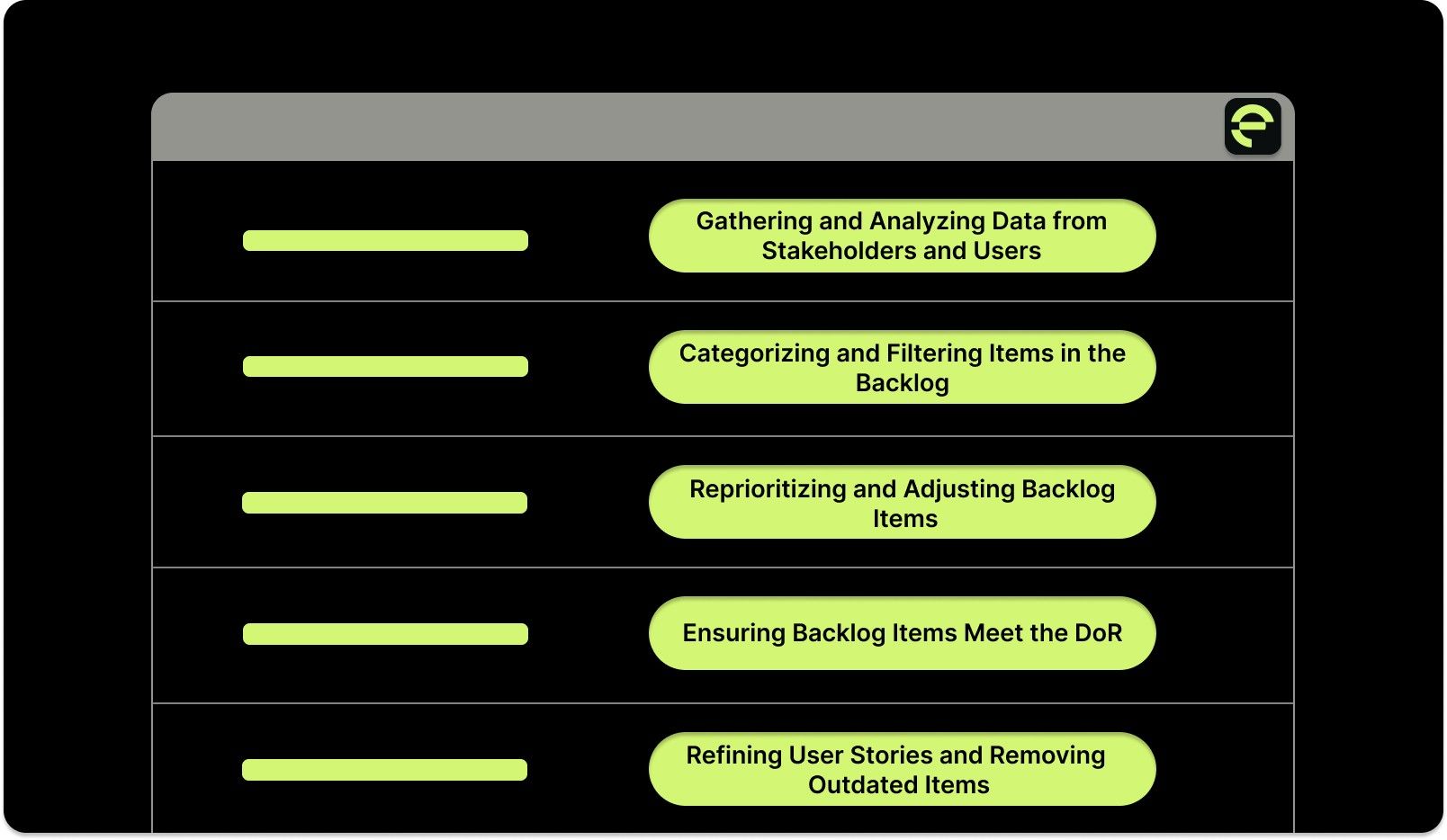
A well-organized backlog is the key to a smooth sprint. The steps outlined below will help you refine your backlog, ensuring tasks are prioritized, actionable, and ready for the next sprint:
Backlog Grooming Process: Steps to Get It Right

1. Gathering and Analyzing Data from Stakeholders and Users

Effective backlog grooming begins with gathering input from key stakeholders and users to ensure the backlog aligns with current business goals. This process helps you avoid working on features that are based on assumptions rather than actual needs. 

For example, if a new customer segment is identified, the backlog might need to include features that cater specifically to their needs.

2. Categorizing and Filtering Items in the Backlog

Organize your backlog into categories like features, bugs, and technical debt. This helps prioritize tasks based on their urgency and importance. 

Categorization makes it easier to focus on critical items first, preventing less important tasks from slowing down your sprint and ensuring a simplified workflow.

3. Reprioritizing and Adjusting Backlog Items

As priorities change, ensure your backlog reflects new insights, customer feedback, or shifting business goals. Regularly reassess and reprioritize tasks to keep your sprint focused on the most impactful work. 

This process helps you avoid wasting time on irrelevant or outdated tasks that no longer align with your project needs.

4. Ensuring Backlog Items Meet the Definition of Ready (DoR)

Before selecting tasks for sprint planning, ensure they meet the Definition of Ready (DoR). A task is ready when it’s clear, actionable, and small enough to complete in a sprint. 

For example, if a task like “build a feature” is too vague, break it into smaller, clearer parts.

5. Refining User Stories and Removing Outdated Items

Regularly review your backlog to remove outdated or irrelevant user stories. Refining these stories ensures they stay aligned with your project goals and product vision. 

This keeps your backlog manageable and relevant, preventing your team from working on tasks that no longer add value to the sprint.

Once your backlog is refined, you're ready to move on to the next step: sprint planning. This is where you’ll select tasks from your groomed backlog and define a clear path for your team to follow during the sprint.
What is Sprint Planning?

Sprint planning is the ceremony where your team defines what will be accomplished during the upcoming sprint. The goal is to set clear, achievable objectives and allocate tasks in alignment with the sprint’s goals. Unlike backlog grooming, which focuses on preparing for future sprints, sprint planning is all about the immediate next sprint.

Why is Sprint Planning Essential for Agile Success?

Sprint planning ensures that the team is aligned on goals and tasks for the upcoming sprint. It provides clarity on:

  • What will the team work on in the sprint?

  • How much work is achievable given the team’s capacity and velocity?

  • Who will take responsibility for each task, ensuring accountability?

Effective sprint planning leads to focused work, better collaboration, and a higher chance of achieving sprint goals.

Sprint Planning Process: Steps for Effective Execution

To ensure a successful sprint, it's essential to follow a structured planning process. These steps will guide your team in defining clear goals, estimating effort, and organizing tasks to stay focused and efficient throughout the sprint.

1. Setting a Clear Sprint Goal

The sprint goal defines the primary objective for the sprint, giving your team a clear focus. It ensures that everyone is aligned and working toward the same outcome. Without a goal, your team might get distracted. 

For example, a goal could be “implement user login functionality.”

2. Reviewing and Selecting Backlog Items for the Sprint

In this step, you’ll carefully select tasks from the groomed backlog that are aligned with your sprint goal. This ensures the work is relevant and achievable within the sprint’s time frame. 

Prioritize items based on their importance and the team’s capacity, making sure no task is overlooked.

3. Estimating the Effort Required and Setting Team Roles

Estimating effort helps your team understand the scope of work. Break down tasks into manageable pieces to determine the amount of time and resources required. Assign roles clearly, so each team member knows their responsibilities. 

For example, one of your developers may handle UI, while another focuses on backend integration.

4. Finalizing the Sprint Plan and Committing to the Goal

Once you’ve selected tasks and assigned roles, finalize the sprint plan. Ensure your team understands the tasks at hand and commits to delivering them within the sprint. 

Your team should be clear on their goals, deadlines, and responsibilities, making it easier to stay focused and productive throughout the sprint.

With a solid sprint plan in place, your team is now aligned and ready to tackle the work ahead. Sprint planning ensures everyone knows their role, the task at hand, and what success looks like, making it the foundation for achieving your sprint goals.

Also Read: Sprint Review Guide: Definition, Goals, and Tips

Backlog Grooming vs. Sprint Planning: The Key Differences

While both backlog grooming and sprint planning are important to Agile workflows, they serve distinct purposes. Let’s break down the similarities and differences:

The Key Similarities

  • Both are Agile ceremonies aimed at enhancing the sprint outcome by ensuring your team is aligned and working on the most valuable tasks.

  • Both involve collaboration between various roles, such as the Product Owner, Scrum Master, and developers.

  • Both set the foundation for a successful sprint, ensuring that tasks are defined, prioritized, and ready to be tackled.

The Core Differences

Understanding the key differences between Backlog Grooming and Sprint Planning is essential for ensuring your Agile processes run smoothly. Below is a clear comparison of how each activity differs in terms of focus, timing, participants, and purpose:

Aspect

Backlog Grooming

Sprint Planning

Focus

Backlog Grooming prepares tasks for future sprints, ensuring your backlog is aligned with the product’s goals.

Sprint Planning focuses on the immediate next sprint, selecting tasks and setting measurable goals.

Timing

Backlog Grooming is an ongoing process throughout the sprint cycle, keeping the backlog updated.

Sprint Planning happens at the beginning of the sprint, defining scope and setting expectations.

Participants

Backlog Grooming involves the Product Owner, Scrum Master, and stakeholders, focusing on preparation.

Sprint Planning includes your full Scrum team to ensure everyone understands their roles and tasks.

Purpose

Backlog Grooming ensures your backlog is organized and ready for sprint planning.

Sprint Planning selects the specific tasks for the upcoming sprint and sets a clear sprint goal.

By understanding these differences, you can effectively manage both Backlog Grooming and Sprint Planning. This ensures each process serves its distinct purpose and sets your team up for a focused, successful sprint.

The Role of Backlog Grooming in Sprint Planning

Backlog grooming is important to sprint planning. When the backlog is well-groomed, sprint planning becomes much more efficient. The team spends less time figuring out what to work on and more time focusing on execution. Grooming ensures that tasks are well-defined, actionable, and prioritized, which sets the stage for successful sprint planning.

Best Practices for Effective Backlog Grooming

To ensure your backlog grooming is as efficient and effective as possible, follow these best practices. They will help keep your backlog organized while reducing inefficiencies and confusion.

1. Keep Backlog Grooming Sessions Regular

Make backlog grooming a regular activity, ideally once a week. Frequent sessions ensure your backlog is always aligned with your product goals and prevent it from becoming outdated, which makes sprint planning more efficient and focused.

2. Prioritize Backlog Items Effectively

Use proven methods like the MoSCoW Method and the Pareto Principle to prioritize tasks. Categorizing items by urgency and value ensures the team works on the most important tasks first, making the sprint more impactful and manageable.

3. Collaborate and Update the Backlog Regularly

Engage your development team regularly during grooming sessions. Their insights help ensure tasks are achievable and properly estimated. Also, keep your backlog updated to avoid confusion and ensure tasks align with the latest project needs.

By adhering to these best practices, your backlog grooming sessions will be more effective than ever.

Also Read: How to Measure Developer Productivity Effectively

Best Practices for Sprint Planning

To ensure your sprint planning is effective, it’s important to follow best practices that help align your team’s capacity, avoid pitfalls, and set clear, achievable goals. Here are the key practices to follow.

1. Set Realistic Goals Based on Team Velocity

Align your sprint goal with your team’s previous performance and capacity. Avoid setting overly ambitious goals that can overwhelm your team. Setting realistic goals based on velocity ensures that your team can consistently meet expectations without burnout.

2. Review Team Capacity and Availability

Before committing to tasks, ensure you understand the team’s availability, including time off or other blockers. This ensures that sprint goals are achievable and prevents overloading the team, leading to more focused and productive work.

3. Time-Box Sprint Planning Sessions

Keep sprint planning sessions time-boxed to avoid inefficiency. Limit discussions to the essential topics and ensure your team stays focused. A set time frame helps prevent long, drawn-out meetings, allowing the team to move quickly into execution.

By following these best practices, you can simplify your sprint planning process, set clear goals, and ensure everyone is aligned and ready to tackle the sprint efficiently. Know that a focused sprint leads to better results.

Tools and Resources for Backlog Grooming & Sprint Planning

Choosing the right tools is essential for optimizing your backlog grooming and sprint planning processes. Whether you’re using Jira or exploring other Agile platforms, the right tools can manage workflows, enhance collaboration, and keep your team focused on the sprint goal.
Tools and Resources for Backlog Grooming & Sprint Planning

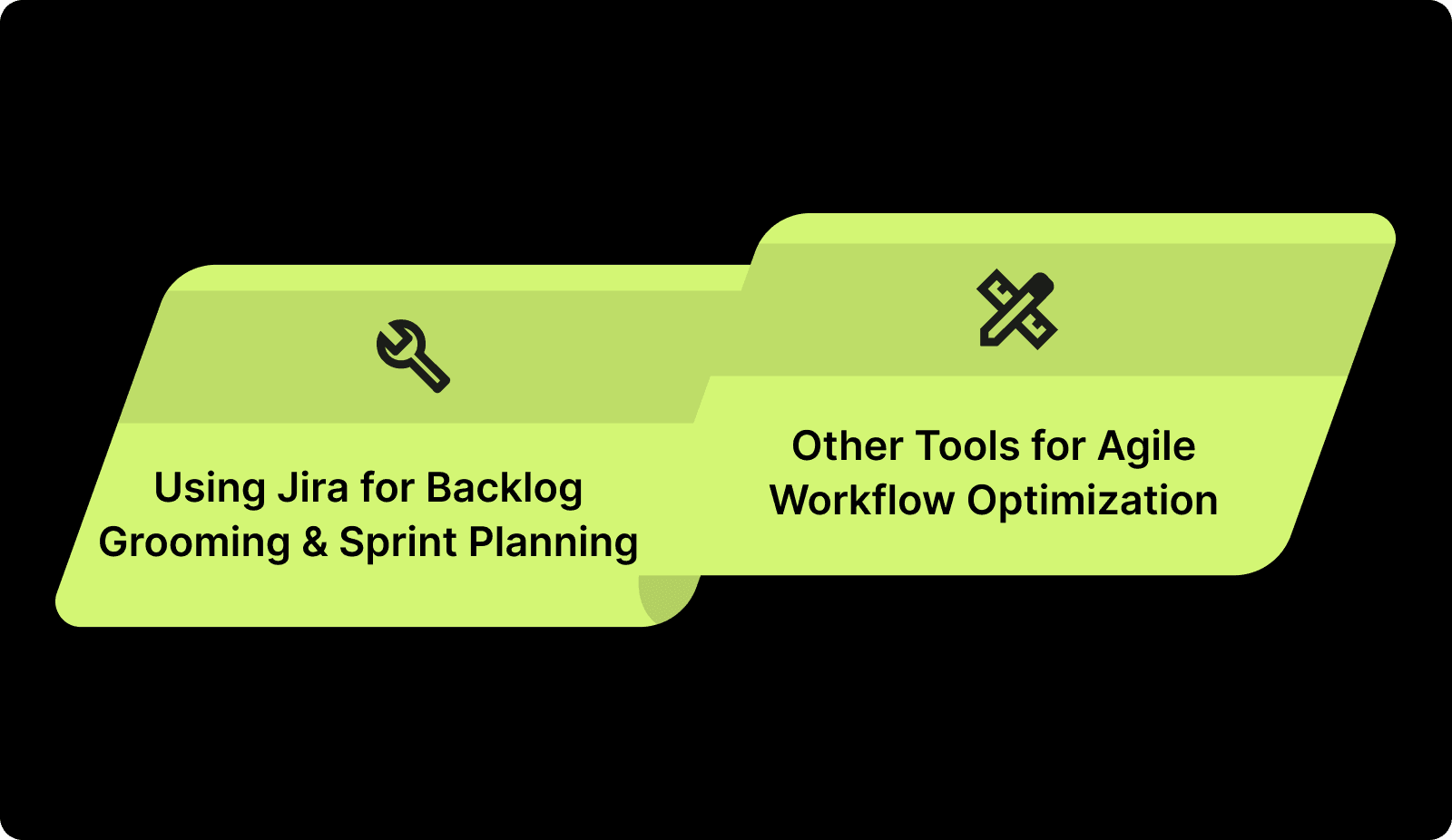
1. Using Jira for Backlog Grooming and Sprint Planning

Jira is a powerful platform for managing Agile workflows. It helps you organize the backlog, prioritize tasks, and track progress. With features like Epics, Stories, and Kanban boards, Jira ensures transparency in both backlog grooming and sprint planning, making it easier to stay on track and aligned with project goals.

2. Other Tools for Agile Workflow Optimization

If your team prefers alternatives to Jira, tools like Trello, Monday.com, and Asana can help manage tasks, assign responsibilities, and stay aligned with sprint goals. These platforms offer customizable workflows to ensure your team is always focused on the most important work.

While these tools work well, effective backlog grooming and sprint planning require more than just the right tools. They demand a platform that integrates insights, prioritization, and alignment. Entelligence AI bridges these gaps, providing the clarity and structure your team needs to succeed.

Also Read: Sprint Velocity in Scrum: How to Measure and Calculate It Right?

Optimizing Backlog Grooming and Sprint Planning with Entelligence AI

Backlog grooming and sprint planning are essential for a successful sprint, yet they often present challenges. Without clear priorities and alignment, teams risk focusing on the wrong tasks, leading to inefficiencies and missed deadlines. A disorganized backlog or unclear sprint goal can confuse your team, delaying project progress.

Entelligence AI solves this by providing a comprehensive platform that unifies code quality, security, team performance, and engineering velocity. Unlike traditional tools, Entelligence AI ensures that your backlog is always aligned with the product’s goals and the team’s capacity, helping you organize both backlog grooming and sprint planning.

Here’s what Entelligence AI offers:

  • Sprint Health Dashboards: Provides real-time visibility into sprint progress, identifying blockers and ensuring timely delivery.

  • Team and Individual Insights: Offers data-driven insights into team performance, helping you allocate tasks based on strengths and availability.

  • Seamless Integrations: Integrates with Jira, GitHub, and other tools, ensuring a unified workflow for backlog grooming and sprint planning.

  • Continuous Code Quality and Security Insights: Embeds code quality checks and security monitoring within your workflow, reducing the risk of defects and vulnerabilities.

With Entelligence AI, you gain the strategic clarity to refine your backlog and plan your sprints with precision. This ensures your team delivers value on time.

Conclusion

Learning the differences and connections between backlog grooming and sprint planning is important for any Agile team. These practices, when executed properly, set the stage for a successful sprint by ensuring your team stays focused, aligned, and productive. By following the outlined processes, you can eliminate inefficiencies and keep your projects on track.

At Entelligence AI, we simplify your Agile processes by unifying code quality, security, and team performance in one platform. Our solution gives you the dashboards and insights that turn your backlog grooming into actionable sprint items, and your sprint planning into measurable outcomes. With Entelligence AI, you can boost your team's success and maximize productivity.

So, quickly take the next step to optimize your Agile workflow. Book a demo with Entelligence AI now and see how our platform can help you with your sprint planning and backlog grooming, boosting your team’s efficiency and sprint outcomes.

FAQs

Q. How long should backlog grooming sessions last?

Backlog grooming sessions should typically last around 45 minutes to 1 hour. This ensures your team can review and refine the backlog effectively without losing focus. Regular, concise sessions keep the backlog manageable and ready for sprint planning.

Q.Who should attend backlog grooming sessions?

Backlog grooming sessions should include the Product Owner, Scrum Master, and key stakeholders. The development team should also participate to ensure tasks are clear and achievable. Collaboration across these roles ensures the backlog is well-prioritized and actionable for the sprint.

Q.Can sprint planning happen without backlog grooming?

Technically, sprint planning can happen without backlog grooming, but it’s inefficient. Without grooming, your backlog may be unclear or misaligned with project priorities. This makes sprint planning less effective, causing confusion and delays in selecting the right tasks for the sprint.

Q.What comes first, sprint planning or grooming?

Backlog grooming comes first. It prepares the backlog by refining and prioritizing tasks, ensuring they're ready for sprint planning. Sprint planning follows grooming, where your team selects tasks from the groomed backlog and commits to completing them in the upcoming sprint.

Q.Why should we have sprint planning at all when you can always pull a task from the backlog if you finish your work early anyway?

Sprint planning provides clarity, alignment, and a focused goal for the sprint. Without it, you risk working on tasks out of order or misaligned with team goals. It ensures that everyone is on the same page and maximizes productivity throughout the sprint.
In Agile development, backlog grooming and sprint planning are both essential to ensuring that tasks are prioritized and your team stays aligned. These processes help clarify goals, prevent confusion, and set a clear direction for the sprint ahead. 

Interestingly, teams that strongly agree they have sprint retrospectives report being 24% more responsive and achieving 42% higher quality with less variability. This demonstrates how consistent, well-organized Agile practices, like grooming and planning, directly improve team performance and deliverables.

In this blog, we’ll break down the key differences between backlog grooming and sprint planning. We will also explain how optimizing both can make your sprints more effective, efficient, and successful.

Overview

  • Backlog grooming keeps tasks prioritized and ready for sprint planning, minimizing confusion and maximizing focus.

  • Sprint planning sets clear goals and tasks for the sprint, aligning your team and ensuring accountability.

  • Backlog grooming is ongoing, while sprint planning happens at the start of each sprint to define scope and priorities.

  • Regular grooming ensures a clean, actionable backlog, making sprint planning more efficient and focused.

  • Tools like Jira and Entelligence AI integrate workflows for smooth grooming and planning. They offer insights for better decision-making.

What is Backlog Grooming?

Backlog grooming is the ongoing process of refining and updating the product backlog. The goal is to ensure that the backlog is ready for future sprints by prioritizing tasks, removing outdated items, and ensuring clarity around each user story. It’s an important part of keeping your project organized, minimizing confusion, and ensuring that your development team works on the right tasks at the right time.

What Happens During Backlog Grooming?

During backlog grooming, the product backlog is reviewed and refined. This can include:

  • Removing outdated tasks that no longer serve the project’s current goals.

  • Reprioritizing tasks based on feedback or changes in business direction.

  • Breaking down large tasks into smaller, more manageable pieces that can be tackled in upcoming sprints.

By making sure each item in the backlog is clear, prioritized, and ready for sprint planning, you ensure that your team won’t waste time figuring out what needs to be done when the sprint begins.

Also Read: How AI Transforms Code Comments and Documentation?

Why is Backlog Grooming Important?

Backlog grooming plays an important role in setting your sprint up for success. If your backlog is disorganized, full of vague tasks, or outdated, sprint planning becomes a challenge. Backlog grooming:

  • Aligns priorities: Ensures the most important tasks are clearly visible, prioritized, and ready for action, preventing confusion later.

  • Reduces risk: Identifies potential blockers or gaps in user stories early, allowing your team to address issues before they impact progress.

  • Improves sprint efficiency: Helps your team to avoid wasting time on vague tasks, ensuring they stay focused on delivering high-impact work.

By refining your backlog grooming and sprint planning processes, you give your team the clarity and focus needed to drive consistent results.

Backlog Grooming Process: Steps to Get It Right

A well-organized backlog is the key to a smooth sprint. The steps outlined below will help you refine your backlog, ensuring tasks are prioritized, actionable, and ready for the next sprint:

Backlog Grooming Process: Steps to Get It Right

1. Gathering and Analyzing Data from Stakeholders and Users

Effective backlog grooming begins with gathering input from key stakeholders and users to ensure the backlog aligns with current business goals. This process helps you avoid working on features that are based on assumptions rather than actual needs. 

For example, if a new customer segment is identified, the backlog might need to include features that cater specifically to their needs.

2. Categorizing and Filtering Items in the Backlog

Organize your backlog into categories like features, bugs, and technical debt. This helps prioritize tasks based on their urgency and importance. 

Categorization makes it easier to focus on critical items first, preventing less important tasks from slowing down your sprint and ensuring a simplified workflow.

3. Reprioritizing and Adjusting Backlog Items

As priorities change, ensure your backlog reflects new insights, customer feedback, or shifting business goals. Regularly reassess and reprioritize tasks to keep your sprint focused on the most impactful work. 

This process helps you avoid wasting time on irrelevant or outdated tasks that no longer align with your project needs.

4. Ensuring Backlog Items Meet the Definition of Ready (DoR)

Before selecting tasks for sprint planning, ensure they meet the Definition of Ready (DoR). A task is ready when it’s clear, actionable, and small enough to complete in a sprint. 

For example, if a task like “build a feature” is too vague, break it into smaller, clearer parts.

5. Refining User Stories and Removing Outdated Items

Regularly review your backlog to remove outdated or irrelevant user stories. Refining these stories ensures they stay aligned with your project goals and product vision. 

This keeps your backlog manageable and relevant, preventing your team from working on tasks that no longer add value to the sprint.

Once your backlog is refined, you're ready to move on to the next step: sprint planning. This is where you’ll select tasks from your groomed backlog and define a clear path for your team to follow during the sprint.

What is Sprint Planning?

Sprint planning is the ceremony where your team defines what will be accomplished during the upcoming sprint. The goal is to set clear, achievable objectives and allocate tasks in alignment with the sprint’s goals. Unlike backlog grooming, which focuses on preparing for future sprints, sprint planning is all about the immediate next sprint.

Why is Sprint Planning Essential for Agile Success?

Sprint planning ensures that the team is aligned on goals and tasks for the upcoming sprint. It provides clarity on:

  • What will the team work on in the sprint?

  • How much work is achievable given the team’s capacity and velocity?

  • Who will take responsibility for each task, ensuring accountability?

Effective sprint planning leads to focused work, better collaboration, and a higher chance of achieving sprint goals.

Sprint Planning Process: Steps for Effective Execution

To ensure a successful sprint, it's essential to follow a structured planning process. These steps will guide your team in defining clear goals, estimating effort, and organizing tasks to stay focused and efficient throughout the sprint.

1. Setting a Clear Sprint Goal

The sprint goal defines the primary objective for the sprint, giving your team a clear focus. It ensures that everyone is aligned and working toward the same outcome. Without a goal, your team might get distracted. 

For example, a goal could be “implement user login functionality.”

2. Reviewing and Selecting Backlog Items for the Sprint

In this step, you’ll carefully select tasks from the groomed backlog that are aligned with your sprint goal. This ensures the work is relevant and achievable within the sprint’s time frame. 

Prioritize items based on their importance and the team’s capacity, making sure no task is overlooked.

3. Estimating the Effort Required and Setting Team Roles

Estimating effort helps your team understand the scope of work. Break down tasks into manageable pieces to determine the amount of time and resources required. Assign roles clearly, so each team member knows their responsibilities. 

For example, one of your developers may handle UI, while another focuses on backend integration.

4. Finalizing the Sprint Plan and Committing to the Goal

Once you’ve selected tasks and assigned roles, finalize the sprint plan. Ensure your team understands the tasks at hand and commits to delivering them within the sprint. 

Your team should be clear on their goals, deadlines, and responsibilities, making it easier to stay focused and productive throughout the sprint.

With a solid sprint plan in place, your team is now aligned and ready to tackle the work ahead. Sprint planning ensures everyone knows their role, the task at hand, and what success looks like, making it the foundation for achieving your sprint goals.

Also Read: Sprint Review Guide: Definition, Goals, and Tips

Backlog Grooming vs. Sprint Planning: The Key Differences

While both backlog grooming and sprint planning are important to Agile workflows, they serve distinct purposes. Let’s break down the similarities and differences:

The Key Similarities

  • Both are Agile ceremonies aimed at enhancing the sprint outcome by ensuring your team is aligned and working on the most valuable tasks.

  • Both involve collaboration between various roles, such as the Product Owner, Scrum Master, and developers.

  • Both set the foundation for a successful sprint, ensuring that tasks are defined, prioritized, and ready to be tackled.

The Core Differences

Understanding the key differences between Backlog Grooming and Sprint Planning is essential for ensuring your Agile processes run smoothly. Below is a clear comparison of how each activity differs in terms of focus, timing, participants, and purpose:

Aspect

Backlog Grooming

Sprint Planning

Focus

Backlog Grooming prepares tasks for future sprints, ensuring your backlog is aligned with the product’s goals.

Sprint Planning focuses on the immediate next sprint, selecting tasks and setting measurable goals.

Timing

Backlog Grooming is an ongoing process throughout the sprint cycle, keeping the backlog updated.

Sprint Planning happens at the beginning of the sprint, defining scope and setting expectations.

Participants

Backlog Grooming involves the Product Owner, Scrum Master, and stakeholders, focusing on preparation.

Sprint Planning includes your full Scrum team to ensure everyone understands their roles and tasks.

Purpose

Backlog Grooming ensures your backlog is organized and ready for sprint planning.

Sprint Planning selects the specific tasks for the upcoming sprint and sets a clear sprint goal.

By understanding these differences, you can effectively manage both Backlog Grooming and Sprint Planning. This ensures each process serves its distinct purpose and sets your team up for a focused, successful sprint.

The Role of Backlog Grooming in Sprint Planning

Backlog grooming is important to sprint planning. When the backlog is well-groomed, sprint planning becomes much more efficient. The team spends less time figuring out what to work on and more time focusing on execution. Grooming ensures that tasks are well-defined, actionable, and prioritized, which sets the stage for successful sprint planning.

Best Practices for Effective Backlog Grooming

To ensure your backlog grooming is as efficient and effective as possible, follow these best practices. They will help keep your backlog organized while reducing inefficiencies and confusion.

1. Keep Backlog Grooming Sessions Regular

Make backlog grooming a regular activity, ideally once a week. Frequent sessions ensure your backlog is always aligned with your product goals and prevent it from becoming outdated, which makes sprint planning more efficient and focused.

2. Prioritize Backlog Items Effectively

Use proven methods like the MoSCoW Method and the Pareto Principle to prioritize tasks. Categorizing items by urgency and value ensures the team works on the most important tasks first, making the sprint more impactful and manageable.

3. Collaborate and Update the Backlog Regularly

Engage your development team regularly during grooming sessions. Their insights help ensure tasks are achievable and properly estimated. Also, keep your backlog updated to avoid confusion and ensure tasks align with the latest project needs.

By adhering to these best practices, your backlog grooming sessions will be more effective than ever.

Also Read: How to Measure Developer Productivity Effectively

Best Practices for Sprint Planning

To ensure your sprint planning is effective, it’s important to follow best practices that help align your team’s capacity, avoid pitfalls, and set clear, achievable goals. Here are the key practices to follow.

1. Set Realistic Goals Based on Team Velocity

Align your sprint goal with your team’s previous performance and capacity. Avoid setting overly ambitious goals that can overwhelm your team. Setting realistic goals based on velocity ensures that your team can consistently meet expectations without burnout.

2. Review Team Capacity and Availability

Before committing to tasks, ensure you understand the team’s availability, including time off or other blockers. This ensures that sprint goals are achievable and prevents overloading the team, leading to more focused and productive work.

3. Time-Box Sprint Planning Sessions

Keep sprint planning sessions time-boxed to avoid inefficiency. Limit discussions to the essential topics and ensure your team stays focused. A set time frame helps prevent long, drawn-out meetings, allowing the team to move quickly into execution.

By following these best practices, you can simplify your sprint planning process, set clear goals, and ensure everyone is aligned and ready to tackle the sprint efficiently. Know that a focused sprint leads to better results.

Tools and Resources for Backlog Grooming & Sprint Planning

Choosing the right tools is essential for optimizing your backlog grooming and sprint planning processes. Whether you’re using Jira or exploring other Agile platforms, the right tools can manage workflows, enhance collaboration, and keep your team focused on the sprint goal.

Tools and Resources for Backlog Grooming & Sprint Planning

1. Using Jira for Backlog Grooming and Sprint Planning

Jira is a powerful platform for managing Agile workflows. It helps you organize the backlog, prioritize tasks, and track progress. With features like Epics, Stories, and Kanban boards, Jira ensures transparency in both backlog grooming and sprint planning, making it easier to stay on track and aligned with project goals.

2. Other Tools for Agile Workflow Optimization

If your team prefers alternatives to Jira, tools like Trello, Monday.com, and Asana can help manage tasks, assign responsibilities, and stay aligned with sprint goals. These platforms offer customizable workflows to ensure your team is always focused on the most important work.

While these tools work well, effective backlog grooming and sprint planning require more than just the right tools. They demand a platform that integrates insights, prioritization, and alignment. Entelligence AI bridges these gaps, providing the clarity and structure your team needs to succeed.

Also Read: Sprint Velocity in Scrum: How to Measure and Calculate It Right?

Optimizing Backlog Grooming and Sprint Planning with Entelligence AI

Backlog grooming and sprint planning are essential for a successful sprint, yet they often present challenges. Without clear priorities and alignment, teams risk focusing on the wrong tasks, leading to inefficiencies and missed deadlines. A disorganized backlog or unclear sprint goal can confuse your team, delaying project progress.

Entelligence AI solves this by providing a comprehensive platform that unifies code quality, security, team performance, and engineering velocity. Unlike traditional tools, Entelligence AI ensures that your backlog is always aligned with the product’s goals and the team’s capacity, helping you organize both backlog grooming and sprint planning.

Here’s what Entelligence AI offers:

  • Sprint Health Dashboards: Provides real-time visibility into sprint progress, identifying blockers and ensuring timely delivery.

  • Team and Individual Insights: Offers data-driven insights into team performance, helping you allocate tasks based on strengths and availability.

  • Seamless Integrations: Integrates with Jira, GitHub, and other tools, ensuring a unified workflow for backlog grooming and sprint planning.

  • Continuous Code Quality and Security Insights: Embeds code quality checks and security monitoring within your workflow, reducing the risk of defects and vulnerabilities.

With Entelligence AI, you gain the strategic clarity to refine your backlog and plan your sprints with precision. This ensures your team delivers value on time.

Conclusion

Learning the differences and connections between backlog grooming and sprint planning is important for any Agile team. These practices, when executed properly, set the stage for a successful sprint by ensuring your team stays focused, aligned, and productive. By following the outlined processes, you can eliminate inefficiencies and keep your projects on track.

At Entelligence AI, we simplify your Agile processes by unifying code quality, security, and team performance in one platform. Our solution gives you the dashboards and insights that turn your backlog grooming into actionable sprint items, and your sprint planning into measurable outcomes. With Entelligence AI, you can boost your team's success and maximize productivity.

So, quickly take the next step to optimize your Agile workflow. Book a demo with Entelligence AI now and see how our platform can help you with your sprint planning and backlog grooming, boosting your team’s efficiency and sprint outcomes.

FAQs

Q. How long should backlog grooming sessions last?

Backlog grooming sessions should typically last around 45 minutes to 1 hour. This ensures your team can review and refine the backlog effectively without losing focus. Regular, concise sessions keep the backlog manageable and ready for sprint planning.

Q.Who should attend backlog grooming sessions?

Backlog grooming sessions should include the Product Owner, Scrum Master, and key stakeholders. The development team should also participate to ensure tasks are clear and achievable. Collaboration across these roles ensures the backlog is well-prioritized and actionable for the sprint.

Q.Can sprint planning happen without backlog grooming?

Technically, sprint planning can happen without backlog grooming, but it’s inefficient. Without grooming, your backlog may be unclear or misaligned with project priorities. This makes sprint planning less effective, causing confusion and delays in selecting the right tasks for the sprint.

Q.What comes first, sprint planning or grooming?

Backlog grooming comes first. It prepares the backlog by refining and prioritizing tasks, ensuring they're ready for sprint planning. Sprint planning follows grooming, where your team selects tasks from the groomed backlog and commits to completing them in the upcoming sprint.

Q.Why should we have sprint planning at all when you can always pull a task from the backlog if you finish your work early anyway?

Sprint planning provides clarity, alignment, and a focused goal for the sprint. Without it, you risk working on tasks out of order or misaligned with team goals. It ensures that everyone is on the same page and maximizes productivity throughout the sprint.

Your questions,

Your questions,

Decoded

Decoded

What makes Entelligence different?

Unlike tools that just flag issues, Entelligence understands context — detecting, explaining, and fixing problems while aligning with product goals and team standards.

Does it replace human reviewers?

No. It amplifies them. Entelligence handles repetitive checks so engineers can focus on architecture, logic, and innovation.

What tools does it integrate with?

It fits right into your workflow — GitHub, GitLab, Jira, Linear, Slack, and more. No setup friction, no context switching.

How secure is my code?

Your code never leaves your environment. Entelligence uses encrypted processing and complies with top industry standards like SOC 2 and HIPAA.

Who is it built for?

Fast-growing engineering teams that want to scale quality, security, and velocity without adding more manual reviews or overhead.

What makes Entelligence different?
Does it replace human reviewers?
What tools does it integrate with?
How secure is my code?
Who is it built for?

Drop your details

We’ll reach out before your next deploy hits production.

We’ll reach out before your next deploy hits production.