Effective Strategies to Reduce Technical Debt

Nov 27, 2025

Nov 27, 2025

Technical debt is something you might not notice right away, but it can quickly become a major problem as your project grows. When you or your team take shortcuts to meet deadlines or push out features, these quick fixes can pile up and cause long-term issues. 

Over time, this debt can slow down progress, create inefficiencies, and make maintenance harder. The cost of ignoring technical debt is staggering. In fact, technical debt costs the US an estimated $2.41 trillion annually, with $1.52 trillion needed just to address the backlog. 

This mounting burden affects productivity, software quality, and the ability to innovate. As businesses push for faster delivery, addressing technical debt should be a priority to ensure long-term success and efficiency.

In this article, we’ll explore practical strategies to proactively reduce technical debt, improve your codebase’s maintainability, and enhance development velocity.

Overview

  • Technical debt builds from shortcuts and poor design, making your code harder to maintain and scale.

  • Proactively refactoring, automating tests, and using CI/CD helps reduce debt and improve efficiency.

  • Designing for scalability upfront prevents future technical debt by making your system adaptable.

  • Regular user feedback and team training keep development focused, reducing unnecessary complexity.

  • Managing technical debt through agile processes ensures issues are tackled incrementally without overwhelming your cycles.

What Is Technical Debt?

Technical debt refers to the long-term costs incurred by choosing easy, quick solutions rather than a more sustainable approach. While this might provide short-term relief, it makes the codebase harder to maintain, scale, and improve in the future. Technical debt results from shortcuts, poor design decisions, and unaddressed technical issues that accumulate over time. 

For example, a developer chooses to hardcode a database URL to meet a deadline, knowing that it will need to be updated later. This "quick fix" saves time now but adds future complexity, resulting in technical debt.

Also Read: What is a Secure Code Review? Process and Best Practices

Causes & Types of Technical Debt

Understanding the causes and types of technical debt is essential for creating a strategy to address it. This section breaks down how tech debt builds over time, various causes, and the types of debt that can impact your codebase.

How Technical Debt Builds Over Time?

Technical debt accumulates gradually and can become harder to manage if not addressed early. Let’s look at how different factors contribute to the buildup of debt over time.

  • Release Cycles: When developers like you rush to ship code, you prioritize speed over quality. This leads to quick fixes and shortcuts that may work temporarily but result in significant technical debt over time.

  • Legacy Code: Older systems often require frequent updates and fixes to stay functional. As technology scales, systems designed with outdated practices or technologies become harder to maintain, increasing technical debt.

  • Changing Requirements: As projects grow, requirements change, but the codebase isn’t always refactored accordingly. This leads to inefficient, tangled code that becomes more difficult to maintain as the project grows.

Understanding how technical debt builds over time helps you address its root causes before it becomes a larger issue in the development process.

Common Causes of Technical Debt

Several common causes contribute to the accumulation of technical debt. Identifying these causes early on is essential to mitigating their impact on your codebase and team productivity.

  • Pressure to Ship Quickly: Tight deadlines often push teams to take shortcuts, resulting in technical debt. While speed is necessary, neglecting technical debt as it arises only leads to a bigger burden later.

  • Lack of Clear Coding Standards: Without consistent coding practices across teams, code can become inconsistent and harder to maintain. Inconsistent codebases increase technical debt as modifications become more complex and error-prone.

  • Poor Documentation and Test Coverage: When documentation is incomplete or test coverage is lacking, it becomes harder for developers like you to understand and update the code. This leads to bugs going unnoticed and tech debt building up over time.

  • Outdated Technology Stacks: Using outdated tools or technologies often results in compatibility issues, inefficiencies, and a lack of scalability. As your codebase grows, these outdated technologies increase maintenance costs and technical debt.

Recognizing and addressing these common causes allows you to prevent unnecessary accumulation of technical debt and maintain a cleaner, more efficient development process.

Also Read: Best Practices for Effective Code Review: A Complete Guide

Types of Technical Debt

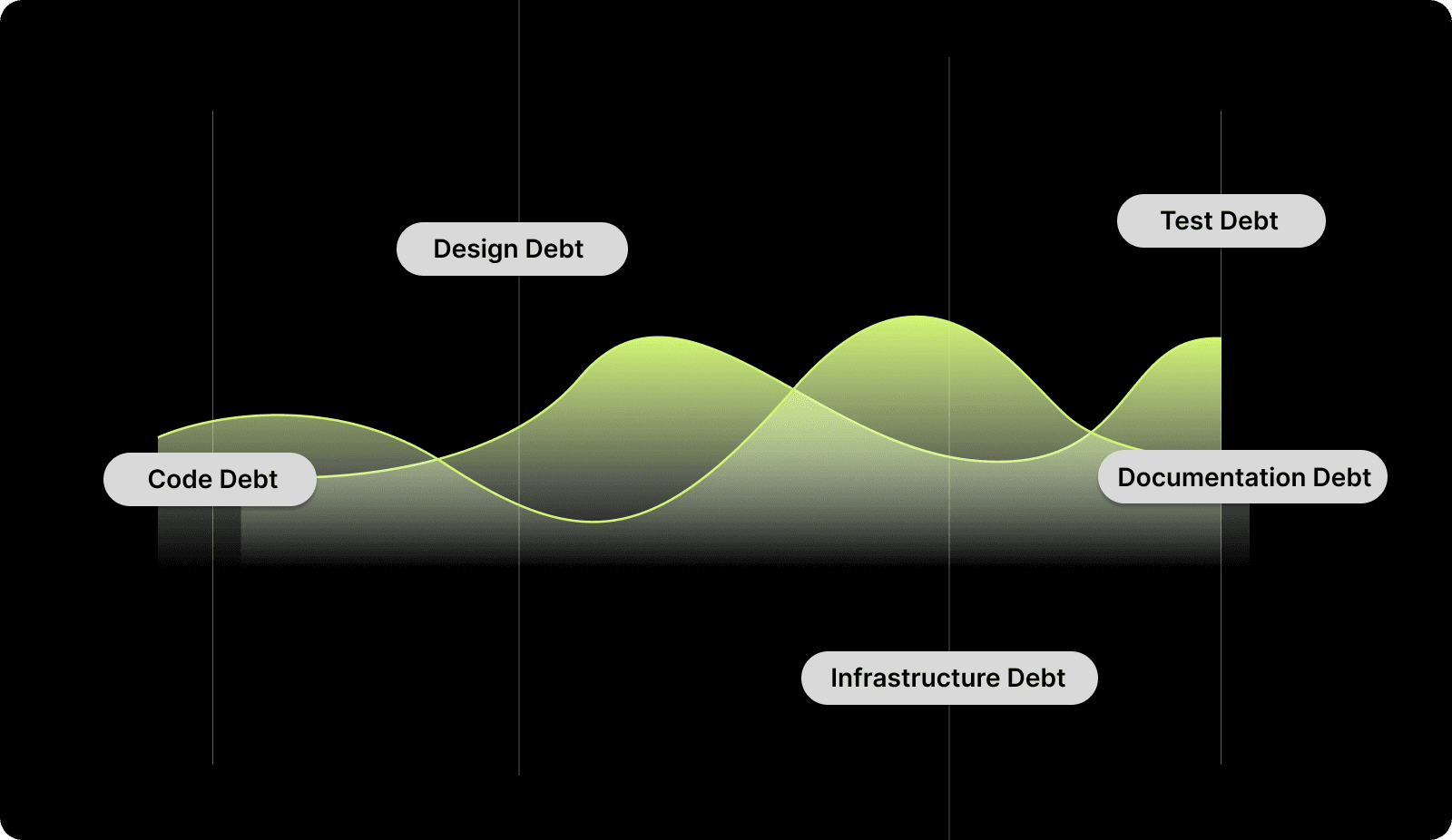
Technical debt can take various forms, each affecting your codebase in different ways. Understanding these types helps you prioritize which areas to address first to avoid bigger issues down the line.
Types of Technical Debt

1. Code Debt

This type of debt arises from poor coding practices or shortcuts, such as hardcoding values or failing to refactor. It leads to a codebase that is hard to maintain and scale.

Example: Hardcoded database URLs that require constant updates and become difficult to manage over time.

2. Design Debt

Design decisions made without considering future scalability or flexibility result in design debt. A rigid architecture can lead to increased complexity as the system grows.

Example: A monolithic design that makes it difficult to add new features or scale as the system evolves.

3. Test Debt

This type of debt results from insufficient or missing tests. Lack of automated tests or poor coverage increases the risk of bugs and makes it harder to ensure code quality.

Example: Skipping unit tests or leaving critical functionality untested increases the likelihood of undetected issues.

4. Documentation Debt

When documentation is incomplete or outdated, it becomes harder for you to understand and work with the codebase. This type of debt leads to miscommunication and inefficiency.

Example: Missing or unclear comments in code, making it difficult for new developers to understand existing code.

5. Infrastructure Debt

Outdated or inefficient infrastructure can limit scalability and increase maintenance costs, contributing to technical debt.

Example: Using legacy servers or non-scalable databases that slow down development and increase operational costs.

Knowing the various types of technical debt allows you to prioritize where to address the most critical issues first. It ensures that your codebase remains healthy and maintainable.

Also Read: What Are DORA Metrics and Why Do They Matter?

Key Strategies to Reduce Technical Debt

Now that we’ve identified what technical debt is, its causes, and its types, let’s dive into some actionable strategies you can use. These strategies proactively reduce tech debt and improve your software development practices.

1. Implement a Proactive Refactoring Strategy

Proactively refactoring your codebase is essential to ensure it remains maintainable and scalable. Regular refactoring prevents the accumulation of technical debt by addressing inefficient or outdated code early, ensuring long-term code quality.

What you can do next:

  • Allocate 10-20% of each sprint solely for refactoring legacy code, making it a continuous focus.

  • Conduct targeted code reviews to identify inefficiencies or inconsistencies in the system.

  • Use a “refactoring backlog” to track areas that require attention during future sprints.

  • Take the help of static analysis tools to automatically flag areas needing refactoring.

What You’ll Achieve:

  • The system will remain agile and adaptable to future changes.

  • Reduces the risk of technical debt accumulating over time.

  • Improves overall developer productivity by minimizing the effort spent on maintaining outdated code.

2. Integrate Continuous Integration/Continuous Deployment (CI/CD)

CI/CD automates your builds, tests, and deployments, providing a continuous feedback loop that helps catch technical debt early. With CI/CD in place, every piece of code is automatically tested for performance, bugs, and security issues, reducing the risk of tech debt accumulating.

What you can do next:

  • Integrate refactoring tasks directly into your CI/CD pipeline so each pull request undergoes an automatic refactor check.

  • Ensure that code quality checks are a mandatory step before code gets merged into the main branch.

  • Automate performance testing to catch potential inefficiencies during the integration phase.

  • Use CI/CD tools to track your technical debt metrics and identify areas needing attention.

What You’ll Achieve:

  • Technical debt will be prevented from accumulating by catching issues in real-time.

  • Ensures continuous, consistent code quality throughout the development process.

  • Reduces manual intervention, allowing you to focus on innovation rather than maintenance.

3. Establish Clear Coding Standards & Guidelines

Having clear, consistent coding standards ensures that everyone in your development team writes code that follows the same structure and practices. This prevents issues that can contribute to technical debt, such as inconsistencies or difficult-to-maintain code.

What you can do next:

  • Use automated tools like ESLint, Prettier, or Entelligence AI to enforce coding standards and improve code quality by reducing human error.

  • Create a shared coding style guide and ask all developers in your team to follow it to maintain uniformity.

  • Implement code review processes that focus not just on functionality, but also on adherence to coding standards.

  • Set up pre-commit hooks to automatically check for style violations before code is pushed.

What You’ll Achieve:

  • The codebase gets more maintainable and reduces inconsistencies.

  • Encourages cleaner, more readable code that is easier to understand and modify.

  • Prevents poor practices from becoming ingrained, reducing the risk of accumulating technical debt.

4. Adopt Modular Design & Tech Stacks

A modular design enables your team to build and maintain different system components independently. Adopting a microservices architecture or similar modular design allows for flexibility and scalability, reducing the risk of widespread tech debt in large, monolithic applications.

What you can do next:

  • Break down monolithic applications into smaller microservices to increase maintainability and scalability.

  • Define clear APIs between services to ensure they can function independently and be refactored easily.

  • Use containerization technologies like Docker to isolate services and make them more portable.

  • Regularly evaluate and refactor modules to ensure they remain efficient and adaptable.

What You’ll Achieve:

  • Updating and modifying components becomes easier without affecting the entire system.

  • Enables faster iterations and reduces the complexity that can lead to tech debt.

  • Isolates changes, so debt is localized to specific modules, preventing it from affecting the whole system.

5. Automate Testing to Catch Issues Early

Automated testing ensures that new code doesn’t introduce bugs or regressions into the system. By implementing a robust testing strategy, teams can catch issues early, preventing them from becoming larger problems and reducing the accumulation of technical debt.

What you can do next:

  • Implement unit tests, integration tests, and end-to-end tests for critical paths of your application.

  • Use testing frameworks like Jest or Cypress to automate test execution as part of your CI/CD pipeline.

  • Make sure tests are comprehensive and cover edge cases to prevent hidden issues.

  • Set up automated regression testing to ensure new code doesn’t break existing functionality.

What You’ll Achieve:

  • Catching issues early prevents them from escalating into costly problems.

  • Reduces the need for extensive manual testing and boosts development.

  • Improves code reliability, reducing future maintenance needs and tech debt.

6. Create a “Quality First” Development Culture

Shifting your team's mindset to prioritize quality from the outset ensures that your code is maintainable and scalable. This proactive approach reduces the long-term risk of technical debt by embedding quality assurance at every stage of development.

What you can do next:

  • Promote peer programming to encourage collaboration and knowledge sharing, leading to higher-quality code.

  • Make code reviews an essential part of your workflow to identify potential issues before they escalate.

  • Introduce test-driven development (TDD) practices to ensure code quality before writing features.

  • Build a culture where quality is everyone’s responsibility, not just QA’s.

What You’ll Achieve:

  • Prevents future rework, saving time and resources in the long run.

  • Encourages ownership of code quality across all team members.

  • Ensures that technical debt is minimized by producing clean, reliable code from the start.

7. Use Agile Practices to Track and Prioritize Technical Debt

Incorporate technical debt management into your Agile processes by tracking it in your backlog and prioritizing it during sprint planning. This keeps technical debt visible and ensures that it’s addressed regularly alongside new features and bugs.

What you can do next:

  • Add technical debt items to your Agile boards and treat them like any other backlog item.

  • Regularly evaluate and prioritize tech debt during sprint planning sessions to ensure it doesn't get overlooked.

  • Encourage your team to set aside time for each sprint to address tech debt, preventing it from piling up.

  • Use burndown charts to track the progress of reducing technical debt over time.

What You’ll Achieve:

  • Technical debt is never ignored or neglected, keeping it in check.

  • Promotes continuous improvement by making debt reduction a part of every sprint.

  • Allows the team to maintain focus on both delivering features and maintaining code quality.

By implementing these strategic practices, you’ll not only reduce technical debt but also build a sustainable development process that supports faster, more efficient, and high-quality software delivery for the long term.

Preventing Technical Debt in Future Projects

The best way to deal with technical debt is to prevent it from accumulating in the first place. In this section, we’ll cover strategies to ensure that future projects don’t fall into the same trap.
Preventing Technical Debt in Future Projects

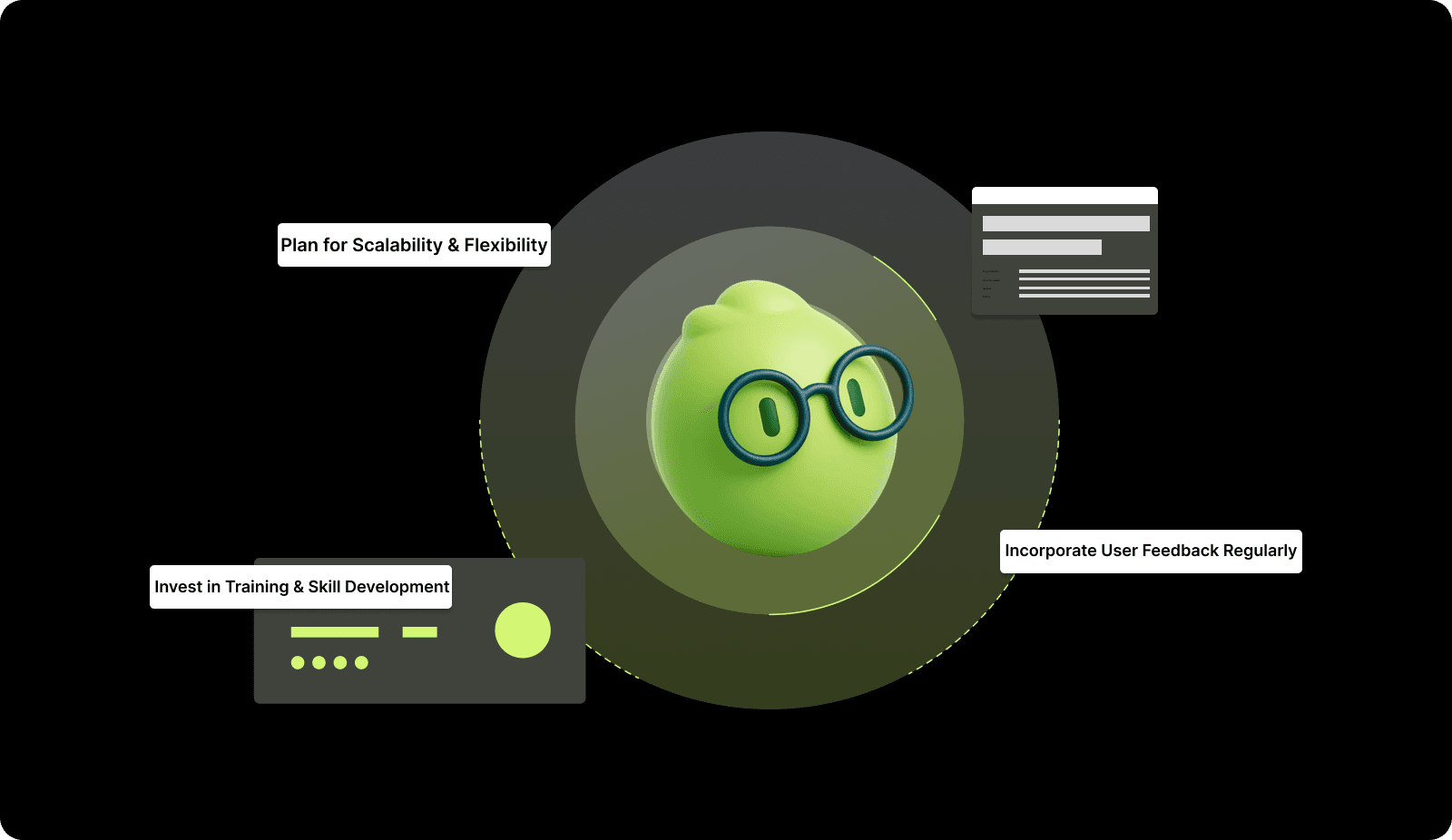
1. Plan for Scalability and Flexibility

Designing with scalability in mind ensures your system grows without major changes. Cloud-native architectures and containerization allow seamless adaptability, preventing costly overhauls and minimizing tech debt as your business expands.

By planning ahead, you avoid rework and enable smooth transitions. This keeps your infrastructure scalable, reducing friction and technical debt while supporting long-term growth.

2. Incorporate User Feedback Regularly

Regular user feedback ensures you focus on building what truly matters. By aligning with real customer needs, you avoid wasted effort and unnecessary features that add to technical debt.

Incorporating feedback early lets you adjust quickly and stay on track. This reduces rework and keeps your codebase lean, preventing future complexities and debt.

3. Invest in Training and Skill Development

Ongoing training keeps your team sharp and aligned with industry trends. When you and your entire team are well-versed in tools like CI/CD and microservices, you write more efficient, debt-free code.

Well-trained teams spot problems early and make smarter choices. This proactive approach reduces the risk of technical debt and ensures the codebase remains clean and maintainable.

By proactively planning for scalability, incorporating user feedback, and investing in continuous training, you lay the foundation for sustainable development. This way, technical debt can be minimized and future projects remain efficient and adaptable.

Also Read: Understanding Velocity in Agile Software Development

Advanced Tips for CTOs & Engineering Leaders

As a CTO or engineering leader, managing technical debt is an important responsibility. Thus, following the tips below can directly affect your team’s efficiency, product quality, and the long-term success of your organization.

1. Align Technical Debt Reduction with Business Goals

CTOs and engineering leaders must ensure that tech debt reduction is aligned with business objectives. Prioritize debt that directly impacts scalability, product delivery speed, and customer experience to drive the most value.

Example: For instance, focus on reducing debt in critical areas such as performance or security that directly affect time-to-market or customer satisfaction.

2. Define a Structured Debt Repayment Plan

Develop a clear, structured plan to address technical debt incrementally. Break down the repayment process into phases, tackling high-impact debt first and ensuring progress without overwhelming the team.

Example: Start by resolving performance bottlenecks, then gradually address legacy code refactoring to maintain momentum without disrupting ongoing development.

In short, you must strategically align tech debt reduction with your business objectives and adopt a phased repayment plan. This way, you ensure that technical debt becomes a manageable asset rather than a roadblock to growth.

How Entelligence AI Tackles Technical Debt?

Technical debt often hampers development, introduces risks, and creates friction between teams. As speed takes precedence, neglected refactoring and inconsistent code quality build up, stalling progress and complicating debt management.

Entelligence AI is the perfect solution for you. By combining code quality, security, and team insights, our platform enables continuous debt reduction and helps maintain a clean, scalable codebase.

Key Features of Entelligence AI include: 

  • AI-Powered Code Reviews: Automatically detect bugs, anti-patterns, and inefficiencies during the development cycle to minimize future rework.

  • Continuous Security Monitoring: Identify vulnerabilities early, preventing them from becoming technical debt and adding unnecessary risk.

  • Team Insights & Sprint Assessments: Enhance visibility into progress and blockers, enabling quick resolutions and ensuring a steady flow of quality code.

  • Automated Documentation: Keep documentation automatically updated, eliminating manual work and ensuring alignment between code and docs.

With Entelligence AI, technical debt becomes an ongoing, manageable process, allowing your team to focus on delivering high-quality software without the overhead.

Conclusion

Technical debt is an ongoing challenge, but with the right strategies, it can be reduced and managed effectively. By incorporating proactive measures like refactoring, automated testing, and continuous integration, you can create a cleaner, more efficient codebase. Addressing technical debt not only improves software quality but also enhances team productivity and speeds up release cycles.

Entelligence AI provides real-time insights, automated code reviews, and proactive refactoring tools, helping teams reduce technical debt before it affects their progress. Our platform ensures that your code remains scalable, maintainable, and of the highest quality.

Book a demo today to see how Entelligence AI can help your team simplify development, improve code quality, and minimize technical debt.

FAQs

1. What’s the impact of technical debt on development speed?

Technical debt slows development by creating hidden inefficiencies in the codebase. It complicates implementing new features, fixing bugs, and maintaining the system, ultimately decreasing development velocity and increasing long-term costs for your engineering team.

2. How can automated testing reduce technical debt?

Automated testing identifies issues early, preventing them from becoming bigger problems later. It ensures that code changes are validated, reduces manual testing efforts, and promotes continuous delivery, ultimately reducing the accumulation of technical debt.

3. What are the signs that your project is suffering from technical debt?

Signs of technical debt include frequent bugs, slow delivery, poor code quality, and difficulty in adding features. These occur when shortcuts, poor design, or lack of refactoring cause long-term maintainability issues.

4. Can agile practices really help with reducing tech debt?

Yes. Agile practices like sprint planning, continuous integration, and regular retrospectives help track and prioritize tech debt, making it visible. Agile creates a culture where debt is tackled incrementally, preventing it from overwhelming your team.

5. Is technical debt always bad?

Not necessarily. Some technical debt is a strategic decision, such as temporary shortcuts for meeting deadlines. However, it's essential to manage it carefully, ensuring it doesn’t accumulate and slow down progress or system growth in the long run.

Technical debt is something you might not notice right away, but it can quickly become a major problem as your project grows. When you or your team take shortcuts to meet deadlines or push out features, these quick fixes can pile up and cause long-term issues. 

Over time, this debt can slow down progress, create inefficiencies, and make maintenance harder. The cost of ignoring technical debt is staggering. In fact, technical debt costs the US an estimated $2.41 trillion annually, with $1.52 trillion needed just to address the backlog. 

This mounting burden affects productivity, software quality, and the ability to innovate. As businesses push for faster delivery, addressing technical debt should be a priority to ensure long-term success and efficiency.

In this article, we’ll explore practical strategies to proactively reduce technical debt, improve your codebase’s maintainability, and enhance development velocity.

Overview

  • Technical debt builds from shortcuts and poor design, making your code harder to maintain and scale.

  • Proactively refactoring, automating tests, and using CI/CD helps reduce debt and improve efficiency.

  • Designing for scalability upfront prevents future technical debt by making your system adaptable.

  • Regular user feedback and team training keep development focused, reducing unnecessary complexity.

  • Managing technical debt through agile processes ensures issues are tackled incrementally without overwhelming your cycles.

What Is Technical Debt?

Technical debt refers to the long-term costs incurred by choosing easy, quick solutions rather than a more sustainable approach. While this might provide short-term relief, it makes the codebase harder to maintain, scale, and improve in the future. Technical debt results from shortcuts, poor design decisions, and unaddressed technical issues that accumulate over time. 

For example, a developer chooses to hardcode a database URL to meet a deadline, knowing that it will need to be updated later. This "quick fix" saves time now but adds future complexity, resulting in technical debt.

Also Read: What is a Secure Code Review? Process and Best Practices

Causes & Types of Technical Debt

Understanding the causes and types of technical debt is essential for creating a strategy to address it. This section breaks down how tech debt builds over time, various causes, and the types of debt that can impact your codebase.

How Technical Debt Builds Over Time?

Technical debt accumulates gradually and can become harder to manage if not addressed early. Let’s look at how different factors contribute to the buildup of debt over time.

  • Release Cycles: When developers like you rush to ship code, you prioritize speed over quality. This leads to quick fixes and shortcuts that may work temporarily but result in significant technical debt over time.

  • Legacy Code: Older systems often require frequent updates and fixes to stay functional. As technology scales, systems designed with outdated practices or technologies become harder to maintain, increasing technical debt.

  • Changing Requirements: As projects grow, requirements change, but the codebase isn’t always refactored accordingly. This leads to inefficient, tangled code that becomes more difficult to maintain as the project grows.

Understanding how technical debt builds over time helps you address its root causes before it becomes a larger issue in the development process.

Common Causes of Technical Debt

Several common causes contribute to the accumulation of technical debt. Identifying these causes early on is essential to mitigating their impact on your codebase and team productivity.

  • Pressure to Ship Quickly: Tight deadlines often push teams to take shortcuts, resulting in technical debt. While speed is necessary, neglecting technical debt as it arises only leads to a bigger burden later.

  • Lack of Clear Coding Standards: Without consistent coding practices across teams, code can become inconsistent and harder to maintain. Inconsistent codebases increase technical debt as modifications become more complex and error-prone.

  • Poor Documentation and Test Coverage: When documentation is incomplete or test coverage is lacking, it becomes harder for developers like you to understand and update the code. This leads to bugs going unnoticed and tech debt building up over time.

  • Outdated Technology Stacks: Using outdated tools or technologies often results in compatibility issues, inefficiencies, and a lack of scalability. As your codebase grows, these outdated technologies increase maintenance costs and technical debt.

Recognizing and addressing these common causes allows you to prevent unnecessary accumulation of technical debt and maintain a cleaner, more efficient development process.

Also Read: Best Practices for Effective Code Review: A Complete Guide

Types of Technical Debt

Technical debt can take various forms, each affecting your codebase in different ways. Understanding these types helps you prioritize which areas to address first to avoid bigger issues down the line.

Types of Technical Debt

1. Code Debt

This type of debt arises from poor coding practices or shortcuts, such as hardcoding values or failing to refactor. It leads to a codebase that is hard to maintain and scale.

Example: Hardcoded database URLs that require constant updates and become difficult to manage over time.

2. Design Debt

Design decisions made without considering future scalability or flexibility result in design debt. A rigid architecture can lead to increased complexity as the system grows.

Example: A monolithic design that makes it difficult to add new features or scale as the system evolves.

3. Test Debt

This type of debt results from insufficient or missing tests. Lack of automated tests or poor coverage increases the risk of bugs and makes it harder to ensure code quality.

Example: Skipping unit tests or leaving critical functionality untested increases the likelihood of undetected issues.

4. Documentation Debt

When documentation is incomplete or outdated, it becomes harder for you to understand and work with the codebase. This type of debt leads to miscommunication and inefficiency.

Example: Missing or unclear comments in code, making it difficult for new developers to understand existing code.

5. Infrastructure Debt

Outdated or inefficient infrastructure can limit scalability and increase maintenance costs, contributing to technical debt.

Example: Using legacy servers or non-scalable databases that slow down development and increase operational costs.

Knowing the various types of technical debt allows you to prioritize where to address the most critical issues first. It ensures that your codebase remains healthy and maintainable.

Also Read: What Are DORA Metrics and Why Do They Matter?

Key Strategies to Reduce Technical Debt

Now that we’ve identified what technical debt is, its causes, and its types, let’s dive into some actionable strategies you can use. These strategies proactively reduce tech debt and improve your software development practices.

1. Implement a Proactive Refactoring Strategy

Proactively refactoring your codebase is essential to ensure it remains maintainable and scalable. Regular refactoring prevents the accumulation of technical debt by addressing inefficient or outdated code early, ensuring long-term code quality.

What you can do next:

  • Allocate 10-20% of each sprint solely for refactoring legacy code, making it a continuous focus.

  • Conduct targeted code reviews to identify inefficiencies or inconsistencies in the system.

  • Use a “refactoring backlog” to track areas that require attention during future sprints.

  • Take the help of static analysis tools to automatically flag areas needing refactoring.

What You’ll Achieve:

  • The system will remain agile and adaptable to future changes.

  • Reduces the risk of technical debt accumulating over time.

  • Improves overall developer productivity by minimizing the effort spent on maintaining outdated code.

2. Integrate Continuous Integration/Continuous Deployment (CI/CD)

CI/CD automates your builds, tests, and deployments, providing a continuous feedback loop that helps catch technical debt early. With CI/CD in place, every piece of code is automatically tested for performance, bugs, and security issues, reducing the risk of tech debt accumulating.

What you can do next:

  • Integrate refactoring tasks directly into your CI/CD pipeline so each pull request undergoes an automatic refactor check.

  • Ensure that code quality checks are a mandatory step before code gets merged into the main branch.

  • Automate performance testing to catch potential inefficiencies during the integration phase.

  • Use CI/CD tools to track your technical debt metrics and identify areas needing attention.

What You’ll Achieve:

  • Technical debt will be prevented from accumulating by catching issues in real-time.

  • Ensures continuous, consistent code quality throughout the development process.

  • Reduces manual intervention, allowing you to focus on innovation rather than maintenance.

3. Establish Clear Coding Standards & Guidelines

Having clear, consistent coding standards ensures that everyone in your development team writes code that follows the same structure and practices. This prevents issues that can contribute to technical debt, such as inconsistencies or difficult-to-maintain code.

What you can do next:

  • Use automated tools like ESLint, Prettier, or Entelligence AI to enforce coding standards and improve code quality by reducing human error.

  • Create a shared coding style guide and ask all developers in your team to follow it to maintain uniformity.

  • Implement code review processes that focus not just on functionality, but also on adherence to coding standards.

  • Set up pre-commit hooks to automatically check for style violations before code is pushed.

What You’ll Achieve:

  • The codebase gets more maintainable and reduces inconsistencies.

  • Encourages cleaner, more readable code that is easier to understand and modify.

  • Prevents poor practices from becoming ingrained, reducing the risk of accumulating technical debt.

4. Adopt Modular Design & Tech Stacks

A modular design enables your team to build and maintain different system components independently. Adopting a microservices architecture or similar modular design allows for flexibility and scalability, reducing the risk of widespread tech debt in large, monolithic applications.

What you can do next:

  • Break down monolithic applications into smaller microservices to increase maintainability and scalability.

  • Define clear APIs between services to ensure they can function independently and be refactored easily.

  • Use containerization technologies like Docker to isolate services and make them more portable.

  • Regularly evaluate and refactor modules to ensure they remain efficient and adaptable.

What You’ll Achieve:

  • Updating and modifying components becomes easier without affecting the entire system.

  • Enables faster iterations and reduces the complexity that can lead to tech debt.

  • Isolates changes, so debt is localized to specific modules, preventing it from affecting the whole system.

5. Automate Testing to Catch Issues Early

Automated testing ensures that new code doesn’t introduce bugs or regressions into the system. By implementing a robust testing strategy, teams can catch issues early, preventing them from becoming larger problems and reducing the accumulation of technical debt.

What you can do next:

  • Implement unit tests, integration tests, and end-to-end tests for critical paths of your application.

  • Use testing frameworks like Jest or Cypress to automate test execution as part of your CI/CD pipeline.

  • Make sure tests are comprehensive and cover edge cases to prevent hidden issues.

  • Set up automated regression testing to ensure new code doesn’t break existing functionality.

What You’ll Achieve:

  • Catching issues early prevents them from escalating into costly problems.

  • Reduces the need for extensive manual testing and boosts development.

  • Improves code reliability, reducing future maintenance needs and tech debt.

6. Create a “Quality First” Development Culture

Shifting your team's mindset to prioritize quality from the outset ensures that your code is maintainable and scalable. This proactive approach reduces the long-term risk of technical debt by embedding quality assurance at every stage of development.

What you can do next:

  • Promote peer programming to encourage collaboration and knowledge sharing, leading to higher-quality code.

  • Make code reviews an essential part of your workflow to identify potential issues before they escalate.

  • Introduce test-driven development (TDD) practices to ensure code quality before writing features.

  • Build a culture where quality is everyone’s responsibility, not just QA’s.

What You’ll Achieve:

  • Prevents future rework, saving time and resources in the long run.

  • Encourages ownership of code quality across all team members.

  • Ensures that technical debt is minimized by producing clean, reliable code from the start.

7. Use Agile Practices to Track and Prioritize Technical Debt

Incorporate technical debt management into your Agile processes by tracking it in your backlog and prioritizing it during sprint planning. This keeps technical debt visible and ensures that it’s addressed regularly alongside new features and bugs.

What you can do next:

  • Add technical debt items to your Agile boards and treat them like any other backlog item.

  • Regularly evaluate and prioritize tech debt during sprint planning sessions to ensure it doesn't get overlooked.

  • Encourage your team to set aside time for each sprint to address tech debt, preventing it from piling up.

  • Use burndown charts to track the progress of reducing technical debt over time.

What You’ll Achieve:

  • Technical debt is never ignored or neglected, keeping it in check.

  • Promotes continuous improvement by making debt reduction a part of every sprint.

  • Allows the team to maintain focus on both delivering features and maintaining code quality.

By implementing these strategic practices, you’ll not only reduce technical debt but also build a sustainable development process that supports faster, more efficient, and high-quality software delivery for the long term.

Preventing Technical Debt in Future Projects

The best way to deal with technical debt is to prevent it from accumulating in the first place. In this section, we’ll cover strategies to ensure that future projects don’t fall into the same trap.

Preventing Technical Debt in Future Projects

1. Plan for Scalability and Flexibility

Designing with scalability in mind ensures your system grows without major changes. Cloud-native architectures and containerization allow seamless adaptability, preventing costly overhauls and minimizing tech debt as your business expands.

By planning ahead, you avoid rework and enable smooth transitions. This keeps your infrastructure scalable, reducing friction and technical debt while supporting long-term growth.

2. Incorporate User Feedback Regularly

Regular user feedback ensures you focus on building what truly matters. By aligning with real customer needs, you avoid wasted effort and unnecessary features that add to technical debt.

Incorporating feedback early lets you adjust quickly and stay on track. This reduces rework and keeps your codebase lean, preventing future complexities and debt.

3. Invest in Training and Skill Development

Ongoing training keeps your team sharp and aligned with industry trends. When you and your entire team are well-versed in tools like CI/CD and microservices, you write more efficient, debt-free code.

Well-trained teams spot problems early and make smarter choices. This proactive approach reduces the risk of technical debt and ensures the codebase remains clean and maintainable.

By proactively planning for scalability, incorporating user feedback, and investing in continuous training, you lay the foundation for sustainable development. This way, technical debt can be minimized and future projects remain efficient and adaptable.

Also Read: Understanding Velocity in Agile Software Development

Advanced Tips for CTOs & Engineering Leaders

As a CTO or engineering leader, managing technical debt is an important responsibility. Thus, following the tips below can directly affect your team’s efficiency, product quality, and the long-term success of your organization.

1. Align Technical Debt Reduction with Business Goals

CTOs and engineering leaders must ensure that tech debt reduction is aligned with business objectives. Prioritize debt that directly impacts scalability, product delivery speed, and customer experience to drive the most value.

Example: For instance, focus on reducing debt in critical areas such as performance or security that directly affect time-to-market or customer satisfaction.

2. Define a Structured Debt Repayment Plan

Develop a clear, structured plan to address technical debt incrementally. Break down the repayment process into phases, tackling high-impact debt first and ensuring progress without overwhelming the team.

Example: Start by resolving performance bottlenecks, then gradually address legacy code refactoring to maintain momentum without disrupting ongoing development.

In short, you must strategically align tech debt reduction with your business objectives and adopt a phased repayment plan. This way, you ensure that technical debt becomes a manageable asset rather than a roadblock to growth.

How Entelligence AI Tackles Technical Debt?

Technical debt often hampers development, introduces risks, and creates friction between teams. As speed takes precedence, neglected refactoring and inconsistent code quality build up, stalling progress and complicating debt management.

Entelligence AI is the perfect solution for you. By combining code quality, security, and team insights, our platform enables continuous debt reduction and helps maintain a clean, scalable codebase.

Key Features of Entelligence AI include: 

  • AI-Powered Code Reviews: Automatically detect bugs, anti-patterns, and inefficiencies during the development cycle to minimize future rework.

  • Continuous Security Monitoring: Identify vulnerabilities early, preventing them from becoming technical debt and adding unnecessary risk.

  • Team Insights & Sprint Assessments: Enhance visibility into progress and blockers, enabling quick resolutions and ensuring a steady flow of quality code.

  • Automated Documentation: Keep documentation automatically updated, eliminating manual work and ensuring alignment between code and docs.

With Entelligence AI, technical debt becomes an ongoing, manageable process, allowing your team to focus on delivering high-quality software without the overhead.

Conclusion

Technical debt is an ongoing challenge, but with the right strategies, it can be reduced and managed effectively. By incorporating proactive measures like refactoring, automated testing, and continuous integration, you can create a cleaner, more efficient codebase. Addressing technical debt not only improves software quality but also enhances team productivity and speeds up release cycles.

Entelligence AI provides real-time insights, automated code reviews, and proactive refactoring tools, helping teams reduce technical debt before it affects their progress. Our platform ensures that your code remains scalable, maintainable, and of the highest quality.

Book a demo today to see how Entelligence AI can help your team simplify development, improve code quality, and minimize technical debt.

FAQs

1. What’s the impact of technical debt on development speed?

Technical debt slows development by creating hidden inefficiencies in the codebase. It complicates implementing new features, fixing bugs, and maintaining the system, ultimately decreasing development velocity and increasing long-term costs for your engineering team.

2. How can automated testing reduce technical debt?

Automated testing identifies issues early, preventing them from becoming bigger problems later. It ensures that code changes are validated, reduces manual testing efforts, and promotes continuous delivery, ultimately reducing the accumulation of technical debt.

3. What are the signs that your project is suffering from technical debt?

Signs of technical debt include frequent bugs, slow delivery, poor code quality, and difficulty in adding features. These occur when shortcuts, poor design, or lack of refactoring cause long-term maintainability issues.

4. Can agile practices really help with reducing tech debt?

Yes. Agile practices like sprint planning, continuous integration, and regular retrospectives help track and prioritize tech debt, making it visible. Agile creates a culture where debt is tackled incrementally, preventing it from overwhelming your team.

5. Is technical debt always bad?

Not necessarily. Some technical debt is a strategic decision, such as temporary shortcuts for meeting deadlines. However, it's essential to manage it carefully, ensuring it doesn’t accumulate and slow down progress or system growth in the long run.
Your questions,

Your questions,

Decoded

Decoded

What makes Entelligence different?

Unlike tools that just flag issues, Entelligence understands context — detecting, explaining, and fixing problems while aligning with product goals and team standards.

Does it replace human reviewers?

No. It amplifies them. Entelligence handles repetitive checks so engineers can focus on architecture, logic, and innovation.

What tools does it integrate with?

It fits right into your workflow — GitHub, GitLab, Jira, Linear, Slack, and more. No setup friction, no context switching.

How secure is my code?

Your code never leaves your environment. Entelligence uses encrypted processing and complies with top industry standards like SOC 2 and HIPAA.

Who is it built for?

Fast-growing engineering teams that want to scale quality, security, and velocity without adding more manual reviews or overhead.

What makes Entelligence different?
Does it replace human reviewers?
What tools does it integrate with?
How secure is my code?
Who is it built for?

Drop your details

We’ll reach out before your next deploy hits production.

We’ll reach out before your next deploy hits production.