8 Top OKR Software for Engineering Teams in 2025

Nov 27, 2025

Nov 27, 2025

Aligning engineering teams with company goals is often a challenge, especially when you’re juggling multiple tasks and deadlines. Without the right tools, it’s easy to lose track of key priorities. 

This is where objectives and key results (OKR) software can make a big difference. These tools help teams stay focused, track their progress, and align their efforts with broader business objectives. 

In fact, the OKR software market is expected to grow to $2.98 billion in 2029 at a compound annual growth rate (CAGR) of 16.9%, reflecting how crucial these tools have become for teams. With more engineering teams implementing OKRs, the right software can drive greater performance and enhance alignment with company objectives.

In this blog, we will discuss the best OKR software for engineering teams in 2025, key features to look for, and tips on selecting the right tool for your team.

Overview

  • OKR software helps engineering teams align daily tasks with strategic business goals, providing clarity and visibility into progress.

  • Effective OKR tools integrate with development platforms like GitHub and Jira, ensuring seamless workflow alignment.

  • The best OKR software for engineering teams includes real-time tracking and analytics to address blockers and adjust quickly.

  • Goal alignment should align from individual to team to organizational levels, ensuring everyone is working toward the same objectives.

  • Customization and ease of use are important for engineering teams, allowing them to adapt OKR software to their specific development workflows without added overhead.

What is OKR Software and Why Does it Matter for Engineering?

OKR software is a goal-setting tool designed to help you align your efforts with your strategic objectives. For your engineering team, it’s essential to track progress on specific goals like code quality, sprint velocity, and deployment success. OKR software not only helps you set objectives but also ensures every action aligns with broader company goals.

Additionally, this software helps your team measure success against key metrics, making sure that individual tasks, team goals, and company objectives are aligned. In short, it provides clarity, visibility, and actionable insights, enabling better decision-making and performance tracking.
Also Read: Decoding Source Code Management Tools: Types, Benefits, & Top Picks

Typical Architecture of OKR Tools vs Engineering-Specific Needs

Unlike generic OKR tools, you need solutions that integrate seamlessly with your development tools like GitHub and Jira. Engineering-specific OKR software aligns your workflows directly with business goals, offering real-time data and deeper visibility into your team's progress.

Below is a comparison to highlight the differences between generic OKR tools and those tailored for engineering teams:

Feature

Generic OKR Tools

Engineering-Specific OKR Tools

Integration with Dev Tools

Limited integration, often external

Seamless integration with GitHub, Jira, CI/CD

Real-Time Data

Delayed updates, less actionable insights

Real-time tracking of key results, progress

Goal Alignment

High-level goal setting, basic tracking

Direct link between engineering tasks and OKRs

Customization for Engineering

Limited to general workflows

Customizable to engineering-specific processes

The right OKR software for engineering teams must provide both real-time insights and smooth integration with existing development tools to ensure maximum developer productivity and alignment with business goals.

What Are the Key Features of OKR Software?

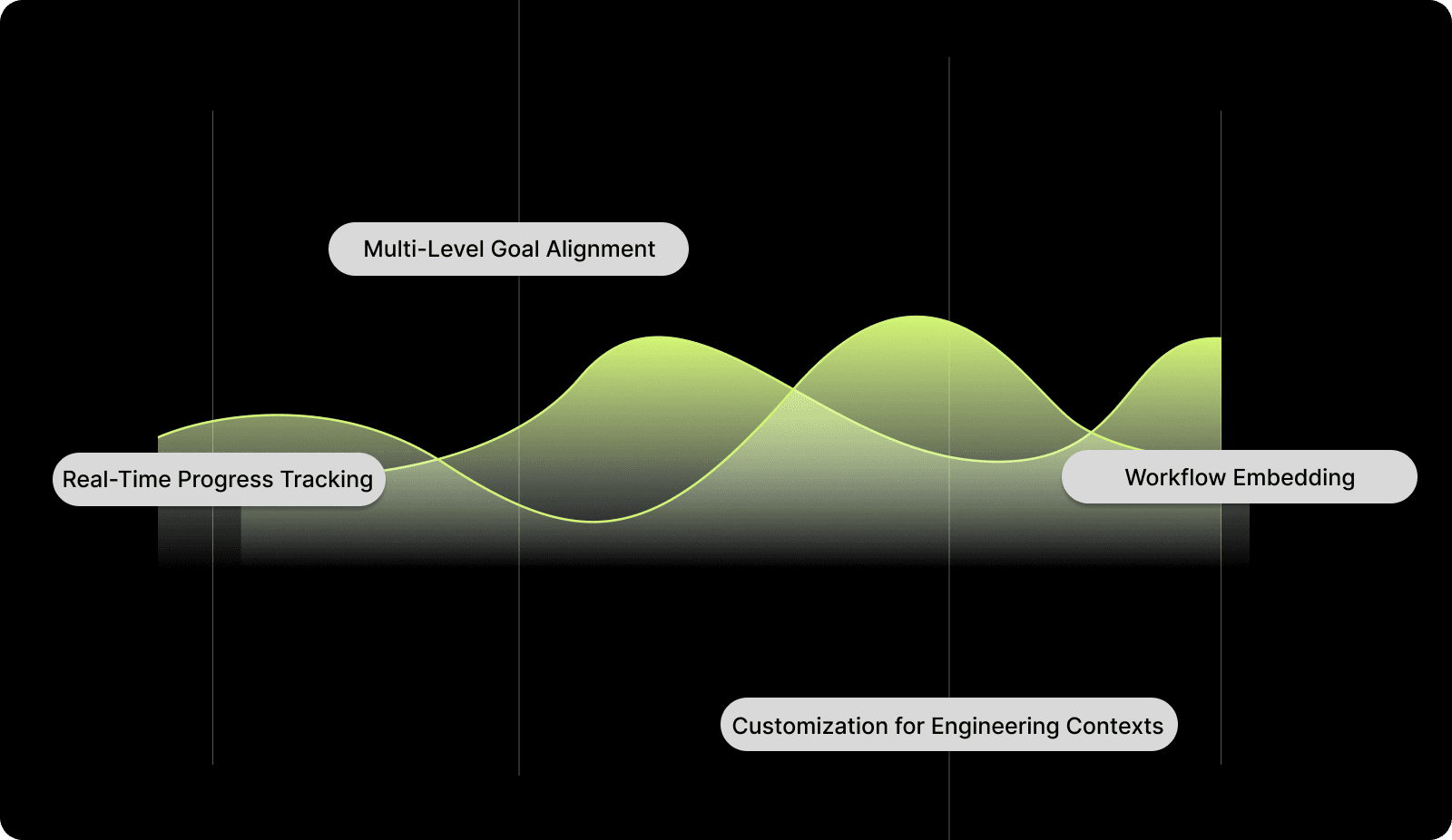
OKR software should offer features that go beyond simple goal tracking. The best tools encourage engineering teams to work efficiently while staying aligned with their company’s strategy. Here’s what the features must include:
What Are the Key Features of OKR Software?

1. Real-Time Progress Tracking & Analytics

These tools must track your progress live and surface blockers immediately. This allows you to adjust quickly and keep your momentum, ensuring that your team stays on track without waiting for delayed updates or reports.

2. Multi-Level Goal Alignment (Individual → Team → Org)

Align your individual and team goals with broader company objectives. This ensures you and your team are all working toward the same outcomes, driving better performance and motivation by clearly connecting daily tasks to the organization’s success.

3. Integrations & Workflow Embedding

Make sure the OKR software integrates seamlessly with your existing engineering tools like IDEs, CI/CD systems, and project management platforms. This reduces friction, automates task tracking, and keeps you productive by eliminating manual updates.

4. Usability & Customization for Engineering Contexts

The best OKR software should be intuitive for you and your developers. It should also be customizable to fit your specific engineering workflows, reducing overhead and ensuring you can focus on coding and achieving goals.

The right OKR software helps you bridge the gap between strategic alignment and daily operations, ensuring that your team’s work directly drives the broader organizational goals, keeping you focused and productive. On that note, let’s have a look at the top 8 OKRs software for Engineering Teams in 2025.

Top 8 Best Project Management Software for Engineering OKRs

Here are the best OKR software tools that are specifically tailored for engineering teams, starting with Entelligence AI, a solution designed for developers and engineering teams.

1. Entelligence AI 

Entelligence AI is an engineering-first productivity suite that integrates OKRs directly with your development workflows. It helps track progress, boost team performance, and align engineering tasks with business goals. Beyond just tracking OKRs, it provides real-time insights and simplifies code reviews, sprint health, and team productivity.

Key Features of Entelligence AI:

  • Real-Time OKR Tracking and Analytics: Track OKRs live, surfacing blockers and progress updates, so your team stays aligned with business goals in real-time.

  • Seamless Integration with Development Tools: Easily integrates with GitHub, Jira, and CI/CD pipelines, ensuring your OKRs align with engineering workflows and project milestones.

  • Sprint Health Dashboards: Visualize sprint performance and OKR progress, identifying blockers early and ensuring your team remains on track to achieve objectives.

  • Context-Aware Code Reviews: Provides contextual feedback on code changes, ensuring they contribute to engineering OKRs and improving code quality before submission.

  • Team Performance Insights: Gain real-time performance insights, tracking productivity and goal achievement across teams, with data-driven decision-making support.

Pricing: Starts at $40 / Month
2. Profit.co

Profit.co offers a robust OKR framework with strong tracking and alignment features. It integrates well with tools like Jira and GitHub, making it a solid choice for engineering teams. 

Key Features of Profit.co:

  • Goal Cascading and Alignment: Align individual, team, and organizational goals seamlessly, ensuring that objectives are communicated clearly at all levels, enhancing team focus.

  • Integration with Development Tools: Profit.co integrates smoothly with tools like Jira, GitHub, and others. This makes it easy to track engineering progress alongside OKRs, ensuring no disconnect between development work and company goals.

  • Progress Tracking and Analytics: Provides real-time progress tracking, coupled with visual analytics to help monitor performance, ensuring OKRs remain aligned with business objectives and drive actionable insights.

  • Customizable Dashboards: Offers customizable dashboards, allowing teams to track key results, identify blockers, and align their efforts with strategic goals, improving decision-making.

Limitations: Profit.co's complexity can overwhelm new users, with multiple dashboards requiring a steep learning curve. The platform’s integrations are limited, and it lacks bulk import options, making setup slower for engineering teams.

Pricing: Custom Pricing

3. Quantive

Quantive delivers comprehensive OKR tracking and analytics, offering deep insights into team progress and organizational transparency. It's particularly suited for larger engineering teams, but its extensive features may be overwhelming for smaller teams seeking a simpler, more straightforward solution.

Key Features of Quantive:

  • Comprehensive OKR Tracking: Track goals across multiple levels, individual, team, and organizational, providing visibility into every stage of progress to ensure alignment across the entire team.

  • Advanced Analytics & Reporting: Quantive offers advanced analytics and reporting features that help track key results and provide detailed insights. It enables data-driven decision-making for teams.

  • Customizable Reporting Features: The platform allows customization of reports, giving teams the ability to focus on the most relevant metrics. It ensures that the goals stay aligned with the company’s strategy.

  • Goal Alignment Across Teams: Quantive ensures that every team remains aligned with the organization's larger goals. This creates better collaboration and transparent communication across departments.

Limitations: Quantive is feature-rich, but its complexity can overwhelm smaller teams. It lacks file attachments and OKR grading, and customization options are limited, making it less flexible for engineering teams with unique workflows.

Pricing: Custom Pricing

4. Weekdone

Weekdone is a straightforward OKR tool focused on ease of use and simple progress tracking. It’s ideal for smaller engineering teams looking for a no-frills, easy-to-implement solution, though it lacks the advanced integration features required by larger or more complex teams.

Key Features of Weekdone:

  • Ease of Use & Setup: Weekdone’s simple implementation and user-friendly interface allow teams to quickly set up and start tracking OKRs, making it easy for small teams to begin tracking progress.

  • Weekly Check-ins: The platform enables teams to conduct weekly check-ins, helping monitor progress and make necessary adjustments, ensuring continuous alignment with objectives.

  • Goal Setting & Alignment: Weekdone provides easy goal setting and alignment across individuals and teams, ensuring that everyone is working toward the same objectives, creating transparency and focus.

  • Basic Analytics & Reporting: Weekdone offers straightforward analytics, ideal for small teams.

Limitations: Weekdone is ideal for smaller teams but lacks advanced integrations and deeper customization options. Users may find its reporting features limited and less effective for larger teams or more complex OKR structures.

Pricing: Starts at $108 per month for 4-10 people

Also Read: How AI Transforms Code Comments and Documentation?

5. Asana

Asana’s visual task management system is paired with OKR functionality, making it suitable for engineering teams needing both project management and OKR tracking. However, it’s not as deeply integrated into development workflows as other OKR tools designed specifically for engineering teams.

Key Features of Asana:

  • Visual Task Management: Asana offers visual task management with boards and timelines. It helps teams manage OKRs and daily tasks in an organized manner.

  • Customizable Workflows: The platform lets you create customizable workflows. This allows your team to align daily tasks with broader business goals and key results.

  • OKR Tracking: Asana’s OKR functionality enables goal setting and tracking, but it may lack deeper integrations needed for engineering-specific workflows.

  • Collaboration Features: Asana includes file-sharing and team collaboration tools, which promote communication and ensure alignment across your team when working toward OKRs.

Limitations: Asana’s OKR features are less developed compared to dedicated tools. It lacks deep integration with development tools like GitHub or Jira, making it less suited for engineering teams that need advanced task‑goal alignment.

Pricing: Starts at US$10.99 per user

6. Lattice

Lattice is a people management platform with strong OKR capabilities, ideal for teams needing OKR tracking alongside performance reviews and feedback loops. However, engineering teams may find its task management features more suitable for HR purposes than for technical workflows.

Key Features of Lattice:

  • OKR Tracking and Alignment: Track OKRs and gain visibility into both individual and team performance, facilitating alignment across the organization.

  • Performance Reviews: Lattice integrates performance reviews with OKRs, helping HR and engineering managers link performance directly to professional growth and OKR outcomes.

  • 360-Degree Feedback: Includes 360-degree feedback loops to evaluate performance, particularly useful for team leaders and HR professionals.

  • Engagement Surveys: Offers employee engagement surveys, providing valuable insights into team morale and helping to improve performance toward OKRs.

Limitations: Lattice’s OKR tracking is better suited for HR teams, with limited task management features for engineering workflows. It also has mobile app limitations and struggles with calendar integrations, reducing its effectiveness for real-time collaboration.

Pricing: Starts at 11 seat/month

7. Monday.com

Monday.com offers a visual project management interface with customizable workflows, ideal for engineering teams needing task management. While it provides OKR tracking, it focuses more on task management and lacks deep integration with development workflows.

Key Features of Monday.com:

  • Visual Project Management Interface: Organize tasks using visual boards and timelines, which help your team stay on track with both OKRs and project deadlines.

  • Customizable Workflows: Tailor workflows to your team’s unique processes and integrate with other tools to improve project and OKR management efficiency.

  • OKR Tracking: Monday.com enables OKR tracking, but it may not offer the advanced development tool integration that engineering teams often require.

  • Automation Features: Automate repetitive tasks and reminders to keep your team focused on achieving key results without being bogged down by manual processes.

Limitations: While strong in project management, Monday.com’s OKR features are basic. It lacks advanced integration with development tools and focuses more on task management than goal alignment, limiting its effectiveness for engineering teams.

Pricing: Starts at $ 12 per seat/month

8. Betterworks

Betterworks offers enterprise-level OKR and performance management tools with advanced reporting and alignment features. It’s ideal for large engineering teams but may be too complex for smaller teams or those looking for a simpler solution.

Key Features of Betterworks:

  • Enterprise-Grade OKR Management: Betterworks provides a robust OKR and performance management tool. It is specifically designed for large-scale enterprises with multiple teams.

  • Advanced Reporting: The platform offers advanced reporting and analytics, allowing your team to track OKR progress in depth and make data-driven decisions.

  • OKR Alignment Across Teams: Betterworks ensures that organizational goals break down to team and individual OKRs, promoting alignment across departments.

  • Performance Management Integration: Integrates OKR tracking with performance management, enabling you to tie results directly to team performance, progress, and compensation.

Limitations: Betterworks is complex and better suited for large enterprises. Smaller teams may struggle with its setup and customization. Its advanced reporting requires manual workarounds, which can be time-consuming and cumbersome for fast-moving teams.

Pricing: Custom Pricing

This sums up the key OKR software tools available for engineering teams in 2025. Each tool offers unique features, from comprehensive tracking and integration with development workflows to simplicity and ease of use. Now let's have a look at how you can choose the right tool.

How to Choose the Right OKR Software?

Choosing the right OKR software for your engineering team involves considering how the tool fits within your current workflows and team needs. Below are some key factors to evaluate when selecting the best solution for your team.
How to Choose the Right OKR Software

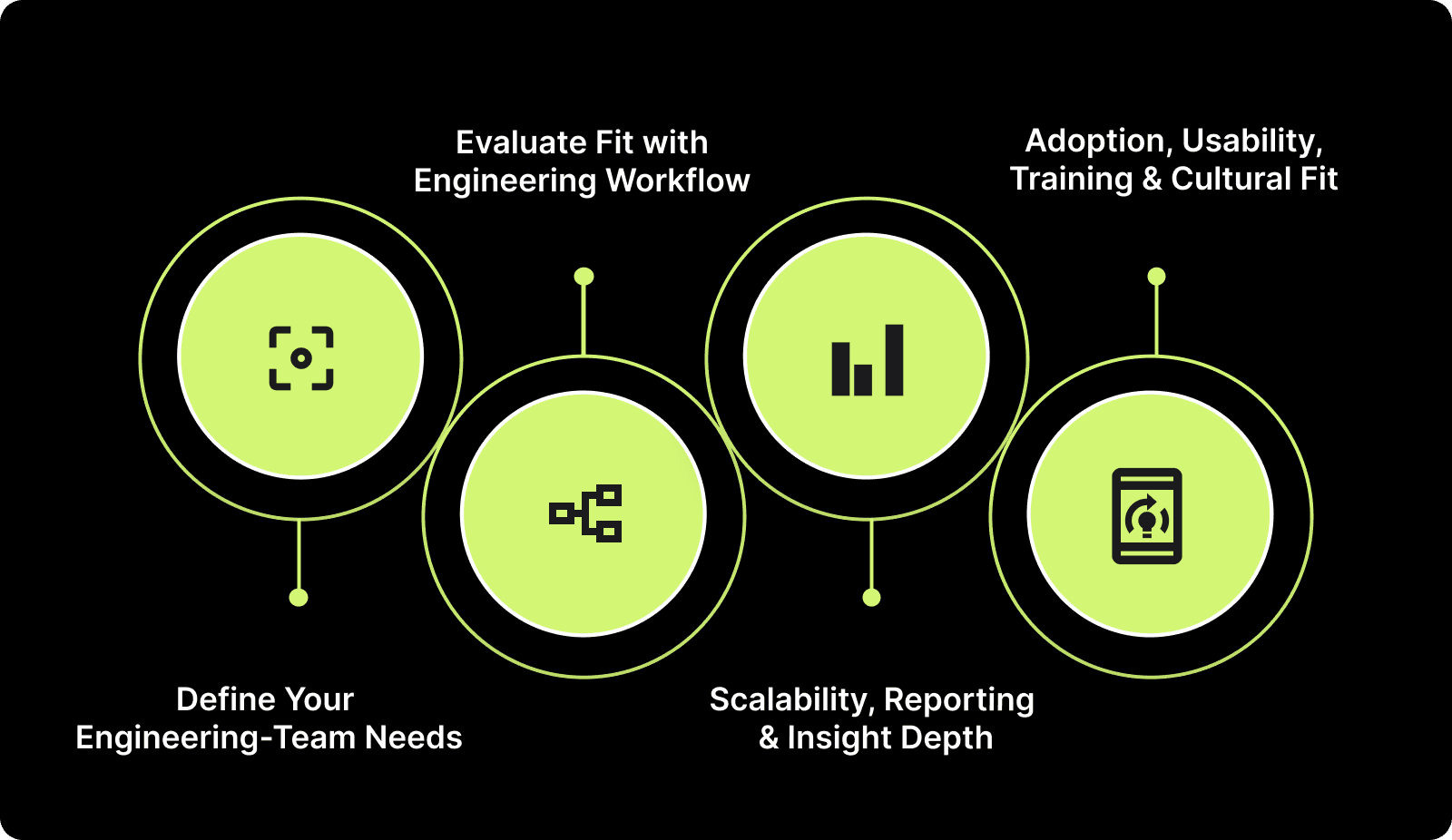
1. Define Your Engineering-Team Needs & OKR Maturity

Start by assessing your team’s current workflow and OKR maturity. If you're new to OKRs, select a tool that’s easy to implement. If you have established OKR practices, opt for more robust software that scales with your team's growth.

2. Evaluate Fit with Engineering Workflow & Tooling

Choose OKR software that seamlessly integrates with your existing tools like GitHub, Jira, or your CI/CD pipeline. This will reduce friction, allow for automatic tracking of key metrics, and ensure a smooth workflow across your team’s daily operations.

3. Scalability, Reporting & Insight Depth

When selecting OKR software, ensure it can scale with your team's growth. Larger teams may require advanced reporting features, such as real-time data insights, while smaller teams might prefer simplicity and ease of use to avoid unnecessary complexity.

4. Adoption, Usability, Training & Cultural Fit

Consider the software's learning curve and how quickly your engineers can adopt it. Choose a solution that integrates into your team’s culture and minimizes overhead, allowing your engineers to focus on their tasks while still tracking progress toward OKRs.

Choosing the right OKR software is about finding the perfect balance between your engineering team’s workflow, scalability, and ease of use. With the right tool, your team can stay aligned, reduce friction, and drive real results towards your goals.
Also Read: The Design Evolution of Entelligence AI

Conclusion

Having the right OKR software for your engineering team in 2025 is essential for aligning daily tasks with company goals. The ideal tool should provide real-time progress tracking, integrate seamlessly with your development tools, and help your team stay focused on achieving key results.

Entelligence AI offers a comprehensive solution tailored to engineering teams, combining OKR tracking with sprint health monitoring and code reviews. Its integration with tools like GitHub and Jira ensures your team remains productive and aligned with organizational objectives.

Start optimizing your team’s OKRs today with Entelligence AI. Schedule a demo to see how our platform can help you align your engineering goals, improve productivity, and drive measurable results for your team.

FAQs

Q. What is the best OKR software for small businesses?

The best OKR software for small businesses should offer an intuitive interface, affordable pricing, and simple setup. It should also provide clear goal tracking, alignment across teams, and ensure scalability as your business grows.

Q. How do I ensure my engineering team fully adopts OKR software?

To ensure full adoption, provide clear training on how the software integrates with your team’s daily workflows. Choose a tool that minimizes overhead, offers user-friendly interfaces, and continuously aligns OKRs with team objectives. Regular check-ins and feedback sessions will help your team stay on track and engaged.

Q. What are the benefits of the best project management software for engineering OKRs?

The best project management software for engineering OKRs helps align engineering tasks with company goals. It offers real-time tracking, smooth integration with tools like GitHub and Jira, and visibility into sprint performance to ensure goals are met.

Q. How long does it take to implement OKR software in an engineering team?

Implementing OKR software in an engineering team typically takes a few weeks to set up. The timeline depends on team size, goal complexity, and software integration, but the process is managed with the right tool for development workflows.

Q. Can OKR software integrate with tools like GitHub and Jira for engineering workflows?

Yes, top OKR software integrates seamlessly with tools like GitHub and Jira. This integration ensures smooth tracking of code commits, pull requests, and sprint metrics, making it easier to align engineering efforts with broader organizational objectives.
Aligning engineering teams with company goals is often a challenge, especially when you’re juggling multiple tasks and deadlines. Without the right tools, it’s easy to lose track of key priorities. 

This is where objectives and key results (OKR) software can make a big difference. These tools help teams stay focused, track their progress, and align their efforts with broader business objectives. 

In fact, the OKR software market is expected to grow to $2.98 billion in 2029 at a compound annual growth rate (CAGR) of 16.9%, reflecting how crucial these tools have become for teams. With more engineering teams implementing OKRs, the right software can drive greater performance and enhance alignment with company objectives.

In this blog, we will discuss the best OKR software for engineering teams in 2025, key features to look for, and tips on selecting the right tool for your team.

Overview

  • OKR software helps engineering teams align daily tasks with strategic business goals, providing clarity and visibility into progress.

  • Effective OKR tools integrate with development platforms like GitHub and Jira, ensuring seamless workflow alignment.

  • The best OKR software for engineering teams includes real-time tracking and analytics to address blockers and adjust quickly.

  • Goal alignment should align from individual to team to organizational levels, ensuring everyone is working toward the same objectives.

  • Customization and ease of use are important for engineering teams, allowing them to adapt OKR software to their specific development workflows without added overhead.

What is OKR Software and Why Does it Matter for Engineering?

OKR software is a goal-setting tool designed to help you align your efforts with your strategic objectives. For your engineering team, it’s essential to track progress on specific goals like code quality, sprint velocity, and deployment success. OKR software not only helps you set objectives but also ensures every action aligns with broader company goals.

Additionally, this software helps your team measure success against key metrics, making sure that individual tasks, team goals, and company objectives are aligned. In short, it provides clarity, visibility, and actionable insights, enabling better decision-making and performance tracking.

Also Read: Decoding Source Code Management Tools: Types, Benefits, & Top Picks

Typical Architecture of OKR Tools vs Engineering-Specific Needs

Unlike generic OKR tools, you need solutions that integrate seamlessly with your development tools like GitHub and Jira. Engineering-specific OKR software aligns your workflows directly with business goals, offering real-time data and deeper visibility into your team's progress.

Below is a comparison to highlight the differences between generic OKR tools and those tailored for engineering teams:

Feature

Generic OKR Tools

Engineering-Specific OKR Tools

Integration with Dev Tools

Limited integration, often external

Seamless integration with GitHub, Jira, CI/CD

Real-Time Data

Delayed updates, less actionable insights

Real-time tracking of key results, progress

Goal Alignment

High-level goal setting, basic tracking

Direct link between engineering tasks and OKRs

Customization for Engineering

Limited to general workflows

Customizable to engineering-specific processes

The right OKR software for engineering teams must provide both real-time insights and smooth integration with existing development tools to ensure maximum developer productivity and alignment with business goals.

What Are the Key Features of OKR Software?

OKR software should offer features that go beyond simple goal tracking. The best tools encourage engineering teams to work efficiently while staying aligned with their company’s strategy. Here’s what the features must include:

What Are the Key Features of OKR Software?

1. Real-Time Progress Tracking & Analytics

These tools must track your progress live and surface blockers immediately. This allows you to adjust quickly and keep your momentum, ensuring that your team stays on track without waiting for delayed updates or reports.

2. Multi-Level Goal Alignment (Individual → Team → Org)

Align your individual and team goals with broader company objectives. This ensures you and your team are all working toward the same outcomes, driving better performance and motivation by clearly connecting daily tasks to the organization’s success.

3. Integrations & Workflow Embedding

Make sure the OKR software integrates seamlessly with your existing engineering tools like IDEs, CI/CD systems, and project management platforms. This reduces friction, automates task tracking, and keeps you productive by eliminating manual updates.

4. Usability & Customization for Engineering Contexts

The best OKR software should be intuitive for you and your developers. It should also be customizable to fit your specific engineering workflows, reducing overhead and ensuring you can focus on coding and achieving goals.

The right OKR software helps you bridge the gap between strategic alignment and daily operations, ensuring that your team’s work directly drives the broader organizational goals, keeping you focused and productive. On that note, let’s have a look at the top 8 OKRs software for Engineering Teams in 2025.

Top 8 Best Project Management Software for Engineering OKRs

Here are the best OKR software tools that are specifically tailored for engineering teams, starting with Entelligence AI, a solution designed for developers and engineering teams.

1. Entelligence AI 

Entelligence AI is an engineering-first productivity suite that integrates OKRs directly with your development workflows. It helps track progress, boost team performance, and align engineering tasks with business goals. Beyond just tracking OKRs, it provides real-time insights and simplifies code reviews, sprint health, and team productivity.

Key Features of Entelligence AI:

  • Real-Time OKR Tracking and Analytics: Track OKRs live, surfacing blockers and progress updates, so your team stays aligned with business goals in real-time.

  • Seamless Integration with Development Tools: Easily integrates with GitHub, Jira, and CI/CD pipelines, ensuring your OKRs align with engineering workflows and project milestones.

  • Sprint Health Dashboards: Visualize sprint performance and OKR progress, identifying blockers early and ensuring your team remains on track to achieve objectives.

  • Context-Aware Code Reviews: Provides contextual feedback on code changes, ensuring they contribute to engineering OKRs and improving code quality before submission.

  • Team Performance Insights: Gain real-time performance insights, tracking productivity and goal achievement across teams, with data-driven decision-making support.

Pricing: Starts at $40 / Month

2. Profit.co

Profit.co offers a robust OKR framework with strong tracking and alignment features. It integrates well with tools like Jira and GitHub, making it a solid choice for engineering teams. 

Key Features of Profit.co:

  • Goal Cascading and Alignment: Align individual, team, and organizational goals seamlessly, ensuring that objectives are communicated clearly at all levels, enhancing team focus.

  • Integration with Development Tools: Profit.co integrates smoothly with tools like Jira, GitHub, and others. This makes it easy to track engineering progress alongside OKRs, ensuring no disconnect between development work and company goals.

  • Progress Tracking and Analytics: Provides real-time progress tracking, coupled with visual analytics to help monitor performance, ensuring OKRs remain aligned with business objectives and drive actionable insights.

  • Customizable Dashboards: Offers customizable dashboards, allowing teams to track key results, identify blockers, and align their efforts with strategic goals, improving decision-making.

Limitations: Profit.co's complexity can overwhelm new users, with multiple dashboards requiring a steep learning curve. The platform’s integrations are limited, and it lacks bulk import options, making setup slower for engineering teams.

Pricing: Custom Pricing

3. Quantive

Quantive delivers comprehensive OKR tracking and analytics, offering deep insights into team progress and organizational transparency. It's particularly suited for larger engineering teams, but its extensive features may be overwhelming for smaller teams seeking a simpler, more straightforward solution.

Key Features of Quantive:

  • Comprehensive OKR Tracking: Track goals across multiple levels, individual, team, and organizational, providing visibility into every stage of progress to ensure alignment across the entire team.

  • Advanced Analytics & Reporting: Quantive offers advanced analytics and reporting features that help track key results and provide detailed insights. It enables data-driven decision-making for teams.

  • Customizable Reporting Features: The platform allows customization of reports, giving teams the ability to focus on the most relevant metrics. It ensures that the goals stay aligned with the company’s strategy.

  • Goal Alignment Across Teams: Quantive ensures that every team remains aligned with the organization's larger goals. This creates better collaboration and transparent communication across departments.

Limitations: Quantive is feature-rich, but its complexity can overwhelm smaller teams. It lacks file attachments and OKR grading, and customization options are limited, making it less flexible for engineering teams with unique workflows.

Pricing: Custom Pricing

4. Weekdone

Weekdone is a straightforward OKR tool focused on ease of use and simple progress tracking. It’s ideal for smaller engineering teams looking for a no-frills, easy-to-implement solution, though it lacks the advanced integration features required by larger or more complex teams.

Key Features of Weekdone:

  • Ease of Use & Setup: Weekdone’s simple implementation and user-friendly interface allow teams to quickly set up and start tracking OKRs, making it easy for small teams to begin tracking progress.

  • Weekly Check-ins: The platform enables teams to conduct weekly check-ins, helping monitor progress and make necessary adjustments, ensuring continuous alignment with objectives.

  • Goal Setting & Alignment: Weekdone provides easy goal setting and alignment across individuals and teams, ensuring that everyone is working toward the same objectives, creating transparency and focus.

  • Basic Analytics & Reporting: Weekdone offers straightforward analytics, ideal for small teams.

Limitations: Weekdone is ideal for smaller teams but lacks advanced integrations and deeper customization options. Users may find its reporting features limited and less effective for larger teams or more complex OKR structures.

Pricing: Starts at $108 per month for 4-10 people

Also Read: How AI Transforms Code Comments and Documentation?

5. Asana

Asana’s visual task management system is paired with OKR functionality, making it suitable for engineering teams needing both project management and OKR tracking. However, it’s not as deeply integrated into development workflows as other OKR tools designed specifically for engineering teams.

Key Features of Asana:

  • Visual Task Management: Asana offers visual task management with boards and timelines. It helps teams manage OKRs and daily tasks in an organized manner.

  • Customizable Workflows: The platform lets you create customizable workflows. This allows your team to align daily tasks with broader business goals and key results.

  • OKR Tracking: Asana’s OKR functionality enables goal setting and tracking, but it may lack deeper integrations needed for engineering-specific workflows.

  • Collaboration Features: Asana includes file-sharing and team collaboration tools, which promote communication and ensure alignment across your team when working toward OKRs.

Limitations: Asana’s OKR features are less developed compared to dedicated tools. It lacks deep integration with development tools like GitHub or Jira, making it less suited for engineering teams that need advanced task‑goal alignment.

Pricing: Starts at US$10.99 per user

6. Lattice

Lattice is a people management platform with strong OKR capabilities, ideal for teams needing OKR tracking alongside performance reviews and feedback loops. However, engineering teams may find its task management features more suitable for HR purposes than for technical workflows.

Key Features of Lattice:

  • OKR Tracking and Alignment: Track OKRs and gain visibility into both individual and team performance, facilitating alignment across the organization.

  • Performance Reviews: Lattice integrates performance reviews with OKRs, helping HR and engineering managers link performance directly to professional growth and OKR outcomes.

  • 360-Degree Feedback: Includes 360-degree feedback loops to evaluate performance, particularly useful for team leaders and HR professionals.

  • Engagement Surveys: Offers employee engagement surveys, providing valuable insights into team morale and helping to improve performance toward OKRs.

Limitations: Lattice’s OKR tracking is better suited for HR teams, with limited task management features for engineering workflows. It also has mobile app limitations and struggles with calendar integrations, reducing its effectiveness for real-time collaboration.

Pricing: Starts at 11 seat/month

7. Monday.com

Monday.com offers a visual project management interface with customizable workflows, ideal for engineering teams needing task management. While it provides OKR tracking, it focuses more on task management and lacks deep integration with development workflows.

Key Features of Monday.com:

  • Visual Project Management Interface: Organize tasks using visual boards and timelines, which help your team stay on track with both OKRs and project deadlines.

  • Customizable Workflows: Tailor workflows to your team’s unique processes and integrate with other tools to improve project and OKR management efficiency.

  • OKR Tracking: Monday.com enables OKR tracking, but it may not offer the advanced development tool integration that engineering teams often require.

  • Automation Features: Automate repetitive tasks and reminders to keep your team focused on achieving key results without being bogged down by manual processes.

Limitations: While strong in project management, Monday.com’s OKR features are basic. It lacks advanced integration with development tools and focuses more on task management than goal alignment, limiting its effectiveness for engineering teams.

Pricing: Starts at $ 12 per seat/month

8. Betterworks

Betterworks offers enterprise-level OKR and performance management tools with advanced reporting and alignment features. It’s ideal for large engineering teams but may be too complex for smaller teams or those looking for a simpler solution.

Key Features of Betterworks:

  • Enterprise-Grade OKR Management: Betterworks provides a robust OKR and performance management tool. It is specifically designed for large-scale enterprises with multiple teams.

  • Advanced Reporting: The platform offers advanced reporting and analytics, allowing your team to track OKR progress in depth and make data-driven decisions.

  • OKR Alignment Across Teams: Betterworks ensures that organizational goals break down to team and individual OKRs, promoting alignment across departments.

  • Performance Management Integration: Integrates OKR tracking with performance management, enabling you to tie results directly to team performance, progress, and compensation.

Limitations: Betterworks is complex and better suited for large enterprises. Smaller teams may struggle with its setup and customization. Its advanced reporting requires manual workarounds, which can be time-consuming and cumbersome for fast-moving teams.

Pricing: Custom Pricing

This sums up the key OKR software tools available for engineering teams in 2025. Each tool offers unique features, from comprehensive tracking and integration with development workflows to simplicity and ease of use. Now let's have a look at how you can choose the right tool.

How to Choose the Right OKR Software?

Choosing the right OKR software for your engineering team involves considering how the tool fits within your current workflows and team needs. Below are some key factors to evaluate when selecting the best solution for your team.

How to Choose the Right OKR Software

1. Define Your Engineering-Team Needs & OKR Maturity

Start by assessing your team’s current workflow and OKR maturity. If you're new to OKRs, select a tool that’s easy to implement. If you have established OKR practices, opt for more robust software that scales with your team's growth.

2. Evaluate Fit with Engineering Workflow & Tooling

Choose OKR software that seamlessly integrates with your existing tools like GitHub, Jira, or your CI/CD pipeline. This will reduce friction, allow for automatic tracking of key metrics, and ensure a smooth workflow across your team’s daily operations.

3. Scalability, Reporting & Insight Depth

When selecting OKR software, ensure it can scale with your team's growth. Larger teams may require advanced reporting features, such as real-time data insights, while smaller teams might prefer simplicity and ease of use to avoid unnecessary complexity.

4. Adoption, Usability, Training & Cultural Fit

Consider the software's learning curve and how quickly your engineers can adopt it. Choose a solution that integrates into your team’s culture and minimizes overhead, allowing your engineers to focus on their tasks while still tracking progress toward OKRs.

Choosing the right OKR software is about finding the perfect balance between your engineering team’s workflow, scalability, and ease of use. With the right tool, your team can stay aligned, reduce friction, and drive real results towards your goals.

Also Read: The Design Evolution of Entelligence AI

Conclusion

Having the right OKR software for your engineering team in 2025 is essential for aligning daily tasks with company goals. The ideal tool should provide real-time progress tracking, integrate seamlessly with your development tools, and help your team stay focused on achieving key results.

Entelligence AI offers a comprehensive solution tailored to engineering teams, combining OKR tracking with sprint health monitoring and code reviews. Its integration with tools like GitHub and Jira ensures your team remains productive and aligned with organizational objectives.

Start optimizing your team’s OKRs today with Entelligence AI. Schedule a demo to see how our platform can help you align your engineering goals, improve productivity, and drive measurable results for your team.

FAQs

Q. What is the best OKR software for small businesses?

The best OKR software for small businesses should offer an intuitive interface, affordable pricing, and simple setup. It should also provide clear goal tracking, alignment across teams, and ensure scalability as your business grows.

Q. How do I ensure my engineering team fully adopts OKR software?

To ensure full adoption, provide clear training on how the software integrates with your team’s daily workflows. Choose a tool that minimizes overhead, offers user-friendly interfaces, and continuously aligns OKRs with team objectives. Regular check-ins and feedback sessions will help your team stay on track and engaged.

Q. What are the benefits of the best project management software for engineering OKRs?

The best project management software for engineering OKRs helps align engineering tasks with company goals. It offers real-time tracking, smooth integration with tools like GitHub and Jira, and visibility into sprint performance to ensure goals are met.

Q. How long does it take to implement OKR software in an engineering team?

Implementing OKR software in an engineering team typically takes a few weeks to set up. The timeline depends on team size, goal complexity, and software integration, but the process is managed with the right tool for development workflows.

Q. Can OKR software integrate with tools like GitHub and Jira for engineering workflows?

Yes, top OKR software integrates seamlessly with tools like GitHub and Jira. This integration ensures smooth tracking of code commits, pull requests, and sprint metrics, making it easier to align engineering efforts with broader organizational objectives.
Your questions,

Your questions,

Decoded

Decoded

What makes Entelligence different?

Unlike tools that just flag issues, Entelligence understands context — detecting, explaining, and fixing problems while aligning with product goals and team standards.

Does it replace human reviewers?

No. It amplifies them. Entelligence handles repetitive checks so engineers can focus on architecture, logic, and innovation.

What tools does it integrate with?

It fits right into your workflow — GitHub, GitLab, Jira, Linear, Slack, and more. No setup friction, no context switching.

How secure is my code?

Your code never leaves your environment. Entelligence uses encrypted processing and complies with top industry standards like SOC 2 and HIPAA.

Who is it built for?

Fast-growing engineering teams that want to scale quality, security, and velocity without adding more manual reviews or overhead.

What makes Entelligence different?
Does it replace human reviewers?
What tools does it integrate with?
How secure is my code?
Who is it built for?

Drop your details

We’ll reach out before your next deploy hits production.

We’ll reach out before your next deploy hits production.