What Should You Know About Engineering Intelligence Platforms?
Dec 1, 2025
Dec 1, 2025
Imagine being able to identify bottlenecks and inefficiencies in your development process before they become a problem. Engineering intelligence platforms make this possible by providing real-time data and actionable insights that optimize workflows, boost productivity, and improve code quality.
With these tools, developers and engineering leaders like you can make faster, smarter decisions, automating repetitive tasks and simplifying the entire software development lifecycle. In fact, the global engineering intelligence platform market is expected to reach USD 10.2 billion by 2033, reflecting the growing adoption of these powerful solutions.
As more organizations adopt these platforms, they’re seeing significant improvements in both speed and quality. This makes engineering intelligence an important part of the modern development process.
In this blog, we will explore what engineering intelligence platforms are, their key benefits, and take a look at some of the leading platforms available today to help optimize your development process.
Overview
Engineering intelligence platforms optimize software development by providing real-time data to identify bottlenecks and improve efficiency.
They automate tasks like code reviews and documentation, allowing you to focus on higher-priority work.
With data-driven insights, these tools enable faster issue resolution and continuous performance improvement.
Integration with existing tools offers a unified view, improving collaboration and resource allocation.
Real-time feedback and predictive analytics help maintain quality and drive better development outcomes.
What are Engineering Intelligence Platforms?
Engineering intelligence platforms use real-time data to help you manage your software development more effectively. They gather insights from your existing tools and processes, helping you identify where things are slowing down or getting stuck.
With these insights, you can make better decisions, fix issues faster, and focus on getting high-quality code out the door.
By using data-driven recommendations, you can also improve your workflow, boost productivity, and maintain the quality of your work without the guesswork.
Also Read: How Entelligence AI Empowers Engineering Leaders to Drive High-Performing Teams
What are the Key Benefits of Engineering Intelligence?
Engineering intelligence platforms simplify workflows, improve decision-making, and boost product development. By offering data-driven insights, these platforms help you enhance performance, eliminate inefficiencies, and ensure better outcomes with faster delivery and higher quality.
1. Improved Engineering Efficiency
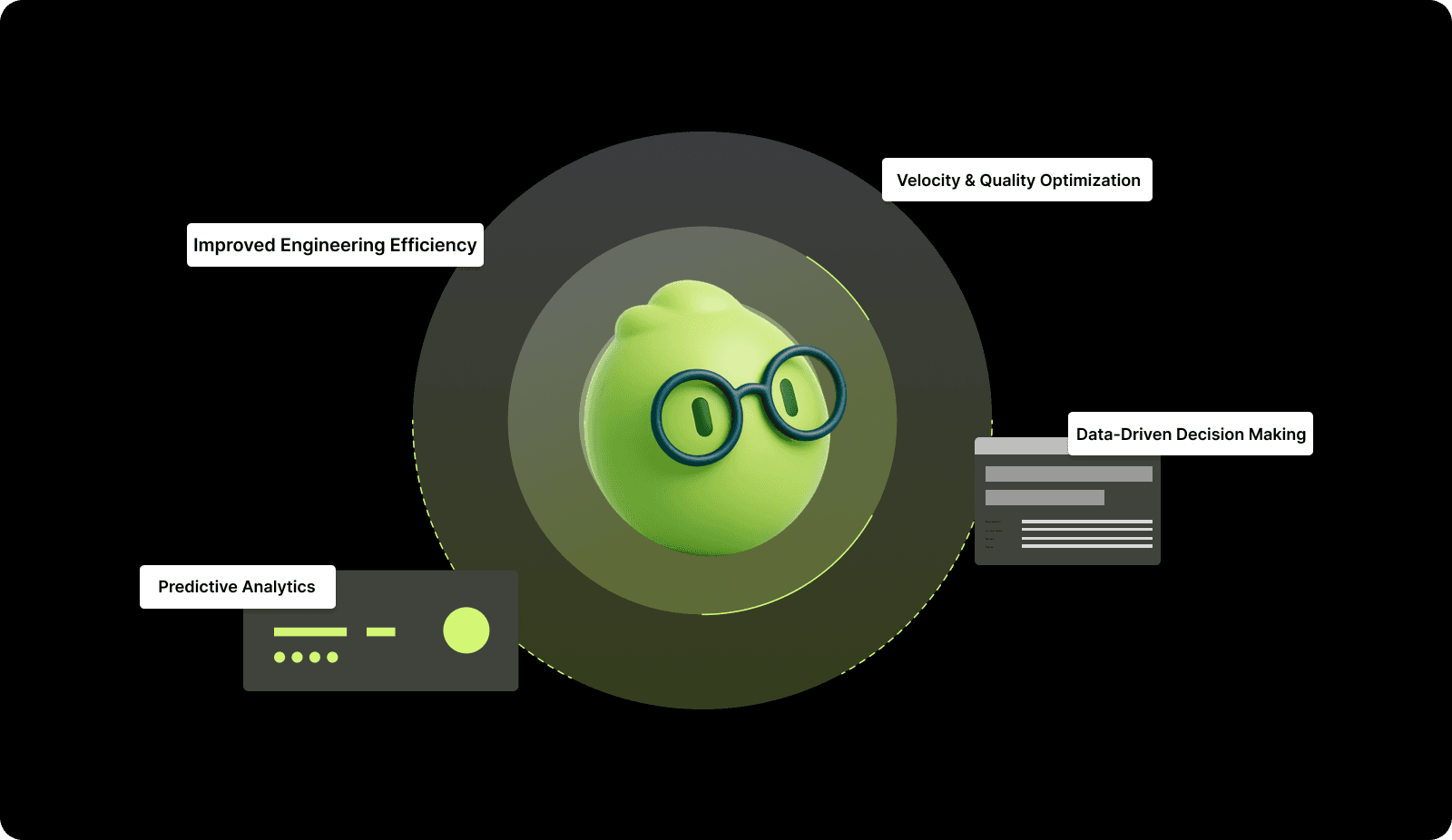
Engineering intelligence identifies inefficiencies and bottlenecks in your workflow. For example, automating code reviews with context-aware AI reduces unnecessary back-and-forth and ensures that you can focus on high-priority tasks. This results in faster delivery and improved productivity.
2. Velocity and Quality Optimization
Real-time insights from engineering intelligence tools help you improve development cycles without sacrificing code quality. By monitoring key metrics like lead time and bug fix rates, you can address issues early and ensure faster delivery while maintaining high standards.
3. Data-Driven Decision Making
Engineering intelligence provides access to real-time performance data, letting you make quick, informed decisions. In fact, Google observed that AI enhanced productivity among its software engineers by approximately 10%. By analyzing metrics such as sprint velocity or bug counts, you can adjust your strategy, prioritize effectively, and optimize your workflow for better outcomes.
4. Predictive Analytics
Predictive analytics in engineering intelligence platforms help you anticipate potential issues before they impact development. By analyzing past data trends, these tools predict bottlenecks or quality concerns, enabling you to take proactive steps to ensure long-term success and minimize disruptions.
Now that we've covered the benefits, let’s explore the core components of an engineering intelligence platform that make it effective.
The Core Components of an Engineering Intelligence Platform
Engineering intelligence platforms include several key components that work together to improve performance, efficiency, and decision-making. These components ensure seamless data integration, real-time insights, and proactive monitoring to optimize your development process.
1. Data Integration
Data integration consolidates information from multiple tools like Jira, GitHub, and Slack into a single platform, providing a clear, unified view of your development process. This combined approach makes it easier to track performance, spot inefficiencies, and take corrective action when needed.
2. Data Management and Governance
Engineering intelligence platforms ensure data is securely stored, accurate, and compliant with industry regulations. They provide clear governance structures to protect sensitive information while maintaining high data quality, so you can trust the insights you rely on for important decisions.
3. Advanced Analytics and Reporting
Advanced analytics in engineering intelligence tools allow you to dive deep into metrics like code quality, lead time, and bug resolution. These insights help you identify areas for improvement, understand your workflow bottlenecks, and optimize your processes for greater efficiency and speed.
4. Insights and Actionable Recommendations
Engineering intelligence platforms analyze data and provide clear, actionable recommendations. For example, the platform may suggest changes to your coding practices or highlight areas of your workflow that need adjustment to optimize output and reduce delays.
5. Customizable Dashboards
Customizable dashboards allow you to track the metrics most relevant to your work. Whether it’s deployment success rates or code quality, these personalized dashboards offer a clear, concise view of your progress and highlight areas that need attention for improved performance.
6. Collaboration Integration
Engineering intelligence platforms integrate with tools you already use, such as Jira, GitHub, and Slack. This seamless integration ensures that all data flows naturally into one platform, so you don’t have to switch between apps or manually update metrics.
Also Read: How to Use AI for Code Reviews on GitHub?
How to Choose the Right Engineering Intelligence Platform?
Selecting the right engineering intelligence platform is extremely important so you can maximize your productivity. Let’s check out how to choose the right engineering intelligence platform.
Criteria for Selecting a Platform:
Focus on Leading Indicators, Not Just Lagging Ones: Look for platforms that provide real-time, predictive insights into your performance rather than only reporting past data.
Advanced Data Handling Capabilities: Ensure the platform can handle large datasets efficiently, providing you with accurate and timely insights.
Ensure Strong Collaboration Tool Integrations: The platform should seamlessly integrate with your existing tools like GitHub or Jira, minimizing disruptions to your workflow.
Predictive Analytics to Shape Engineering Strategies: Choose a platform that can forecast future challenges and suggest strategies to mitigate potential issues before they arise.
Developer Privacy and Safeguarding Sensitive Information: Ensure that the platform prioritizes privacy and data security, particularly when dealing with sensitive code and intellectual property.
On-Premise Connectors for Customized, Secure Integrations: For more control over your data, ensure that the platform offers on-premise integration options that align with your specific security needs.
Evaluation Process:
Define Key Performance Indicators (KPIs): Establish clear KPIs to track before and after platform adoption to assess its effectiveness.
User Feedback and Success Stories: Look for real-world success stories and user feedback to gauge how the platform has impacted similar workflows and objectives.
By considering these criteria and evaluation steps, you'll be equipped to choose the right engineering intelligence platform that best fits your needs.
How Engineering Intelligence Platforms Work?
Engineering intelligence platforms collect, analyze, and present data to help you improve your development workflows. They provide real-time insights that allow for timely decision-making. Here’s a closer look at how engineering intelligence platforms function behind the scenes.
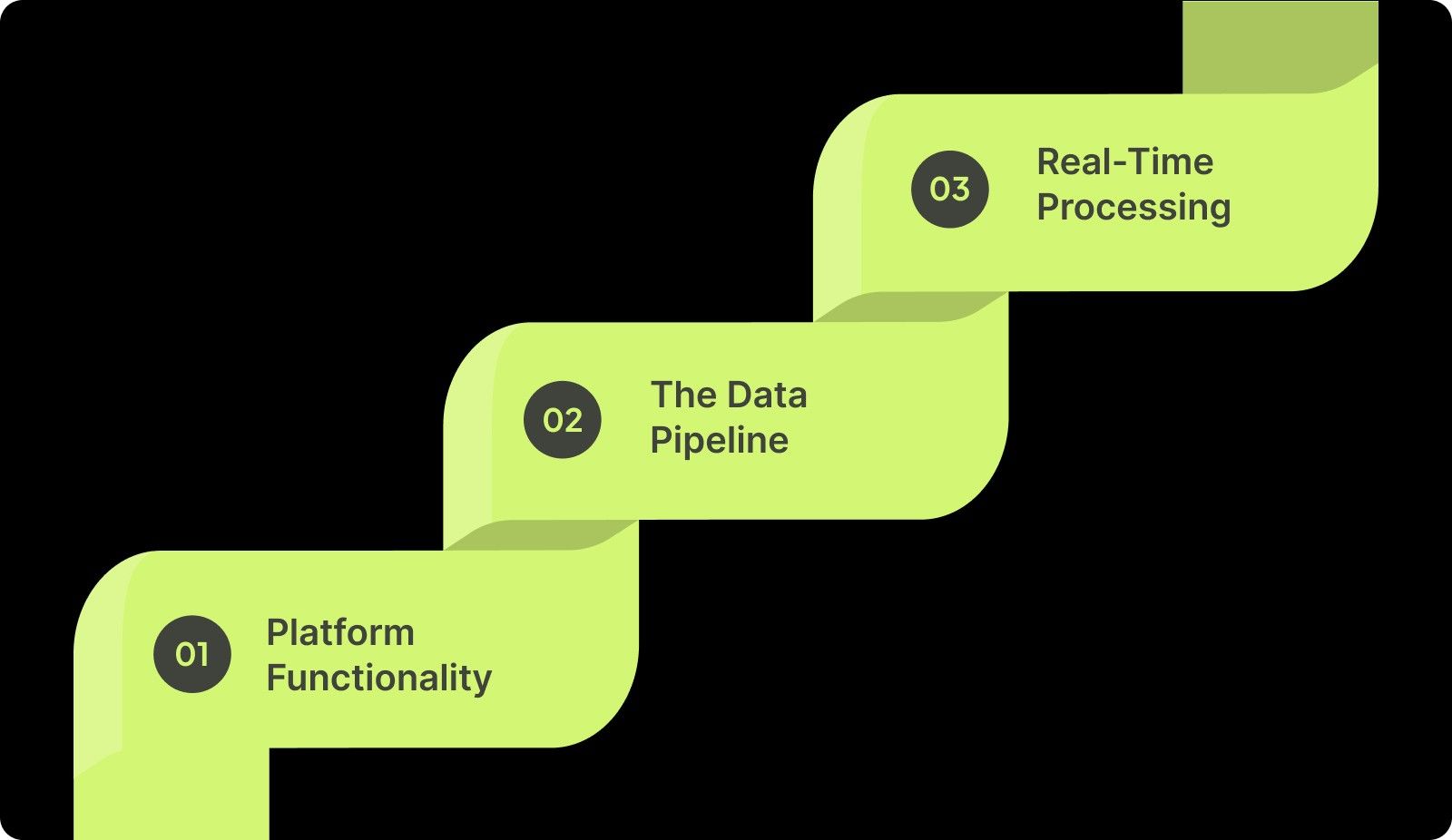
1. Platform Functionality
Engineering intelligence platforms collect data from multiple sources, analyze it in real-time, and present actionable insights. For example, a platform might track your code’s performance in real-time, providing instant feedback on potential issues or areas of improvement. This enables you to address issues before they escalate.
2. The Data Pipeline
Data flows through various stages: collection, analysis, and presentation. Raw data from different systems is aggregated, cleaned, and processed to extract actionable insights. They are then displayed on dashboards or used to generate reports that guide your next steps in the development process.
3. Real-Time Processing and Monitoring
Real-time processing is essential for optimizing workflows. Live data allows you to track progress, adjust resource allocation, and monitor bug resolution as it happens. This approach ensures that issues are addressed quickly and efficiently, minimizing delays and preventing backlogs.
Having explored how engineering intelligence platforms operate, let’s now take a closer look at the top platforms that can help you refine your development workflows and drive measurable results.

Top 5 Engineering Intelligence Platforms on the Market Today
The following platforms are industry leaders, offering a wide range of features to optimize your engineering workflow, from real-time insights to predictive analytics. Each of these tools provides unique capabilities to enhance productivity, quality, and decision-making.
1. Entelligence AI
Entelligence AI is an engineering intelligence platform designed to enhance development workflows through AI-driven automation and real-time insights. It offers intelligent pull request (PR) reviews, static code analysis, and comprehensive security scanning to improve code quality and overall performance.
Features:
Automated Code Reviews: AI-powered reviews integrated directly in your IDE. Provides real-time feedback, flags potential bugs, and ensures code quality before submission. It reduces manual review time and improves productivity.
Pull Request Dashboard: Unified dashboard for tracking PRs across repositories. Shows status, links PRs to contributors, and sends alerts for blocked or stale PRs, improving efficiency and team collaboration.
AI-Driven Documentation: Automates the generation of up-to-date architecture diagrams and API documentation. It syncs with repositories, reducing manual effort and ensuring accurate documentation as the code scales.
Security Insights: Continuous vulnerability scanning integrated into the IDE. Detects and remediates potential security risks, ensuring a secure development environment and reducing the likelihood of production bugs.
Background AI Agent: Automates repetitive tasks like linting, formatting, and boilerplate setup. Offers contextual suggestions in real-time, freeing you up to focus on more complex tasks and enhancing coding efficiency.
Pros:
Automates code reviews, reducing manual effort.
Provides actionable insights to improve code quality.
Integrates with existing development tools for a smooth workflow.
Cons:
May require initial setup time for integration.
Advanced features may have a learning curve.
2. Jellyfish
Jellyfish is a software engineering intelligence platform that provides visibility into the software development lifecycle. It helps engineering leaders align engineering efforts with business goals by tracking resource allocation, delivery performance, and team health.
Features:
Integration with Git repositories, project management tools, and communication platforms.
Metrics on resource allocation, delivery performance, and team alignment.
Visual dashboards for both technical and non-technical stakeholders.
Pros:
Offers clear metrics around resource allocation and delivery performance.
Helps align engineering efforts with strategic initiatives.
Intuitive dashboards facilitate understanding across teams.
Cons:
User experience may require time to learn due to the abundance of data.
Some users may find the reporting flexibility limited.
3. Code Climate Velocity
Code Climate Velocity is a platform that provides data-driven visibility into engineering’s capacity, delivery, quality, and progress toward key goals. It helps optimize the software development lifecycle by offering insights into your performance and areas for improvement.
Features:
Metrics on cycle time, pull request resolution, and code quality.
Integration with GitHub and Jira for comprehensive tracking.
Insights into team performance and areas of improvement.
Pros:
Helps maintain code consistency and quality.
Provides developer-level analytics for targeted improvements.
Offers clear objectives and opportunities for skill development.
Cons:
May have limitations in customization and flexibility.
You might find some challenges in integrating with certain tools.
4. LinearB
LinearB is a software engineering intelligence platform that emphasizes your experience, productivity, and predictable software delivery. It offers real-time metrics and analytics to improve collaboration and reduce bottlenecks in the development process.
Features:
Real-time development metrics and analytics.
Project forecasting and cost capitalization tools.
Integration with Git, Jira, and CI/CD tools.
Pros:
Provides actionable insights to improve collaboration and reduce bottlenecks.
Offers tools for project forecasting and cost management.
Highly flexible and self-service configuration options.
Cons:
Some users report that metrics may be ignored over time if not actively managed.
Initial setup and customization may require effort.
5. Waydev
Waydev is an engineering performance analytics platform that helps organizations optimize efficiency and improve code quality. It does so through predictive analytics, benchmarking, and AI-powered recommendations.
Features:
DORA metrics tracking for software delivery performance.
Custom dashboards and reports for engineering insights.
Integration with Git, Jira, and other development tools.
Pros:
Provides comprehensive insights into engineering performance.
Offers customizable dashboards and reports.
Supports enterprise-scale organizations with over 10,000 engineers.
Cons:
Some users find the interface complex and require time to master.
Advanced features may require additional configuration.
Also Read: Choosing the Right Tool: Top 7 Graphite Alternatives for AI Code Review
How to Get Started with Engineering Intelligence?
To begin implementing engineering intelligence, focus on integrating it into one key area of your workflow. Start with a process that will show immediate results, like automating code reviews or simplifying sprint tracking. This allows you to experience measurable improvements early without disrupting the entire workflow.
Once you see results, gradually expand its use across other areas. Continuously measure the impact, adapt based on real-time insights, and engage with the platform’s support team to explore advanced features.
By adopting a step-by-step approach, you’ll ensure that engineering intelligence becomes a valuable, seamless part of your development process.
Conclusion
An efficient engineering process goes beyond just tools and metrics. It eliminates inefficiencies and makes better decisions at every step. However, without the right platform, even the best strategies can fall short, leading to delays and poor results.
Entelligence AI solves this by integrating engineering intelligence directly into your workflow. With AI-powered insights, automated code reviews, and predictive analytics, Entelligence AI helps you reduce manual tasks, improve performance, and ensure consistent quality while meeting deadlines.
Start a free trial with Entelligence AI today and see how our platform can improve your development process, reduce bottlenecks, and increase your productivity.
Frequently Asked Questions
1. How can engineering intelligence platforms help reduce software development costs?
Engineering intelligence platforms can reduce software development costs by identifying inefficiencies and automating repetitive tasks. With real-time insights, you can focus on high-value work, reduce delays, and eliminate waste. This leads to shorter development cycles, fewer errors, and ultimately, cost savings in both time and resources.
2. Which metrics do engineering intelligence platforms track to monitor performance?
Engineering intelligence platforms track a variety of metrics such as cycle time, bug resolution rates, pull request activity, code quality, and sprint velocity. By analyzing these metrics, platforms help you assess individual and team performance, identify bottlenecks, and make data-driven decisions to optimize workflows and enhance productivity.
3. How do engineering intelligence platforms improve collaboration across teams?
These platforms enhance collaboration by providing a unified view of the development process. They integrate with tools like Jira and Slack, offering real-time updates on project status, bottlenecks, and team performance. This visibility ensures that everyone is aligned, enabling smoother communication, faster issue resolution, and better cross-team coordination.
4. Can engineering intelligence platforms assist with code quality assurance?
Yes, engineering intelligence platforms play a significant role in code quality assurance by providing automated, context-aware code reviews. They flag potential issues, missing tests, and anti-patterns before code is committed. By offering real-time feedback, they help maintain high coding standards and prevent issues from reaching production.
Imagine being able to identify bottlenecks and inefficiencies in your development process before they become a problem. Engineering intelligence platforms make this possible by providing real-time data and actionable insights that optimize workflows, boost productivity, and improve code quality.
With these tools, developers and engineering leaders like you can make faster, smarter decisions, automating repetitive tasks and simplifying the entire software development lifecycle. In fact, the global engineering intelligence platform market is expected to reach USD 10.2 billion by 2033, reflecting the growing adoption of these powerful solutions.
As more organizations adopt these platforms, they’re seeing significant improvements in both speed and quality. This makes engineering intelligence an important part of the modern development process.
In this blog, we will explore what engineering intelligence platforms are, their key benefits, and take a look at some of the leading platforms available today to help optimize your development process.
Overview
Engineering intelligence platforms optimize software development by providing real-time data to identify bottlenecks and improve efficiency.
They automate tasks like code reviews and documentation, allowing you to focus on higher-priority work.
With data-driven insights, these tools enable faster issue resolution and continuous performance improvement.
Integration with existing tools offers a unified view, improving collaboration and resource allocation.
Real-time feedback and predictive analytics help maintain quality and drive better development outcomes.
What are Engineering Intelligence Platforms?
Engineering intelligence platforms use real-time data to help you manage your software development more effectively. They gather insights from your existing tools and processes, helping you identify where things are slowing down or getting stuck.
With these insights, you can make better decisions, fix issues faster, and focus on getting high-quality code out the door.
By using data-driven recommendations, you can also improve your workflow, boost productivity, and maintain the quality of your work without the guesswork.
Also Read: How Entelligence AI Empowers Engineering Leaders to Drive High-Performing Teams
What are the Key Benefits of Engineering Intelligence?
Engineering intelligence platforms simplify workflows, improve decision-making, and boost product development. By offering data-driven insights, these platforms help you enhance performance, eliminate inefficiencies, and ensure better outcomes with faster delivery and higher quality.

1. Improved Engineering Efficiency
Engineering intelligence identifies inefficiencies and bottlenecks in your workflow. For example, automating code reviews with context-aware AI reduces unnecessary back-and-forth and ensures that you can focus on high-priority tasks. This results in faster delivery and improved productivity.
2. Velocity and Quality Optimization
Real-time insights from engineering intelligence tools help you improve development cycles without sacrificing code quality. By monitoring key metrics like lead time and bug fix rates, you can address issues early and ensure faster delivery while maintaining high standards.
3. Data-Driven Decision Making
Engineering intelligence provides access to real-time performance data, letting you make quick, informed decisions. In fact, Google observed that AI enhanced productivity among its software engineers by approximately 10%. By analyzing metrics such as sprint velocity or bug counts, you can adjust your strategy, prioritize effectively, and optimize your workflow for better outcomes.
4. Predictive Analytics
Predictive analytics in engineering intelligence platforms help you anticipate potential issues before they impact development. By analyzing past data trends, these tools predict bottlenecks or quality concerns, enabling you to take proactive steps to ensure long-term success and minimize disruptions.
Now that we've covered the benefits, let’s explore the core components of an engineering intelligence platform that make it effective.

The Core Components of an Engineering Intelligence Platform
Engineering intelligence platforms include several key components that work together to improve performance, efficiency, and decision-making. These components ensure seamless data integration, real-time insights, and proactive monitoring to optimize your development process.
1. Data Integration
Data integration consolidates information from multiple tools like Jira, GitHub, and Slack into a single platform, providing a clear, unified view of your development process. This combined approach makes it easier to track performance, spot inefficiencies, and take corrective action when needed.
2. Data Management and Governance
Engineering intelligence platforms ensure data is securely stored, accurate, and compliant with industry regulations. They provide clear governance structures to protect sensitive information while maintaining high data quality, so you can trust the insights you rely on for important decisions.
3. Advanced Analytics and Reporting
Advanced analytics in engineering intelligence tools allow you to dive deep into metrics like code quality, lead time, and bug resolution. These insights help you identify areas for improvement, understand your workflow bottlenecks, and optimize your processes for greater efficiency and speed.
4. Insights and Actionable Recommendations
Engineering intelligence platforms analyze data and provide clear, actionable recommendations. For example, the platform may suggest changes to your coding practices or highlight areas of your workflow that need adjustment to optimize output and reduce delays.
5. Customizable Dashboards
Customizable dashboards allow you to track the metrics most relevant to your work. Whether it’s deployment success rates or code quality, these personalized dashboards offer a clear, concise view of your progress and highlight areas that need attention for improved performance.
6. Collaboration Integration
Engineering intelligence platforms integrate with tools you already use, such as Jira, GitHub, and Slack. This seamless integration ensures that all data flows naturally into one platform, so you don’t have to switch between apps or manually update metrics.
Also Read: How to Use AI for Code Reviews on GitHub?
How to Choose the Right Engineering Intelligence Platform?
Selecting the right engineering intelligence platform is extremely important so you can maximize your productivity. Let’s check out how to choose the right engineering intelligence platform.
Criteria for Selecting a Platform:
Focus on Leading Indicators, Not Just Lagging Ones: Look for platforms that provide real-time, predictive insights into your performance rather than only reporting past data.
Advanced Data Handling Capabilities: Ensure the platform can handle large datasets efficiently, providing you with accurate and timely insights.
Ensure Strong Collaboration Tool Integrations: The platform should seamlessly integrate with your existing tools like GitHub or Jira, minimizing disruptions to your workflow.
Predictive Analytics to Shape Engineering Strategies: Choose a platform that can forecast future challenges and suggest strategies to mitigate potential issues before they arise.
Developer Privacy and Safeguarding Sensitive Information: Ensure that the platform prioritizes privacy and data security, particularly when dealing with sensitive code and intellectual property.
On-Premise Connectors for Customized, Secure Integrations: For more control over your data, ensure that the platform offers on-premise integration options that align with your specific security needs.
Evaluation Process:
Define Key Performance Indicators (KPIs): Establish clear KPIs to track before and after platform adoption to assess its effectiveness.
User Feedback and Success Stories: Look for real-world success stories and user feedback to gauge how the platform has impacted similar workflows and objectives.
By considering these criteria and evaluation steps, you'll be equipped to choose the right engineering intelligence platform that best fits your needs.
How Engineering Intelligence Platforms Work?
Engineering intelligence platforms collect, analyze, and present data to help you improve your development workflows. They provide real-time insights that allow for timely decision-making. Here’s a closer look at how engineering intelligence platforms function behind the scenes.

1. Platform Functionality
Engineering intelligence platforms collect data from multiple sources, analyze it in real-time, and present actionable insights. For example, a platform might track your code’s performance in real-time, providing instant feedback on potential issues or areas of improvement. This enables you to address issues before they escalate.
2. The Data Pipeline
Data flows through various stages: collection, analysis, and presentation. Raw data from different systems is aggregated, cleaned, and processed to extract actionable insights. They are then displayed on dashboards or used to generate reports that guide your next steps in the development process.
3. Real-Time Processing and Monitoring
Real-time processing is essential for optimizing workflows. Live data allows you to track progress, adjust resource allocation, and monitor bug resolution as it happens. This approach ensures that issues are addressed quickly and efficiently, minimizing delays and preventing backlogs.
Having explored how engineering intelligence platforms operate, let’s now take a closer look at the top platforms that can help you refine your development workflows and drive measurable results.

Top 5 Engineering Intelligence Platforms on the Market Today
The following platforms are industry leaders, offering a wide range of features to optimize your engineering workflow, from real-time insights to predictive analytics. Each of these tools provides unique capabilities to enhance productivity, quality, and decision-making.
1. Entelligence AI
Entelligence AI is an engineering intelligence platform designed to enhance development workflows through AI-driven automation and real-time insights. It offers intelligent pull request (PR) reviews, static code analysis, and comprehensive security scanning to improve code quality and overall performance.
Features:
Automated Code Reviews: AI-powered reviews integrated directly in your IDE. Provides real-time feedback, flags potential bugs, and ensures code quality before submission. It reduces manual review time and improves productivity.
Pull Request Dashboard: Unified dashboard for tracking PRs across repositories. Shows status, links PRs to contributors, and sends alerts for blocked or stale PRs, improving efficiency and team collaboration.
AI-Driven Documentation: Automates the generation of up-to-date architecture diagrams and API documentation. It syncs with repositories, reducing manual effort and ensuring accurate documentation as the code scales.
Security Insights: Continuous vulnerability scanning integrated into the IDE. Detects and remediates potential security risks, ensuring a secure development environment and reducing the likelihood of production bugs.
Background AI Agent: Automates repetitive tasks like linting, formatting, and boilerplate setup. Offers contextual suggestions in real-time, freeing you up to focus on more complex tasks and enhancing coding efficiency.
Pros:
Automates code reviews, reducing manual effort.
Provides actionable insights to improve code quality.
Integrates with existing development tools for a smooth workflow.
Cons:
May require initial setup time for integration.
Advanced features may have a learning curve.
2. Jellyfish
Jellyfish is a software engineering intelligence platform that provides visibility into the software development lifecycle. It helps engineering leaders align engineering efforts with business goals by tracking resource allocation, delivery performance, and team health.
Features:
Integration with Git repositories, project management tools, and communication platforms.
Metrics on resource allocation, delivery performance, and team alignment.
Visual dashboards for both technical and non-technical stakeholders.
Pros:
Offers clear metrics around resource allocation and delivery performance.
Helps align engineering efforts with strategic initiatives.
Intuitive dashboards facilitate understanding across teams.
Cons:
User experience may require time to learn due to the abundance of data.
Some users may find the reporting flexibility limited.
3. Code Climate Velocity
Code Climate Velocity is a platform that provides data-driven visibility into engineering’s capacity, delivery, quality, and progress toward key goals. It helps optimize the software development lifecycle by offering insights into your performance and areas for improvement.
Features:
Metrics on cycle time, pull request resolution, and code quality.
Integration with GitHub and Jira for comprehensive tracking.
Insights into team performance and areas of improvement.
Pros:
Helps maintain code consistency and quality.
Provides developer-level analytics for targeted improvements.
Offers clear objectives and opportunities for skill development.
Cons:
May have limitations in customization and flexibility.
You might find some challenges in integrating with certain tools.
4. LinearB
LinearB is a software engineering intelligence platform that emphasizes your experience, productivity, and predictable software delivery. It offers real-time metrics and analytics to improve collaboration and reduce bottlenecks in the development process.
Features:
Real-time development metrics and analytics.
Project forecasting and cost capitalization tools.
Integration with Git, Jira, and CI/CD tools.
Pros:
Provides actionable insights to improve collaboration and reduce bottlenecks.
Offers tools for project forecasting and cost management.
Highly flexible and self-service configuration options.
Cons:
Some users report that metrics may be ignored over time if not actively managed.
Initial setup and customization may require effort.
5. Waydev
Waydev is an engineering performance analytics platform that helps organizations optimize efficiency and improve code quality. It does so through predictive analytics, benchmarking, and AI-powered recommendations.
Features:
DORA metrics tracking for software delivery performance.
Custom dashboards and reports for engineering insights.
Integration with Git, Jira, and other development tools.
Pros:
Provides comprehensive insights into engineering performance.
Offers customizable dashboards and reports.
Supports enterprise-scale organizations with over 10,000 engineers.
Cons:
Some users find the interface complex and require time to master.
Advanced features may require additional configuration.
Also Read: Choosing the Right Tool: Top 7 Graphite Alternatives for AI Code Review
How to Get Started with Engineering Intelligence?
To begin implementing engineering intelligence, focus on integrating it into one key area of your workflow. Start with a process that will show immediate results, like automating code reviews or simplifying sprint tracking. This allows you to experience measurable improvements early without disrupting the entire workflow.
Once you see results, gradually expand its use across other areas. Continuously measure the impact, adapt based on real-time insights, and engage with the platform’s support team to explore advanced features.
By adopting a step-by-step approach, you’ll ensure that engineering intelligence becomes a valuable, seamless part of your development process.
Conclusion
An efficient engineering process goes beyond just tools and metrics. It eliminates inefficiencies and makes better decisions at every step. However, without the right platform, even the best strategies can fall short, leading to delays and poor results.
Entelligence AI solves this by integrating engineering intelligence directly into your workflow. With AI-powered insights, automated code reviews, and predictive analytics, Entelligence AI helps you reduce manual tasks, improve performance, and ensure consistent quality while meeting deadlines.
Start a free trial with Entelligence AI today and see how our platform can improve your development process, reduce bottlenecks, and increase your productivity.
Frequently Asked Questions
1. How can engineering intelligence platforms help reduce software development costs?
Engineering intelligence platforms can reduce software development costs by identifying inefficiencies and automating repetitive tasks. With real-time insights, you can focus on high-value work, reduce delays, and eliminate waste. This leads to shorter development cycles, fewer errors, and ultimately, cost savings in both time and resources.
2. Which metrics do engineering intelligence platforms track to monitor performance?
Engineering intelligence platforms track a variety of metrics such as cycle time, bug resolution rates, pull request activity, code quality, and sprint velocity. By analyzing these metrics, platforms help you assess individual and team performance, identify bottlenecks, and make data-driven decisions to optimize workflows and enhance productivity.
3. How do engineering intelligence platforms improve collaboration across teams?
These platforms enhance collaboration by providing a unified view of the development process. They integrate with tools like Jira and Slack, offering real-time updates on project status, bottlenecks, and team performance. This visibility ensures that everyone is aligned, enabling smoother communication, faster issue resolution, and better cross-team coordination.
4. Can engineering intelligence platforms assist with code quality assurance?
Yes, engineering intelligence platforms play a significant role in code quality assurance by providing automated, context-aware code reviews. They flag potential issues, missing tests, and anti-patterns before code is committed. By offering real-time feedback, they help maintain high coding standards and prevent issues from reaching production.
Your questions,
Your questions,
Decoded
Decoded
What makes Entelligence different?
Unlike tools that just flag issues, Entelligence understands context — detecting, explaining, and fixing problems while aligning with product goals and team standards.
Does it replace human reviewers?
No. It amplifies them. Entelligence handles repetitive checks so engineers can focus on architecture, logic, and innovation.
What tools does it integrate with?
It fits right into your workflow — GitHub, GitLab, Jira, Linear, Slack, and more. No setup friction, no context switching.
How secure is my code?
Your code never leaves your environment. Entelligence uses encrypted processing and complies with top industry standards like SOC 2 and HIPAA.
Who is it built for?
Fast-growing engineering teams that want to scale quality, security, and velocity without adding more manual reviews or overhead.

What makes Entelligence different?
Does it replace human reviewers?
What tools does it integrate with?
How secure is my code?
Who is it built for?