What Is Vibe Coding and How AI Tools Are Changing Development?
Nov 27, 2025
Nov 27, 2025
Software development is under pressure to deliver faster, without compromising quality. Traditional coding often gets bogged down by repetitive tasks, slowing everything down. That’s where vibe coding comes in, using AI-powered tools to automate routine tasks and speed up the entire process.
According to MarketsandMarkets, the global market for AI coding tools is expected to grow from USD 4.3 billion in 2023 to USD 12.6 billion by 2028, with a 24% annual growth rate.
This rapid growth shows how essential vibe coding has become, enabling developers like you to build better software, quicker, and more efficiently.
In this blog, we will explore how vibe coding works, its benefits, and the tools and platforms that are changing the development process, helping you code faster and more efficiently.
Overview
Vibe coding uses AI to automate repetitive tasks, allowing you to focus on the creative and critical aspects of software development.
AI tools like code generators, bug fixers, and reviewers speed up the development process while maintaining code quality.
Vibe coding helps you work more efficiently by handling routine tasks, reducing human error, and improving overall workflow.
The use of AI in vibe coding makes the development process faster and more flexible, helping to deliver high-quality software more quickly.
Vibe coding tools integrate seamlessly into existing workflows, offering real-time feedback and support, which enhances productivity without disrupting the development process.
What is Vibe Coding?
Vibe coding is the use of AI-powered tools to assist you in writing, reviewing, and deploying code faster and more efficiently. It reduces repetitive tasks, allowing you to focus on higher-level coding and creative problem-solving. With AI as a partner, you get real-time feedback, automated code generation, and a smoother development workflow.
By automating the routine work, vibe coding lets you maximize productivity and simplify your coding process. This way, you can produce high-quality applications faster. It enhances your development process without compromising on creativity or control.
Why Vibe Coding Matters Right Now?
As businesses push for faster software delivery, vibe coding offers the tools to meet that demand. With AI, you can automate tasks like debugging, testing, and code reviews, which leads to quicker development and better-quality results.
This increases efficiency by freeing up time that would otherwise be spent on repetitive tasks. Instead of manually reviewing every line of code, Vibe coding tools handle these tasks, allowing you to focus on more important work like innovating and improving the developer experience.
How Vibe Coding Enhances Development?
Vibe coding is changing the way software is developed. It offers faster workflows and greater efficiency by utilizing AI-driven tools to automate key aspects of the development process.
1. From Idea to Application: Faster Than Ever
Vibe coding boosts the entire development lifecycle. With AI-powered tools, you can quickly translate an idea into a working prototype without manually writing boilerplate code or configuring systems. Tools like Replit allow you to prototype apps instantly, speeding up the process and reducing time-to-market.
2. Eliminating Traditional Bottlenecks
In traditional development, waiting for code reviews and debugging can create significant delays. Vibe coding removes these bottlenecks by automating code reviews and bug fixes. AI tools flag potential issues, optimize your code, and suggest improvements, helping you move faster and reduce human error.
In short, by adopting vibe coding practices, you can boost your productivity and competitiveness in the market.
Also Read: Comprehensive Guide to Secure Code Review Practices
The Fundamentals of Vibe Coding: How It Works
Vibe coding uses AI to make your development process faster and easier. You can simply build great software now, and to do that, let's understand the process in the following sections.
1. Understanding the Vibe Coding Process
Vibe coding uses AI to assist throughout the development process, from brainstorming ideas to deployment. AI tools automatically generate code, check for errors, and make suggestions, reducing the need for constant oversight and speeding up the entire process.
2. The Code-Level Workflow
AI-driven tools support you by automating routine tasks, like setting up environments or generating basic code structures. This allows you to focus on the unique aspects of your application, ensuring that your coding workflow is more efficient and error-free.
3. The Application Lifecycle
From ideation to maintenance, vibe coding tools help throughout the application lifecycle. After deployment, AI tools monitor the app’s performance, suggest improvements, and automate updates, ensuring that your app stays relevant and bug-free without constant manual input.
With vibe coding, you get a faster, more efficient development process where AI lets you focus on creating and improving your app.

Key Differences: Vibe Coding vs. Traditional Programming
In traditional programming, the development process can be slow and often involves a lot of manual work, from writing boilerplate code to debugging and testing. Vibe coding, however, shifts the focus by integrating AI to handle these tasks, allowing you to focus on more important aspects of the project. Let’s take a look at how vibe coding compares to traditional programming.
Aspect | Vibe Coding | Traditional Programming |
Speed | Fast; AI tools handle repetitive tasks, speeding up the process. | Slow; Manual coding and testing can take a lot of time. |
Efficiency | High; AI automates tasks like code generation, bug fixing, and testing. | Low: Requires extensive manual effort for debugging and code reviews. |
Error Handling | AI automatically detects and fixes common errors. | Manual error detection and fixing, leading to delays. |
Focus | Focus on unique features and creative aspects of development. | Focus on routine coding tasks and error management. |
Collaboration | Real-time collaboration with AI-enhanced tools for seamless development. | Limited collaboration, with more reliance on personal effort and feedback. |
While traditional programming can be slow and repetitive, vibe coding enhances productivity and reduces manual effort.
Also Read: Understanding Code Coverage: Meaning, Metrics, and Measurement
Exploring Vibe Coding Tools
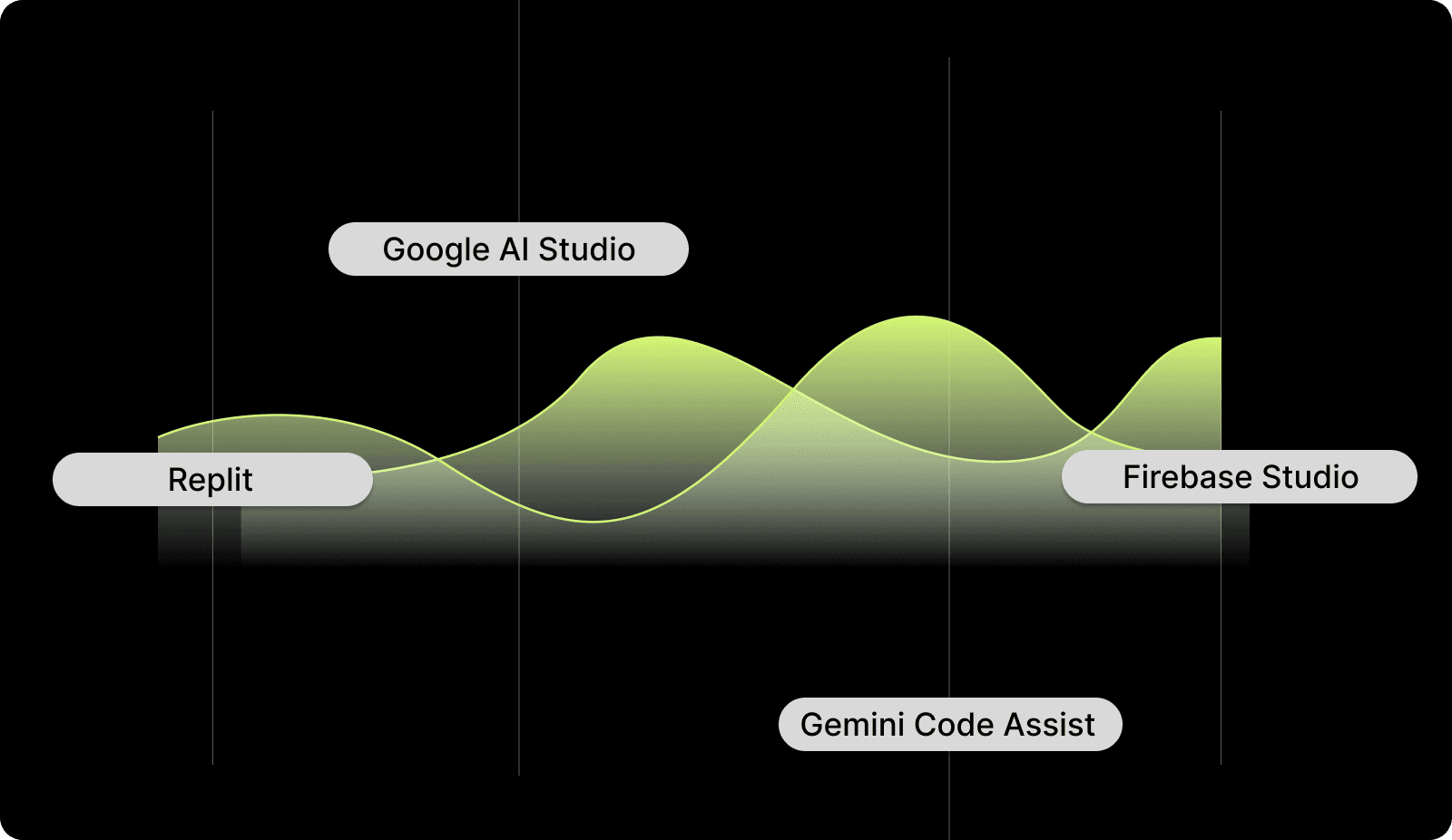
Several tools offer vibe coding capabilities, such as Replit, Google AI Studio, Firebase Studio, and Gemini Code Assist. Each platform integrates AI into the coding process, helping you write and deploy code efficiently without needing to manage every detail manually.
1. Replit
Replit is a cloud-based development environment that enables real-time collaboration. You and your teammates can code together simultaneously, see each other's changes live, and run code in the same environment. This makes it ideal for team projects, pair programming, and educational settings. Replit supports multiple programming languages and offers features like instant deployment and version control, simplifying the development process.
2. Google AI Studio
Google AI Studio is designed for building AI applications. It uses AI to assist in code generation, making it easier to develop machine learning models and other AI-driven applications. The platform provides tools for prototyping, testing, and deploying AI solutions, catering to developers like you who work on AI-centric projects.
3. Firebase Studio
Firebase Studio is a cloud-based development environment that integrates with Firebase's backend services. It allows you to build, test, and deploy full-stack applications, including mobile and web apps, using AI assistance. The platform offers features like AI-optimized templates and seamless integration with Firebase services, facilitating efficient app development.
4. Gemini Code Assist
Gemini Code Assist is an AI-powered tool that integrates with popular IDEs like VS Code and JetBrains. It provides real-time code suggestions, generates code blocks from comments, and assists in debugging and testing. This tool enhances coding efficiency by offering context-aware assistance throughout the development process.
All of these vibe coding platforms offer powerful tools to help you work faster, collaborate seamlessly, and build high-quality applications with the help of AI. This makes your development process more efficient and less time-consuming.
Overcoming Limitations in Vibe Coding
While vibe coding offers significant benefits, there are still key limitations and challenges that need to be addressed to maximize its potential. This includes:
1. Security Concerns in Vibe Coding
AI-generated code can increase development speed but also introduce significant security risks. Vulnerabilities like SQL injections, cross-site scripting (XSS), and insecure data handling may go undetected by AI tools. These flaws can lead to data breaches, unauthorized access, and other security issues that put your application and users at risk.
Additionally, AI-generated code may lack proper encryption or authentication mechanisms, making it vulnerable to exploitation.
2. Addressing Common Challenges and Misconceptions
AI often struggles with complex logic and context-specific decisions, leading to incorrect or inefficient code. Misunderstandings arise when AI’s suggestions lack depth, especially in intricate algorithms or creative solutions.
You may face issues where AI-generated code doesn’t align with the project’s true requirements, creating potential errors.
While security risks and the limitations of AI in complex coding tasks continue to pose real challenges, Entelligence AI tackles these head-on. By automating key processes and providing intelligent, context-aware support, it lets you overcome these hurdles, allowing you to gain the full power of vibe coding.
Also Read: Essential Metrics for Measuring Code Quality
How Entelligence AI Enhances Your Vibe Coding Experience?
Vibe coding helps you work faster, but it also comes with challenges. Issues like security concerns and the fear that AI might not understand complex logic can slow things down. You may need tools that address these concerns while boosting productivity.
Entelligence AI simplifies the vibe coding process by automating repetitive tasks and offering useful insights to improve code quality. Our platform supports you throughout the development cycle by automating tasks such as code generation, debugging, and security checks. This way, you can focus on creating and refining your software without having to worry about the technical details.
Here’s what Entelligence AI offers:
Automated Code Reviews: Instantly find issues, suggest improvements, and ensure high-quality code without manual effort.
Context-Aware Suggestions: Provide AI-driven feedback specific to your code, helping you avoid errors and work more efficiently.
Security Monitoring: Regularly check for vulnerabilities and flag potential risks to ensure your app remains secure.
Seamless Integration: Easily fit into your existing workflow, enhancing your coding experience without disruptions.
With Entelligence AI, you can overcome common limitations in vibe coding, automate key tasks, and improve the quality of your code, all while saving time and reducing mistakes.
Conclusion
Vibe coding is changing how you develop software by using AI to handle repetitive tasks, allowing you to code faster, produce better-quality code, and focus more on innovation. As AI continues to improve, it will play a bigger role in simplifying the development process.
Entelligence AI supports this transformation by automating tasks like code reviews, bug fixes, and documentation. With Entelligence AI, you can focus on building your app while the AI ensures your code is clean, efficient, and error-free.
Start your free trial with Entelligence AI today and see how our tools can improve your vibe coding process, save you time, and boost your overall productivity.
FAQs
Q. What language is best for vibe coding?
Vibe coding supports multiple languages, but it's most effective with languages like Python, JavaScript, and Java, as they have robust AI integration and libraries. These languages allow for seamless AI assistance in coding, testing, and deployment.
Q. What is the best way to vibe code?
To vibe code effectively, start with an AI tool integrated into your IDE. Let the AI handle repetitive tasks like code generation, review, and bug fixes while you focus on the unique aspects and creative features of your project.
Q. How secure is Vibe coding compared to traditional programming?
Vibe coding tools offer security features like automatic vulnerability detection and code reviews. However, you must still perform regular audits, apply secure coding practices, and validate AI-generated code to ensure high standards of security and prevent potential risks.
Q. Can vibe coding be used for complex enterprise applications?
Yes, vibe coding is well-suited for complex enterprise applications. It helps automate repetitive coding tasks, improves scalability, and optimizes performance. With proper AI assistance, you can focus on intricate problem-solving and architectural decisions for large-scale applications.
Q. What are the risks of relying on AI for coding?
While AI can improve efficiency, over-reliance on it may lead to errors if not carefully monitored. AI-generated code requires validation, testing, and human oversight to ensure accuracy, functionality, and security before it’s deployed into production environments.
Q. How does vibe coding impact developer productivity?
Vibe coding boosts productivity by automating repetitive tasks like code reviews, debugging, and testing. With AI handling these routine tasks, you can dedicate more time to solving complex problems, designing features, and innovating without getting bogged down by manual work.
Software development is under pressure to deliver faster, without compromising quality. Traditional coding often gets bogged down by repetitive tasks, slowing everything down. That’s where vibe coding comes in, using AI-powered tools to automate routine tasks and speed up the entire process.
According to MarketsandMarkets, the global market for AI coding tools is expected to grow from USD 4.3 billion in 2023 to USD 12.6 billion by 2028, with a 24% annual growth rate.
This rapid growth shows how essential vibe coding has become, enabling developers like you to build better software, quicker, and more efficiently.
In this blog, we will explore how vibe coding works, its benefits, and the tools and platforms that are changing the development process, helping you code faster and more efficiently.
Overview
Vibe coding uses AI to automate repetitive tasks, allowing you to focus on the creative and critical aspects of software development.
AI tools like code generators, bug fixers, and reviewers speed up the development process while maintaining code quality.
Vibe coding helps you work more efficiently by handling routine tasks, reducing human error, and improving overall workflow.
The use of AI in vibe coding makes the development process faster and more flexible, helping to deliver high-quality software more quickly.
Vibe coding tools integrate seamlessly into existing workflows, offering real-time feedback and support, which enhances productivity without disrupting the development process.
What is Vibe Coding?
Vibe coding is the use of AI-powered tools to assist you in writing, reviewing, and deploying code faster and more efficiently. It reduces repetitive tasks, allowing you to focus on higher-level coding and creative problem-solving. With AI as a partner, you get real-time feedback, automated code generation, and a smoother development workflow.
By automating the routine work, vibe coding lets you maximize productivity and simplify your coding process. This way, you can produce high-quality applications faster. It enhances your development process without compromising on creativity or control.
Why Vibe Coding Matters Right Now?
As businesses push for faster software delivery, vibe coding offers the tools to meet that demand. With AI, you can automate tasks like debugging, testing, and code reviews, which leads to quicker development and better-quality results.
This increases efficiency by freeing up time that would otherwise be spent on repetitive tasks. Instead of manually reviewing every line of code, Vibe coding tools handle these tasks, allowing you to focus on more important work like innovating and improving the developer experience.
How Vibe Coding Enhances Development?
Vibe coding is changing the way software is developed. It offers faster workflows and greater efficiency by utilizing AI-driven tools to automate key aspects of the development process.

1. From Idea to Application: Faster Than Ever
Vibe coding boosts the entire development lifecycle. With AI-powered tools, you can quickly translate an idea into a working prototype without manually writing boilerplate code or configuring systems. Tools like Replit allow you to prototype apps instantly, speeding up the process and reducing time-to-market.
2. Eliminating Traditional Bottlenecks
In traditional development, waiting for code reviews and debugging can create significant delays. Vibe coding removes these bottlenecks by automating code reviews and bug fixes. AI tools flag potential issues, optimize your code, and suggest improvements, helping you move faster and reduce human error.
In short, by adopting vibe coding practices, you can boost your productivity and competitiveness in the market.
Also Read: Comprehensive Guide to Secure Code Review Practices
The Fundamentals of Vibe Coding: How It Works
Vibe coding uses AI to make your development process faster and easier. You can simply build great software now, and to do that, let's understand the process in the following sections.
1. Understanding the Vibe Coding Process
Vibe coding uses AI to assist throughout the development process, from brainstorming ideas to deployment. AI tools automatically generate code, check for errors, and make suggestions, reducing the need for constant oversight and speeding up the entire process.
2. The Code-Level Workflow
AI-driven tools support you by automating routine tasks, like setting up environments or generating basic code structures. This allows you to focus on the unique aspects of your application, ensuring that your coding workflow is more efficient and error-free.
3. The Application Lifecycle
From ideation to maintenance, vibe coding tools help throughout the application lifecycle. After deployment, AI tools monitor the app’s performance, suggest improvements, and automate updates, ensuring that your app stays relevant and bug-free without constant manual input.
With vibe coding, you get a faster, more efficient development process where AI lets you focus on creating and improving your app.

Key Differences: Vibe Coding vs. Traditional Programming
In traditional programming, the development process can be slow and often involves a lot of manual work, from writing boilerplate code to debugging and testing. Vibe coding, however, shifts the focus by integrating AI to handle these tasks, allowing you to focus on more important aspects of the project. Let’s take a look at how vibe coding compares to traditional programming.
Aspect | Vibe Coding | Traditional Programming |
Speed | Fast; AI tools handle repetitive tasks, speeding up the process. | Slow; Manual coding and testing can take a lot of time. |
Efficiency | High; AI automates tasks like code generation, bug fixing, and testing. | Low: Requires extensive manual effort for debugging and code reviews. |
Error Handling | AI automatically detects and fixes common errors. | Manual error detection and fixing, leading to delays. |
Focus | Focus on unique features and creative aspects of development. | Focus on routine coding tasks and error management. |
Collaboration | Real-time collaboration with AI-enhanced tools for seamless development. | Limited collaboration, with more reliance on personal effort and feedback. |
While traditional programming can be slow and repetitive, vibe coding enhances productivity and reduces manual effort.
Also Read: Understanding Code Coverage: Meaning, Metrics, and Measurement
Exploring Vibe Coding Tools
Several tools offer vibe coding capabilities, such as Replit, Google AI Studio, Firebase Studio, and Gemini Code Assist. Each platform integrates AI into the coding process, helping you write and deploy code efficiently without needing to manage every detail manually.

1. Replit
Replit is a cloud-based development environment that enables real-time collaboration. You and your teammates can code together simultaneously, see each other's changes live, and run code in the same environment. This makes it ideal for team projects, pair programming, and educational settings. Replit supports multiple programming languages and offers features like instant deployment and version control, simplifying the development process.
2. Google AI Studio
Google AI Studio is designed for building AI applications. It uses AI to assist in code generation, making it easier to develop machine learning models and other AI-driven applications. The platform provides tools for prototyping, testing, and deploying AI solutions, catering to developers like you who work on AI-centric projects.
3. Firebase Studio
Firebase Studio is a cloud-based development environment that integrates with Firebase's backend services. It allows you to build, test, and deploy full-stack applications, including mobile and web apps, using AI assistance. The platform offers features like AI-optimized templates and seamless integration with Firebase services, facilitating efficient app development.
4. Gemini Code Assist
Gemini Code Assist is an AI-powered tool that integrates with popular IDEs like VS Code and JetBrains. It provides real-time code suggestions, generates code blocks from comments, and assists in debugging and testing. This tool enhances coding efficiency by offering context-aware assistance throughout the development process.
All of these vibe coding platforms offer powerful tools to help you work faster, collaborate seamlessly, and build high-quality applications with the help of AI. This makes your development process more efficient and less time-consuming.
Overcoming Limitations in Vibe Coding
While vibe coding offers significant benefits, there are still key limitations and challenges that need to be addressed to maximize its potential. This includes:
1. Security Concerns in Vibe Coding
AI-generated code can increase development speed but also introduce significant security risks. Vulnerabilities like SQL injections, cross-site scripting (XSS), and insecure data handling may go undetected by AI tools. These flaws can lead to data breaches, unauthorized access, and other security issues that put your application and users at risk.
Additionally, AI-generated code may lack proper encryption or authentication mechanisms, making it vulnerable to exploitation.
2. Addressing Common Challenges and Misconceptions
AI often struggles with complex logic and context-specific decisions, leading to incorrect or inefficient code. Misunderstandings arise when AI’s suggestions lack depth, especially in intricate algorithms or creative solutions.
You may face issues where AI-generated code doesn’t align with the project’s true requirements, creating potential errors.
While security risks and the limitations of AI in complex coding tasks continue to pose real challenges, Entelligence AI tackles these head-on. By automating key processes and providing intelligent, context-aware support, it lets you overcome these hurdles, allowing you to gain the full power of vibe coding.
Also Read: Essential Metrics for Measuring Code Quality
How Entelligence AI Enhances Your Vibe Coding Experience?
Vibe coding helps you work faster, but it also comes with challenges. Issues like security concerns and the fear that AI might not understand complex logic can slow things down. You may need tools that address these concerns while boosting productivity.
Entelligence AI simplifies the vibe coding process by automating repetitive tasks and offering useful insights to improve code quality. Our platform supports you throughout the development cycle by automating tasks such as code generation, debugging, and security checks. This way, you can focus on creating and refining your software without having to worry about the technical details.
Here’s what Entelligence AI offers:
Automated Code Reviews: Instantly find issues, suggest improvements, and ensure high-quality code without manual effort.
Context-Aware Suggestions: Provide AI-driven feedback specific to your code, helping you avoid errors and work more efficiently.
Security Monitoring: Regularly check for vulnerabilities and flag potential risks to ensure your app remains secure.
Seamless Integration: Easily fit into your existing workflow, enhancing your coding experience without disruptions.
With Entelligence AI, you can overcome common limitations in vibe coding, automate key tasks, and improve the quality of your code, all while saving time and reducing mistakes.

Conclusion
Vibe coding is changing how you develop software by using AI to handle repetitive tasks, allowing you to code faster, produce better-quality code, and focus more on innovation. As AI continues to improve, it will play a bigger role in simplifying the development process.
Entelligence AI supports this transformation by automating tasks like code reviews, bug fixes, and documentation. With Entelligence AI, you can focus on building your app while the AI ensures your code is clean, efficient, and error-free.
Start your free trial with Entelligence AI today and see how our tools can improve your vibe coding process, save you time, and boost your overall productivity.
FAQs
Q. What language is best for vibe coding?
Vibe coding supports multiple languages, but it's most effective with languages like Python, JavaScript, and Java, as they have robust AI integration and libraries. These languages allow for seamless AI assistance in coding, testing, and deployment.
Q. What is the best way to vibe code?
To vibe code effectively, start with an AI tool integrated into your IDE. Let the AI handle repetitive tasks like code generation, review, and bug fixes while you focus on the unique aspects and creative features of your project.
Q. How secure is Vibe coding compared to traditional programming?
Vibe coding tools offer security features like automatic vulnerability detection and code reviews. However, you must still perform regular audits, apply secure coding practices, and validate AI-generated code to ensure high standards of security and prevent potential risks.
Q. Can vibe coding be used for complex enterprise applications?
Yes, vibe coding is well-suited for complex enterprise applications. It helps automate repetitive coding tasks, improves scalability, and optimizes performance. With proper AI assistance, you can focus on intricate problem-solving and architectural decisions for large-scale applications.
Q. What are the risks of relying on AI for coding?
While AI can improve efficiency, over-reliance on it may lead to errors if not carefully monitored. AI-generated code requires validation, testing, and human oversight to ensure accuracy, functionality, and security before it’s deployed into production environments.
Q. How does vibe coding impact developer productivity?
Vibe coding boosts productivity by automating repetitive tasks like code reviews, debugging, and testing. With AI handling these routine tasks, you can dedicate more time to solving complex problems, designing features, and innovating without getting bogged down by manual work.
Your questions,
Your questions,
Decoded
Decoded
What makes Entelligence different?
Unlike tools that just flag issues, Entelligence understands context — detecting, explaining, and fixing problems while aligning with product goals and team standards.
Does it replace human reviewers?
No. It amplifies them. Entelligence handles repetitive checks so engineers can focus on architecture, logic, and innovation.
What tools does it integrate with?
It fits right into your workflow — GitHub, GitLab, Jira, Linear, Slack, and more. No setup friction, no context switching.
How secure is my code?
Your code never leaves your environment. Entelligence uses encrypted processing and complies with top industry standards like SOC 2 and HIPAA.
Who is it built for?
Fast-growing engineering teams that want to scale quality, security, and velocity without adding more manual reviews or overhead.

What makes Entelligence different?
Does it replace human reviewers?
What tools does it integrate with?
How secure is my code?
Who is it built for?