Adjusting OKRs for Underperforming Engineering Teams with Examples: A Recovery Guide

Jan 20, 2026

Jan 20, 2026

The panic from a dashboard of missed targets is a unique leadership challenge. The instinct to question team effort and apply more pressure is destructive. It ignores the data: enterprises with high-performing IT organizations achieve up to 35% higher revenue growth and 10% higher profit margins.

This shows that team underperformance is a direct threat to core business outcomes, not just a project delay. This "Red Dashboard" panic typically worsens the real problem. Leaders often blame a lack of effort rather than flawed planning.

Demanding more from a team facing unrealistic goals leads directly to burnout, attrition, and a further drop in velocity. Chronic OKR failures are rarely about individual effort; they are almost always symptoms of systemic friction and hidden blockers.

In this article, you will learn how to identify the root causes of missed targets and follow a recovery guide for adjusting OKRs for underperforming engineering teams.

Quick Look

  • Prioritize Stability: Shift your focus from shipping new features to improving system health and reducing technical debt to rebuild momentum.

  • The 70% Benchmark: Success in an OKR framework means hitting roughly 70% of a target, as 100% completion often indicates "sandbagging."

  • The MVO Framework: Use the "Minimum Viable Objective" to strip away non-essential tasks and focus the team on one critical win.

  • Process over Outcome: Switch to process-based Key Results, like reducing PR review time, to give the team control over their daily success.

  • Data Justifies Pivots: Use real engineering data from your CI/CD pipeline to explain to stakeholders why an OKR adjustment is necessary.

Why Engineering OKRs Fail: Diagnosing Underperformance

You cannot fix a failing roadmap until you understand whether the failure is a result of people, process, or purely technical constraints. Most managers jump straight to "performance improvement plans" without looking at the systemic issues that make high performance impossible for the developers.

To diagnose why your team is struggling, you must look for these specific indicators:

  • Distinguishing between "Lack of Effort" and "Systemic Friction": Effort is rarely the issue in high-growth companies; instead, engineers are often blocked by slow build times or manual QA.

  • The 70% Rule: If your team hits 100% of their OKRs every cycle, they are likely setting easy goals that do not push the product forward.

  • Identifying the "Silent Killers": Unaddressed technical debt and unclear cross-team dependencies act as a permanent tax on every new feature your team tries to ship.

Determining these root causes provides the necessary evidence you need to convince stakeholders that a strategic pivot is the only way forward.

Entelligence AI unifies these signals into a single dashboard, helping leaders distinguish between individual effort and systemic friction. Book a demo to see how to surface the technical debt and blockers that prevent your team from reaching their OKRs.

When to Adjust OKRs Mid-Cycle: Some Warning Signs

Waiting until the end of the quarter to acknowledge a failure ensures that you waste months of productive time on a lost cause. You should be prepared to pivot as soon as the data shows that your current path is no longer viable or sustainable.
When to Adjust OKRs Mid-Cycle: Some Warning Signs

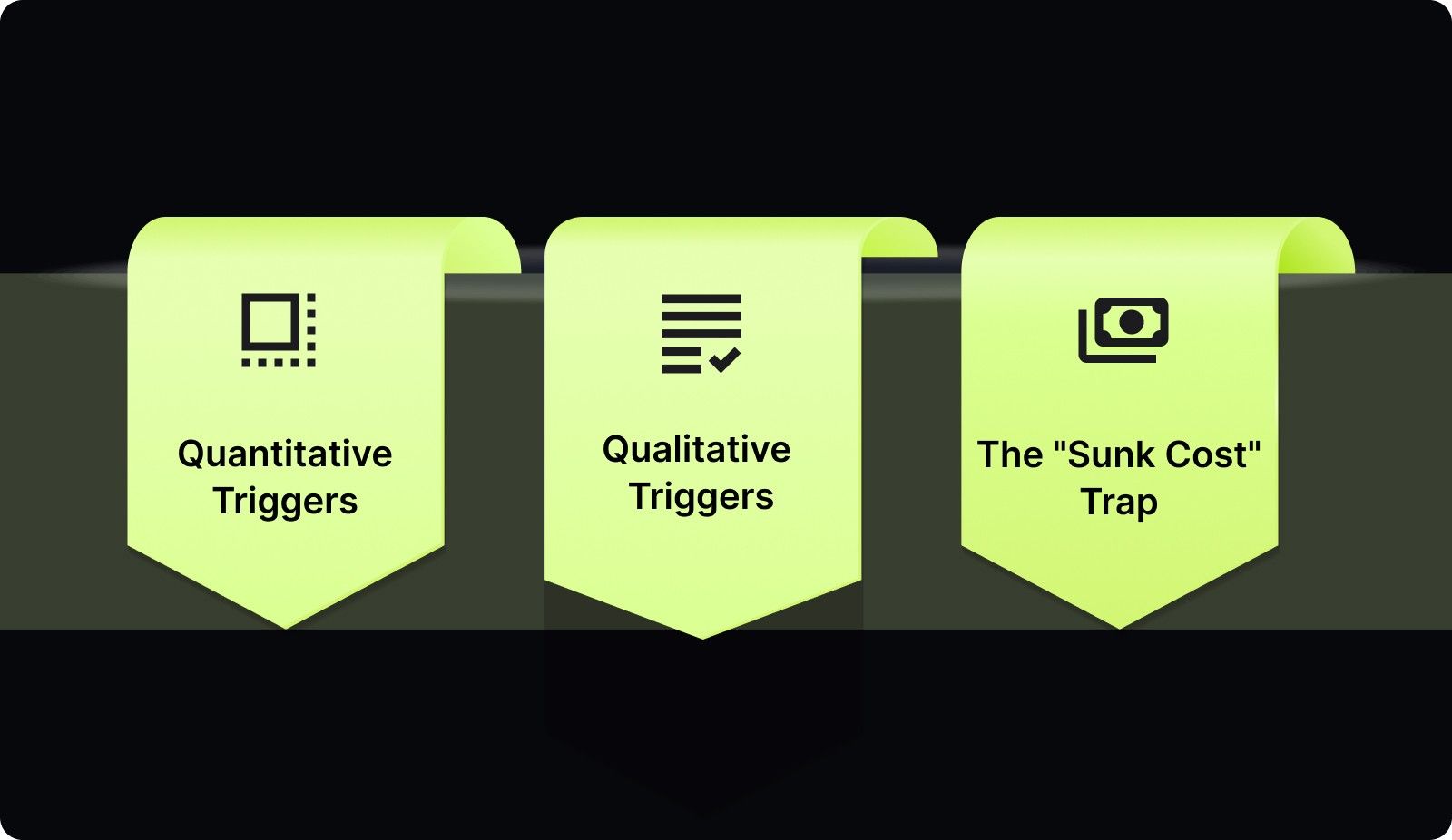
Watch for these specific triggers to decide if it is time to intervene:

1. Quantitative Triggers

A sustained 20-30% drop in sprint velocity over multiple cycles is a major red flag. Similarly, a rising Change Failure Rate, the percentage of deployments causing incidents, indicates quality is being sacrificed for speed. These metrics point to a capacity planning error.

Pro Tip: Track PR cycle time (from open to merge). A creeping increase is an early, leading indicator of review bottlenecks about to impact velocity.

2. Qualitative Triggers

Listen for diminished ownership in stand-ups ("I'm waiting on…") or a decline in proactive solution-building. Quiet quitting, where developers do the minimum, often stems from goals perceived as unachievable. A team that has lost belief in the target has already disengaged from the outcome.

Pro Tip: Run a quick, anonymous sentiment poll. A simple question like "How confident are you in hitting our current OKRs?" can reveal doubts data can't.

3. The "Sunk Cost" Trap

The fallacy is clear: "We've already invested two months; we have to see it through." But persisting on a path guaranteed to miss the objective wastes further resources and opportunity. The business cost of a missed market window or a burned-out team far exceeds the cost of a mid-quarter pivot.

Pro Tip: Frame the adjustment as an optimization of remaining resources. Ask, "With the time and energy we have left, what is the most valuable outcome we can realistically deliver?"

Recognizing these signs early allows you to move into the recovery phase before the team experiences total burnout or significant cultural decay.

Also read: How To Revert A Git Pull Request

How to Adjust OKRs for Recovery: A Step-by-Step Framework

Adjusting OKRs for underperforming engineering teams requires a disciplined approach that balances immediate relief with the long-term health of the codebase.

You must move through these phases carefully to ensure the team feels supported rather than just being given an "easier" path out. Here's how you do it:

Phase 1: Stabilize the Foundation

Stop the bleeding by moving away from "Feature-First" goals and focusing on the "Health-First" objectives that are currently causing the slowdown.

  • Step 1: Identify the top three technical blockers that cause the most developer frustration during the current sprint cycle.

  • Step 2: Pause all non-critical feature development for the next two weeks to focus exclusively on resolving these specific technical bottlenecks.

  • Step 3: Set a Key Result focused on reducing build or deployment times by a specific percentage to improve daily developer flow.

  • Step 4: Re-evaluate the "Definition of Done" to ensure quality is not being traded for speed during the stabilization phase of recovery.

Phase 2: Shrink the Scope

Use the "Minimum Viable Objective" (MVO) framework to reduce the scope of your current goals until they are truly achievable.

  • Step 1: Audit your current backlog and remove any "nice-to-have" features that do not directly contribute to the primary business goal.

  • Step 2: Narrow the focus of the team down to a single objective that provides the highest value with the least complexity.

  • Step 3: Break the MVO into smaller, weekly milestones to give the team frequent "wins" that help rebuild their confidence and momentum.

  • Step 4: Explicitly communicate to product stakeholders what is being cut and why this reduction is necessary for long-term project success.

Phase 3: Pivot the Key Results

Switch from outcome-based Key Results to process-based Key Results to give the team a sense of agency over their daily work.

  • Step 1: Replace targets like "Reach 10k users" with targets like "Reduce PR review turnaround time to under 24 hours" for developers.

  • Step 2: Focus KRs on "inputs" that the team can directly control rather than "outputs" that depend on external market or product factors.

  • Step 3: Implement a "No-Fly Zone" for meetings to protect deep work time and ensure developers have the space to hit targets.

  • Step 4: Measure the improvement in developer experience metrics as a leading indicator of future increases in overall team shipping velocity.

Once you have stabilized the environment, you can use specific examples to illustrate what a healthy adjustment looks like in practice.

Also read: How To Measure And Improve Code Quality?

7 Adjusted OKR Examples for Underperforming Engineering Teams

When you are adjusting OKRs for underperforming engineering teams, you need to transition from aggressive output targets to foundational health metrics.

These examples show how to pivot failing goals into realistic recovery targets that actually address the root causes of the slowdown:

Example 1: Feature Delivery to System Reliability

Before (Failing)

After (Recovery)

Objective: Ship 5 major dashboard features.

Objective: Improve system stability and reduce downtime.

KR: 100% feature completion by the end of Q3.

KR: Reduce Change Failure Rate from 25% to 5%.

Example 2: Data Migration Speed to Data Integrity

Before (Failing)

After (Recovery)

Objective: Migrate all legacy users to the new database.

Objective: Establish a safe and verifiable migration process.

KR: 100,000 users migrated by September.

KR: Automate migration validation tests for 100% of records.

Example 3: Mobile App Rating to Performance Optimization

Before (Failing)

After (Recovery)

Objective: Increase iOS App Store rating to 4.8 stars.

Objective: Resolve core performance issues causing app crashes.

KR: Implement 10 new UI/UX feedback requests.

KR: Reduce median app launch time by 40%.

Example 4: Developer Hiring to Existing Team Onboarding

Before (Failing)

After (Recovery)

Objective: Grow the engineering team by 15 developers.

Objective: Improve the productivity of current engineering hires.

KR: Hire and onboard 5 new engineers per month.

KR: Reduce "Time to First PR" for new hires to 3 days.

Example 5: API Usage to API Documentation Health

Before (Failing)

After (Recovery)

Objective: Increase API requests by 50% year-over-year.

Objective: Reduce developer friction when integrating with our API.

KR: Launch three new API endpoints for partners.

KR: Achieve 100% documentation coverage for all public endpoints.

Example 6: Infrastructure Cost to Infrastructure Automation

Before (Failing)

After (Recovery)

Objective: Reduce monthly AWS spend by $10,000.

Objective: Eliminate manual toil in cloud resource management.

KR: Shut down 20 underutilized staging instances.

KR: Migrate 100% of infrastructure to Terraform scripts.

Example 7: Security Patching to Automated Scanning

Before (Failing)

After (Recovery)

Objective: Resolve all 500 outstanding security tickets.

Objective: Build a proactive security posture within the CI/CD.

KR: Close 50 security-related Jira tickets per week.

KR: Integrate automated vulnerability scanning into every PR.

Establishing these clear, achievable targets helps you rebuild the trust and discipline required for long-term engineering success.

Also read: Sprint Velocity in Scrum: How to Measure and Calculate It Right?

Best Practices for Resetting Engineering Expectations

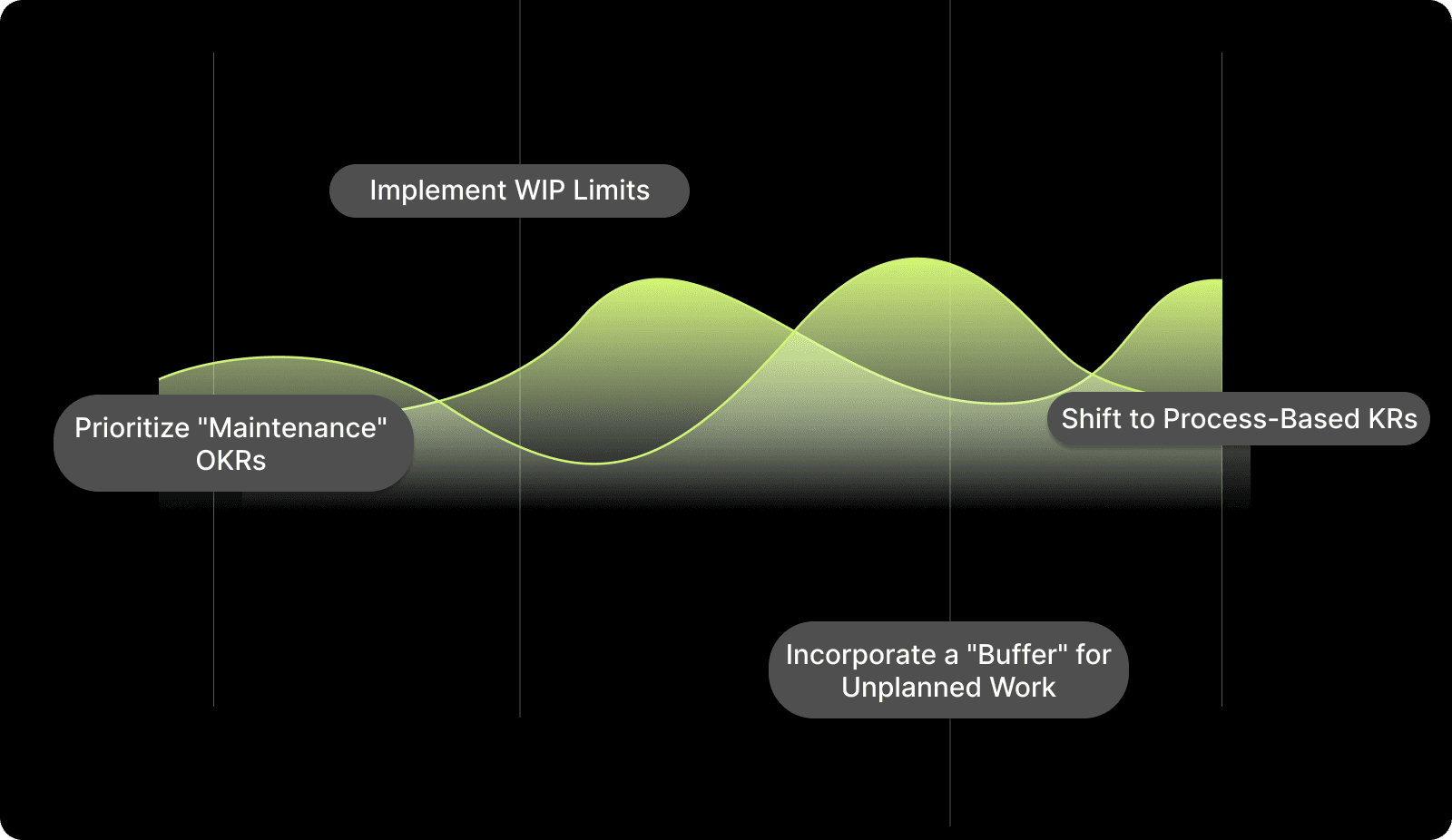
Adjusting your goals is not about "lowering the bar" but rather moving the bar to a place where the team can actually reach it. To ensure your adjusted OKRs lead to a successful turnaround, follow these proven strategies:
Best Practices for Resetting Engineering Expectations

1. Prioritize "Maintenance" OKRs

Dedicate specific Key Results to reducing technical debt to clear the path for future shipping speed and reliability. If your team is underperforming because they are fighting legacy code or broken build pipelines, no amount of "feature pressure" will help.

By legitimizing maintenance work within your OKR framework, you give developers the permission they need to fix the foundations that are currently slowing them down.

Impact:

  • Removes the "invisible tax" that slows down every new feature request.

  • Increases developer satisfaction by resolving long-standing technical frustrations.

  • Lowers the risk of critical production failures caused by brittle, unmaintained code.

2. Implement WIP Limits

Narrow the team's focus to ensure a few critical items get "Done" rather than many staying "In Progress" indefinitely. High-stress environments often lead teams to start many tasks to show "busyness," which only results in massive context-switching costs and zero completed features.

Setting hard limits on active work ensures that the team’s collective energy is channeled into pushing the highest-priority tickets across the finish line.

Impact:

  • Drastically reduces the "lead time" from task creation to production deployment.

  • Prevents the mental fatigue associated with managing multiple half-finished projects.

  • Increases the overall predictability of your sprint cycles and delivery dates.

3. Shift to Process-Based KRs

Reward the "how" of engineering, such as code review turnaround time or automated test coverage, to rebuild daily discipline. When a team is struggling, outcome-based goals like "User Acquisition" can feel outside of their control and demoralizing.

Focusing on internal metrics gives the team a sense of agency and immediate reward for improving their own professional standards and workflow efficiency.

Impact:

  • Builds a culture of high-quality code standards that prevents future technical debt.

  • Shortens the feedback loop between code submission and final approval.

  • Provides a clear, objective way for developers to track their daily improvement.

4. Incorporate a "Buffer" for Unplanned Work

Mathematically account for urgent bugs and production support in your planning to avoid constant sprint overflows and missed targets. Many managers plan for 100% capacity, which leaves zero room for the inevitable production emergencies that occur in any real-world system.

By explicitly dedicating 20% to 30% of your team's bandwidth to "the unknown," you ensure that your primary OKRs remain achievable even when crises arise.

Impact:

  • Eliminates the "failure cycle" where teams miss goals due to unexpected interruptions.

  • Provides a realistic view of team capacity for product and business stakeholders.

  • Reduces the on-call anxiety that contributes to long-term developer burnout.

These best practices help you create a sustainable environment where the team can grow without being crushed by unrealistic organizational pressure.

Also read: Understanding Velocity in Agile Software Development

Common Mistakes to Avoid When Resetting Expectations

When leaders attempt to fix a failing team, they often revert to micromanagement or blame-heavy communication that only deepens the performance issues. You must remain aware of these common mistakes to ensure that your recovery efforts do not backfire and drive away your best talent.

Watch for these errors during your OKR adjustment process:

1. The "Blame Game"

Using OKR adjustments as a way to punish the team for "failing" will instantly destroy psychological safety and stop innovation.

  • Solution: Focus the conversation on "planning accuracy" and "systemic blockers" rather than individual performance or character flaws.

2. Over-Correction

Cutting targets so low that the team loses its sense of purpose can lead to boredom and a lack of professional pride.

  • Solution: Keep the "Objective" ambitious but make the "Key Results" more realistic and grounded in the team's current technical reality.

3. Ignoring the "Why"

Adjusting the numbers without fixing the underlying process bottlenecks means you will likely face the same failure in the next cycle.

  • Solution: Pair every OKR adjustment with a specific process improvement, such as adopting an AI-powered code review tool to reduce review lag.

Avoiding these traps ensures that your pivot is seen as a strategic move toward excellence rather than a desperate retreat from difficulty.

Communicating OKR Adjustments to Stakeholders

One of the hardest parts of leadership is telling executives and product managers that the team will not hit their original targets. You must frame the conversation around "risk management" and "long-term value" to ensure you maintain the confidence of the broader business leadership.

Use these strategies to manage the perception of failure:

  • The "Transparency Script": Start by saying, "The data from our last three sprints shows that our current technical debt is preventing us from hitting Feature X safely."

  • Re-aligning with Business Value: Explain that by fixing "Blocker Y" now, you are ensuring that the next four features will ship 30% faster.

  • Managing Perceptions: Frame the adjustment as a "re-calibration for accuracy" rather than a "failure to deliver" to maintain organizational trust.

By communicating with data-backed clarity, you position yourself as a proactive leader who prioritizes the long-term success of the company over short-term optics.

Entelligence AI: Bridging the Gap Between OKRs and Daily Execution

Engineering OKRs are often too abstract for developers to connect with their daily pull requests and IDE workflows. When goals feel disconnected from reality, teams become disengaged, and leaders lose the visibility they need to make informed strategic pivots before it is too late.

Entelligence AI is the end-to-end engineering productivity suite designed to unify code quality, security, and team management. We bridge the gap between day-to-day code execution and the strategic clarity leaders need, making it a complete solution for the entire engineering organization.

  • Sprint Assessment Dashboards: Automatically track planned versus completed tasks to surface blockers and bottlenecks before they derail your entire quarterly roadmap.

  • PR Bottleneck Alerts: Identify exactly where code is getting stuck in the review cycle to ensure your team maintains a consistent shipping velocity.

  • Automated Blocker Identification: Surface the specific technical debt and manual feedback loops that are preventing your team from reaching their full productive potential.

  • Team Performance & Leaderboard Insights: Move beyond gut feel. Gain quantitative and qualitative analytics on contributions, helping you create fair, motivating goals and recognize top performers to boost engagement around new objectives

Consolidating your engineering data with AI-powered insights allows you to set OKRs based on actual team capacity rather than just optimistic guesswork.

Also read: Understanding Code Scanning for Vulnerabilities

Conclusion

Adjusting OKRs for underperforming engineering teams is an act of strategic leadership that defines the long-term success of your organization. By diagnosing the root causes of failure and resetting expectations with data-driven clarity, you build a sustainable culture of high performance and trust.

Managing the balance between ambitious goals and technical reality requires a platform that understands the deep context of your engineering workflow. Entelligence AI provides the visibility every role needs to ship faster, with higher quality, and with total strategic alignment across the business.

Want to set OKRs your team can actually hit? Book a demo with Entelligence AI today.

FAQs

Q. Should I change the Objective or just the Key Results?

Change the Key Results if the strategic direction (the Objective) is still correct, but the measurements or scope were off. Change the Objective itself if the original strategic goal is no longer viable, relevant, or possible given the new constraints. Most recoveries involve changing KRs to be more process-oriented and achievable while keeping a refined version of the Objective.

Q. How do I keep the team motivated after lowering a target?

Frame it as a focus, not a lowering. Explain that by achieving a smaller, certain win, the team builds momentum and mastery. Celebrate the achievement of the adjusted goals vigorously to rebuild confidence. Most importantly, involve the team in the adjustment process so they own the new targets and understand the "why" behind them.

Q. What if stakeholders refuse to allow an OKR adjustment?

Come prepared with data. Show the velocity trends, the bug reports, and the team sentiment scores. Ask the stakeholder: "Given this data, what outcome do you believe is more likely: us hitting the original target, or burning out and delivering nothing? I'm proposing a path that guarantees we deliver this valuable outcome." Anchor the discussion in business risk and value preservation.

Q. How often should we check in on adjusted OKRs?

Increase check-in frequency significantly. Move from a quarterly review to bi-weekly or even weekly confidence scoring sessions for the adjustment period. This allows for rapid micro-corrections, shows the team their progress is being actively supported, and prevents another major derailment.

Q. Can adjusting OKRs mid-cycle hurt our team's credibility?

Not if handled transparently and professionally. Credibility is damaged by missing goals without warning or explanation. It is enhanced by proactively identifying risks, communicating data-driven solutions, and responsibly stewarding the team and company resources to the best possible outcome. It shows operational maturity.
The panic from a dashboard of missed targets is a unique leadership challenge. The instinct to question team effort and apply more pressure is destructive. It ignores the data: enterprises with high-performing IT organizations achieve up to 35% higher revenue growth and 10% higher profit margins.

This shows that team underperformance is a direct threat to core business outcomes, not just a project delay. This "Red Dashboard" panic typically worsens the real problem. Leaders often blame a lack of effort rather than flawed planning.

Demanding more from a team facing unrealistic goals leads directly to burnout, attrition, and a further drop in velocity. Chronic OKR failures are rarely about individual effort; they are almost always symptoms of systemic friction and hidden blockers.

In this article, you will learn how to identify the root causes of missed targets and follow a recovery guide for adjusting OKRs for underperforming engineering teams.

Quick Look

  • Prioritize Stability: Shift your focus from shipping new features to improving system health and reducing technical debt to rebuild momentum.

  • The 70% Benchmark: Success in an OKR framework means hitting roughly 70% of a target, as 100% completion often indicates "sandbagging."

  • The MVO Framework: Use the "Minimum Viable Objective" to strip away non-essential tasks and focus the team on one critical win.

  • Process over Outcome: Switch to process-based Key Results, like reducing PR review time, to give the team control over their daily success.

  • Data Justifies Pivots: Use real engineering data from your CI/CD pipeline to explain to stakeholders why an OKR adjustment is necessary.

Why Engineering OKRs Fail: Diagnosing Underperformance

You cannot fix a failing roadmap until you understand whether the failure is a result of people, process, or purely technical constraints. Most managers jump straight to "performance improvement plans" without looking at the systemic issues that make high performance impossible for the developers.

To diagnose why your team is struggling, you must look for these specific indicators:

  • Distinguishing between "Lack of Effort" and "Systemic Friction": Effort is rarely the issue in high-growth companies; instead, engineers are often blocked by slow build times or manual QA.

  • The 70% Rule: If your team hits 100% of their OKRs every cycle, they are likely setting easy goals that do not push the product forward.

  • Identifying the "Silent Killers": Unaddressed technical debt and unclear cross-team dependencies act as a permanent tax on every new feature your team tries to ship.

Determining these root causes provides the necessary evidence you need to convince stakeholders that a strategic pivot is the only way forward.

Entelligence AI unifies these signals into a single dashboard, helping leaders distinguish between individual effort and systemic friction. Book a demo to see how to surface the technical debt and blockers that prevent your team from reaching their OKRs.

When to Adjust OKRs Mid-Cycle: Some Warning Signs

Waiting until the end of the quarter to acknowledge a failure ensures that you waste months of productive time on a lost cause. You should be prepared to pivot as soon as the data shows that your current path is no longer viable or sustainable.

When to Adjust OKRs Mid-Cycle: Some Warning Signs

Watch for these specific triggers to decide if it is time to intervene:

1. Quantitative Triggers

A sustained 20-30% drop in sprint velocity over multiple cycles is a major red flag. Similarly, a rising Change Failure Rate, the percentage of deployments causing incidents, indicates quality is being sacrificed for speed. These metrics point to a capacity planning error.

Pro Tip: Track PR cycle time (from open to merge). A creeping increase is an early, leading indicator of review bottlenecks about to impact velocity.

2. Qualitative Triggers

Listen for diminished ownership in stand-ups ("I'm waiting on…") or a decline in proactive solution-building. Quiet quitting, where developers do the minimum, often stems from goals perceived as unachievable. A team that has lost belief in the target has already disengaged from the outcome.

Pro Tip: Run a quick, anonymous sentiment poll. A simple question like "How confident are you in hitting our current OKRs?" can reveal doubts data can't.

3. The "Sunk Cost" Trap

The fallacy is clear: "We've already invested two months; we have to see it through." But persisting on a path guaranteed to miss the objective wastes further resources and opportunity. The business cost of a missed market window or a burned-out team far exceeds the cost of a mid-quarter pivot.

Pro Tip: Frame the adjustment as an optimization of remaining resources. Ask, "With the time and energy we have left, what is the most valuable outcome we can realistically deliver?"

Recognizing these signs early allows you to move into the recovery phase before the team experiences total burnout or significant cultural decay.

Also read: How To Revert A Git Pull Request

How to Adjust OKRs for Recovery: A Step-by-Step Framework

Adjusting OKRs for underperforming engineering teams requires a disciplined approach that balances immediate relief with the long-term health of the codebase.

You must move through these phases carefully to ensure the team feels supported rather than just being given an "easier" path out. Here's how you do it:

Phase 1: Stabilize the Foundation

Stop the bleeding by moving away from "Feature-First" goals and focusing on the "Health-First" objectives that are currently causing the slowdown.

  • Step 1: Identify the top three technical blockers that cause the most developer frustration during the current sprint cycle.

  • Step 2: Pause all non-critical feature development for the next two weeks to focus exclusively on resolving these specific technical bottlenecks.

  • Step 3: Set a Key Result focused on reducing build or deployment times by a specific percentage to improve daily developer flow.

  • Step 4: Re-evaluate the "Definition of Done" to ensure quality is not being traded for speed during the stabilization phase of recovery.

Phase 2: Shrink the Scope

Use the "Minimum Viable Objective" (MVO) framework to reduce the scope of your current goals until they are truly achievable.

  • Step 1: Audit your current backlog and remove any "nice-to-have" features that do not directly contribute to the primary business goal.

  • Step 2: Narrow the focus of the team down to a single objective that provides the highest value with the least complexity.

  • Step 3: Break the MVO into smaller, weekly milestones to give the team frequent "wins" that help rebuild their confidence and momentum.

  • Step 4: Explicitly communicate to product stakeholders what is being cut and why this reduction is necessary for long-term project success.

Phase 3: Pivot the Key Results

Switch from outcome-based Key Results to process-based Key Results to give the team a sense of agency over their daily work.

  • Step 1: Replace targets like "Reach 10k users" with targets like "Reduce PR review turnaround time to under 24 hours" for developers.

  • Step 2: Focus KRs on "inputs" that the team can directly control rather than "outputs" that depend on external market or product factors.

  • Step 3: Implement a "No-Fly Zone" for meetings to protect deep work time and ensure developers have the space to hit targets.

  • Step 4: Measure the improvement in developer experience metrics as a leading indicator of future increases in overall team shipping velocity.

Once you have stabilized the environment, you can use specific examples to illustrate what a healthy adjustment looks like in practice.

Also read: How To Measure And Improve Code Quality?

7 Adjusted OKR Examples for Underperforming Engineering Teams

When you are adjusting OKRs for underperforming engineering teams, you need to transition from aggressive output targets to foundational health metrics.

These examples show how to pivot failing goals into realistic recovery targets that actually address the root causes of the slowdown:

Example 1: Feature Delivery to System Reliability

Before (Failing)

After (Recovery)

Objective: Ship 5 major dashboard features.

Objective: Improve system stability and reduce downtime.

KR: 100% feature completion by the end of Q3.

KR: Reduce Change Failure Rate from 25% to 5%.

Example 2: Data Migration Speed to Data Integrity

Before (Failing)

After (Recovery)

Objective: Migrate all legacy users to the new database.

Objective: Establish a safe and verifiable migration process.

KR: 100,000 users migrated by September.

KR: Automate migration validation tests for 100% of records.

Example 3: Mobile App Rating to Performance Optimization

Before (Failing)

After (Recovery)

Objective: Increase iOS App Store rating to 4.8 stars.

Objective: Resolve core performance issues causing app crashes.

KR: Implement 10 new UI/UX feedback requests.

KR: Reduce median app launch time by 40%.

Example 4: Developer Hiring to Existing Team Onboarding

Before (Failing)

After (Recovery)

Objective: Grow the engineering team by 15 developers.

Objective: Improve the productivity of current engineering hires.

KR: Hire and onboard 5 new engineers per month.

KR: Reduce "Time to First PR" for new hires to 3 days.

Example 5: API Usage to API Documentation Health

Before (Failing)

After (Recovery)

Objective: Increase API requests by 50% year-over-year.

Objective: Reduce developer friction when integrating with our API.

KR: Launch three new API endpoints for partners.

KR: Achieve 100% documentation coverage for all public endpoints.

Example 6: Infrastructure Cost to Infrastructure Automation

Before (Failing)

After (Recovery)

Objective: Reduce monthly AWS spend by $10,000.

Objective: Eliminate manual toil in cloud resource management.

KR: Shut down 20 underutilized staging instances.

KR: Migrate 100% of infrastructure to Terraform scripts.

Example 7: Security Patching to Automated Scanning

Before (Failing)

After (Recovery)

Objective: Resolve all 500 outstanding security tickets.

Objective: Build a proactive security posture within the CI/CD.

KR: Close 50 security-related Jira tickets per week.

KR: Integrate automated vulnerability scanning into every PR.

Establishing these clear, achievable targets helps you rebuild the trust and discipline required for long-term engineering success.

Also read: Sprint Velocity in Scrum: How to Measure and Calculate It Right?

Best Practices for Resetting Engineering Expectations

Adjusting your goals is not about "lowering the bar" but rather moving the bar to a place where the team can actually reach it. To ensure your adjusted OKRs lead to a successful turnaround, follow these proven strategies:

Best Practices for Resetting Engineering Expectations

1. Prioritize "Maintenance" OKRs

Dedicate specific Key Results to reducing technical debt to clear the path for future shipping speed and reliability. If your team is underperforming because they are fighting legacy code or broken build pipelines, no amount of "feature pressure" will help.

By legitimizing maintenance work within your OKR framework, you give developers the permission they need to fix the foundations that are currently slowing them down.

Impact:

  • Removes the "invisible tax" that slows down every new feature request.

  • Increases developer satisfaction by resolving long-standing technical frustrations.

  • Lowers the risk of critical production failures caused by brittle, unmaintained code.

2. Implement WIP Limits

Narrow the team's focus to ensure a few critical items get "Done" rather than many staying "In Progress" indefinitely. High-stress environments often lead teams to start many tasks to show "busyness," which only results in massive context-switching costs and zero completed features.

Setting hard limits on active work ensures that the team’s collective energy is channeled into pushing the highest-priority tickets across the finish line.

Impact:

  • Drastically reduces the "lead time" from task creation to production deployment.

  • Prevents the mental fatigue associated with managing multiple half-finished projects.

  • Increases the overall predictability of your sprint cycles and delivery dates.

3. Shift to Process-Based KRs

Reward the "how" of engineering, such as code review turnaround time or automated test coverage, to rebuild daily discipline. When a team is struggling, outcome-based goals like "User Acquisition" can feel outside of their control and demoralizing.

Focusing on internal metrics gives the team a sense of agency and immediate reward for improving their own professional standards and workflow efficiency.

Impact:

  • Builds a culture of high-quality code standards that prevents future technical debt.

  • Shortens the feedback loop between code submission and final approval.

  • Provides a clear, objective way for developers to track their daily improvement.

4. Incorporate a "Buffer" for Unplanned Work

Mathematically account for urgent bugs and production support in your planning to avoid constant sprint overflows and missed targets. Many managers plan for 100% capacity, which leaves zero room for the inevitable production emergencies that occur in any real-world system.

By explicitly dedicating 20% to 30% of your team's bandwidth to "the unknown," you ensure that your primary OKRs remain achievable even when crises arise.

Impact:

  • Eliminates the "failure cycle" where teams miss goals due to unexpected interruptions.

  • Provides a realistic view of team capacity for product and business stakeholders.

  • Reduces the on-call anxiety that contributes to long-term developer burnout.

These best practices help you create a sustainable environment where the team can grow without being crushed by unrealistic organizational pressure.

Also read: Understanding Velocity in Agile Software Development

Common Mistakes to Avoid When Resetting Expectations

When leaders attempt to fix a failing team, they often revert to micromanagement or blame-heavy communication that only deepens the performance issues. You must remain aware of these common mistakes to ensure that your recovery efforts do not backfire and drive away your best talent.

Watch for these errors during your OKR adjustment process:

1. The "Blame Game"

Using OKR adjustments as a way to punish the team for "failing" will instantly destroy psychological safety and stop innovation.

  • Solution: Focus the conversation on "planning accuracy" and "systemic blockers" rather than individual performance or character flaws.

2. Over-Correction

Cutting targets so low that the team loses its sense of purpose can lead to boredom and a lack of professional pride.

  • Solution: Keep the "Objective" ambitious but make the "Key Results" more realistic and grounded in the team's current technical reality.

3. Ignoring the "Why"

Adjusting the numbers without fixing the underlying process bottlenecks means you will likely face the same failure in the next cycle.

  • Solution: Pair every OKR adjustment with a specific process improvement, such as adopting an AI-powered code review tool to reduce review lag.

Avoiding these traps ensures that your pivot is seen as a strategic move toward excellence rather than a desperate retreat from difficulty.

Communicating OKR Adjustments to Stakeholders

One of the hardest parts of leadership is telling executives and product managers that the team will not hit their original targets. You must frame the conversation around "risk management" and "long-term value" to ensure you maintain the confidence of the broader business leadership.

Use these strategies to manage the perception of failure:

  • The "Transparency Script": Start by saying, "The data from our last three sprints shows that our current technical debt is preventing us from hitting Feature X safely."

  • Re-aligning with Business Value: Explain that by fixing "Blocker Y" now, you are ensuring that the next four features will ship 30% faster.

  • Managing Perceptions: Frame the adjustment as a "re-calibration for accuracy" rather than a "failure to deliver" to maintain organizational trust.

By communicating with data-backed clarity, you position yourself as a proactive leader who prioritizes the long-term success of the company over short-term optics.

Entelligence AI: Bridging the Gap Between OKRs and Daily Execution

Engineering OKRs are often too abstract for developers to connect with their daily pull requests and IDE workflows. When goals feel disconnected from reality, teams become disengaged, and leaders lose the visibility they need to make informed strategic pivots before it is too late.

Entelligence AI is the end-to-end engineering productivity suite designed to unify code quality, security, and team management. We bridge the gap between day-to-day code execution and the strategic clarity leaders need, making it a complete solution for the entire engineering organization.

  • Sprint Assessment Dashboards: Automatically track planned versus completed tasks to surface blockers and bottlenecks before they derail your entire quarterly roadmap.

  • PR Bottleneck Alerts: Identify exactly where code is getting stuck in the review cycle to ensure your team maintains a consistent shipping velocity.

  • Automated Blocker Identification: Surface the specific technical debt and manual feedback loops that are preventing your team from reaching their full productive potential.

  • Team Performance & Leaderboard Insights: Move beyond gut feel. Gain quantitative and qualitative analytics on contributions, helping you create fair, motivating goals and recognize top performers to boost engagement around new objectives

Consolidating your engineering data with AI-powered insights allows you to set OKRs based on actual team capacity rather than just optimistic guesswork.

Also read: Understanding Code Scanning for Vulnerabilities

Conclusion

Adjusting OKRs for underperforming engineering teams is an act of strategic leadership that defines the long-term success of your organization. By diagnosing the root causes of failure and resetting expectations with data-driven clarity, you build a sustainable culture of high performance and trust.

Managing the balance between ambitious goals and technical reality requires a platform that understands the deep context of your engineering workflow. Entelligence AI provides the visibility every role needs to ship faster, with higher quality, and with total strategic alignment across the business.

Want to set OKRs your team can actually hit? Book a demo with Entelligence AI today.

FAQs

Q. Should I change the Objective or just the Key Results?

Change the Key Results if the strategic direction (the Objective) is still correct, but the measurements or scope were off. Change the Objective itself if the original strategic goal is no longer viable, relevant, or possible given the new constraints. Most recoveries involve changing KRs to be more process-oriented and achievable while keeping a refined version of the Objective.

Q. How do I keep the team motivated after lowering a target?

Frame it as a focus, not a lowering. Explain that by achieving a smaller, certain win, the team builds momentum and mastery. Celebrate the achievement of the adjusted goals vigorously to rebuild confidence. Most importantly, involve the team in the adjustment process so they own the new targets and understand the "why" behind them.

Q. What if stakeholders refuse to allow an OKR adjustment?

Come prepared with data. Show the velocity trends, the bug reports, and the team sentiment scores. Ask the stakeholder: "Given this data, what outcome do you believe is more likely: us hitting the original target, or burning out and delivering nothing? I'm proposing a path that guarantees we deliver this valuable outcome." Anchor the discussion in business risk and value preservation.

Q. How often should we check in on adjusted OKRs?

Increase check-in frequency significantly. Move from a quarterly review to bi-weekly or even weekly confidence scoring sessions for the adjustment period. This allows for rapid micro-corrections, shows the team their progress is being actively supported, and prevents another major derailment.

Q. Can adjusting OKRs mid-cycle hurt our team's credibility?

Not if handled transparently and professionally. Credibility is damaged by missing goals without warning or explanation. It is enhanced by proactively identifying risks, communicating data-driven solutions, and responsibly stewarding the team and company resources to the best possible outcome. It shows operational maturity.

We raised $5M to run your Engineering team on Autopilot

We raised $5M to run your Engineering team on Autopilot

Watch our launch video

Talk to Sales

Turn engineering signals into leadership decisions

Connect with our team to see how Entelliegnce helps engineering leaders with full visibility into sprint performance, Team insights & Product Delivery

Talk to Sales

Turn engineering signals into leadership decisions

Connect with our team to see how Entelliegnce helps engineering leaders with full visibility into sprint performance, Team insights & Product Delivery

Try Entelligence now