

Capitalizing Software Development Costs: A Comprehensive Guide

Dec 12, 2025

Dec 12, 2025

Internal software development and R&D are significant investments for many firms. However, the percentage of firms capitalizing software development costs declined by just about 1% between the two years.

Capitalizing software development costs offers an alternative: Recording costs on the balance sheet and amortizing them over time. It smooths Profit and Loss (P&L), improves cash‑flow visibility, and aligns expense recognition with long‑term value.

In this article, you will learn what software capitalization means, when and how to amortize it appropriately. This practical guidance will help engineering and accounting teams adopt a capitalization‑ready workflow.

At a Glance

  • Capitalizing software development costs smooths P&L statements, improves cash flow, and aligns costs with the long-term value of software.

  • Internal-use and external-use software have different capitalization rules, with specific criteria defined by FASB and GASB standards.

  • Only direct costs, such as developer salaries, third-party services, and licenses, can be capitalized. Indirect costs, such as overhead and maintenance, must be expensed.

  • Proper tracking and documentation of capitalized costs are critical for compliance, reducing financial reporting risks and audit complications.

What is Software Capitalization?

Capitalization of software is the practice of treating software development or acquisition costs as an asset on the balance sheet rather than expensing them immediately. This approach allows businesses to spread the cost over the software's useful life, rather than recognizing it all upfront in their profit-and-loss statement.

Financial statements reflect the software's long-term value rather than treating it as a one-time expense, providing a more accurate picture of economic health.

By capitalizing costs, companies can maintain consistent cash flow and improve tax planning, as amortizing software costs reduces taxable income over time. It’s important to differentiate between internal-use software and external-use software:

  • Internal-use software: Software developed for a company’s own operations, such as tools for accounting, HR, or internal collaboration. These costs can often be capitalized once the software reaches a particular stage of development.

  • External-use software: Software developed for sale, lease, or licensing to external customers, such as commercial software applications. Costs related to external-use software can be capitalized only after reaching the technological feasibility stage (e.g., when a working prototype or detailed design has been created).

How companies can determine which costs actually qualify for capitalization. Accounting bodies like the Financial Accounting Standards Board (FASB) and the Governmental Accounting Standards Board (GASB) set specific rules and guidelines for costing.

Also Read: Introducing Entelligence Deep Review Agent

When and How Costs Qualify for Capitalization?

Capitalizing software development costs is more than just a financial strategy. This is needed to ensure that your financial statements accurately reflect the value of the software being developed.

Companies must follow FASB and GASB guidelines, which set the rules for what counts as capitalizable and when it should be done.

FASB Guidelines for Capitalization of Software Implementation Costs

Under FASB standards, software development costs for both internal-use software and external-use software must be capitalized once certain milestones are met:
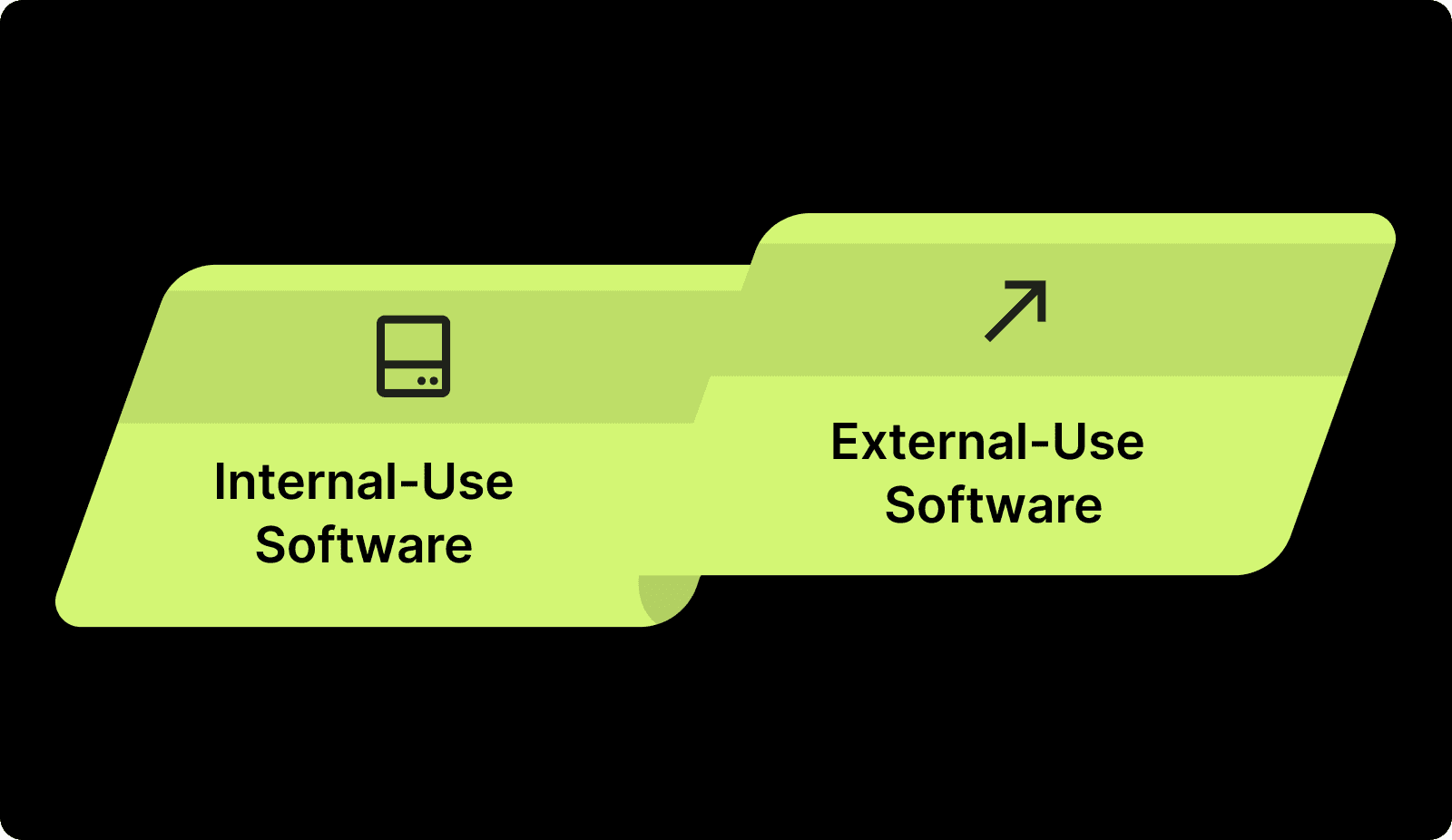
FASB Guidelines for Capitalization of Software Implementation Costs

1. Internal-Use Software: This software is developed for an organization’s internal operations (e.g., HR systems and accounting software). According to FASB ASC 350-40, costs related to this can be capitalized once the project moves past the preliminary stage and application stage.

The costs that can be capitalized include:

  • Developer salaries are directly tied to creating software.

  • Costs for third-party services, such as custom development or system implementation.

  • Materials and licenses used in the software's development.

2. External-Use Software: Software sold, leased, or licensed to external customers (e.g., SaaS products). Under FASB ASC 985-20, capitalization can begin only after "technological feasibility" has been established.

This typically occurs after the product design is complete and the software can perform its intended functions. Costs eligible for capitalization in external-use software include:

  • Development and testing costs are incurred after feasibility is established.

  • Third-party licensing costs are directly tied to the software.

GASB Guidelines for Software Implementation Costs (Governmental Entities)

GASB, which governs accounting for state and local government entities, has similar guidelines but with some differences in application.

The main distinction is that GASB rules apply to software developed for internal use in government agencies. GASB tends to focus on the usage of software for public service, which can affect the types of expenses considered eligible.

In both FASB and GASB guidelines, not all costs related to software development can be capitalized. Here’s the distinction:

  • Direct Costs: Costs directly attributable to software development.

  • Indirect Costs: These are general operational costs that cannot be directly tied to the development process and should be expensed.

Tracking software development costs accurately is a challenge many engineering teams face. Misclassifying direct vs. indirect costs can lead to financial reporting issues and compliance risks.

Entelligence AI helps organize this process by offering real-time visibility into development workflows, making it easier to track and categorize both direct and indirect costs. The platform automates key tasks, including code reviews, sprint assessments, and documentation, ensuring accurate cost tracking.

The critical follow-through is to track and document these costs during development systematically. Proper accounting from the start ensures compliance and simplifies audit and reporting processes.

Also Read: Entelligence Market Analysis

Accrual Accounting vs. Cash-Basis Accounting

When capitalizing software development costs, a company's accounting method can significantly affect how those costs are recognized.

Under accrual accounting, expenses are recorded when they are incurred, regardless of when cash is exchanged. This means that companies can capitalize software costs as they are incurred during the development process, matching costs with the future benefits.

In contrast, cash-basis accounting records expenses only when cash is paid. This method may make it harder to capitalize software costs properly since expenditures may not align with the timing of their recognition in financial reports.

For businesses using cash-basis accounting, it's often more challenging to track and capitalize on software costs accurately. Expenses are recognized when payments are made rather than when the costs are incurred.

With the accounting method as our guide, we transition to its practical application, the capitalization workflow. This process is designed to ensure costs are classified and recorded for compliance.

Read Also: Best Qodo Alternatives: Top Tools for Your Engineering Team

Step-by-Step Process of Capitalization Software Workflow

Without a defined process, capitalizing software costs can lead to inaccurate financials and audit complications. The structured workflow below is designed to eliminate that uncertainty.

It details each essential phase, from expenditure authorization to amortization and efficient capitalization practice for your development projects.

Here’s how engineering and finance teams can manage this effectively:

1. Project Initiation

The first step in the process is to classify the software project as either internal-use or external-use clearly. This distinction directly impacts whether the costs should be capitalized and which rules to follow: Internal-use software or External-use software.

Action Step

Clearly document to ensure the classification aligns with accounting guidelines to determine whether it’s internal-use or external-use software.

2. Tracking Time and Costs

Once the project is classified, it’s time to start tracking costs. Effective cost tracking is critical to ensure accurate capitalization. The key here is segregating costs that are directly related to development from general business expenses:

  • Developer Hours: Time spent by internal developers working directly on the software is a direct cost and should be capitalized.

  • Third-party Costs: If you hire external contractors or consultants for the project, their fees are typically capitalized.

  • Materials and Licenses: Any materials or tools purchased to develop or test the software, such as software licenses or third-party tools, should be capitalized.

Example: If a team of developers works for 500 hours on a project, and you are paying contractors for 200 hours at $50/hour, the total cost of $25,000 would be capitalized.

Action Step

Create a detailed cost-tracking system that categorizes all relevant expenses. Ensure the tracking system captures both internal and external resources to prevent cost misclassification.

3. Documentation and Accounting Entry Guidelines

Once the costs are tracked, it’s time to ensure proper documentation and account for the capitalized expenses.

Many companies struggle to maintain clear, organized records, leading to errors in capitalizing developer salaries, third-party services, and other direct costs.

Vectorial AI, a client of Entelligence AI, faced similar challenges in documenting architectural changes. By using our platform's automatic tracking and updation software development processes, the company organized its documentation and accounting practices.

As a result, this brand achieved 10 times faster development with 100% architectural visibility.

Action Step

Work closely with both your finance and engineering teams to ensure all capitalized costs are recorded accurately and in the correct accounting categories.

4. Transition Point

Once the software is placed in service and ready for use, capitalized costs are amortized, typically using a straight-line method over the software's estimated useful life. For internal-use software, this is usually 3 to 5 years, depending on the software's expected lifespan and the company’s internal policies.

If the software becomes obsolete or is replaced before the end of its expected life, the company must evaluate the remaining capitalized costs. In such cases, the asset may be impaired, and the remaining capitalized costs may need to be written off.

For external-use software (software developed for sale, lease, or licensing), revenue-based amortization may apply instead of the straight-line method. This approach aligns software cost amortization with revenue from sales or licensing.

Action Step

Track when the software is ready for use and ensure the transition to amortization occurs at the right time. This helps avoid any errors in financial reporting.

Why do companies capitalize software costs in the first place? Beyond mere compliance, capitalization is a strategic financial decision that gives significant benefits for both near-term management and long-term growth.

Also Read: Static Code Analysis: A Complete Guide to Improving Your Code

3 Benefits of Capitalizing Software Costs

Now, you have moved beyond the "how"; the strategic "why" for capitalizing software costs lies in its concrete benefits. This approach supports sustainable growth.
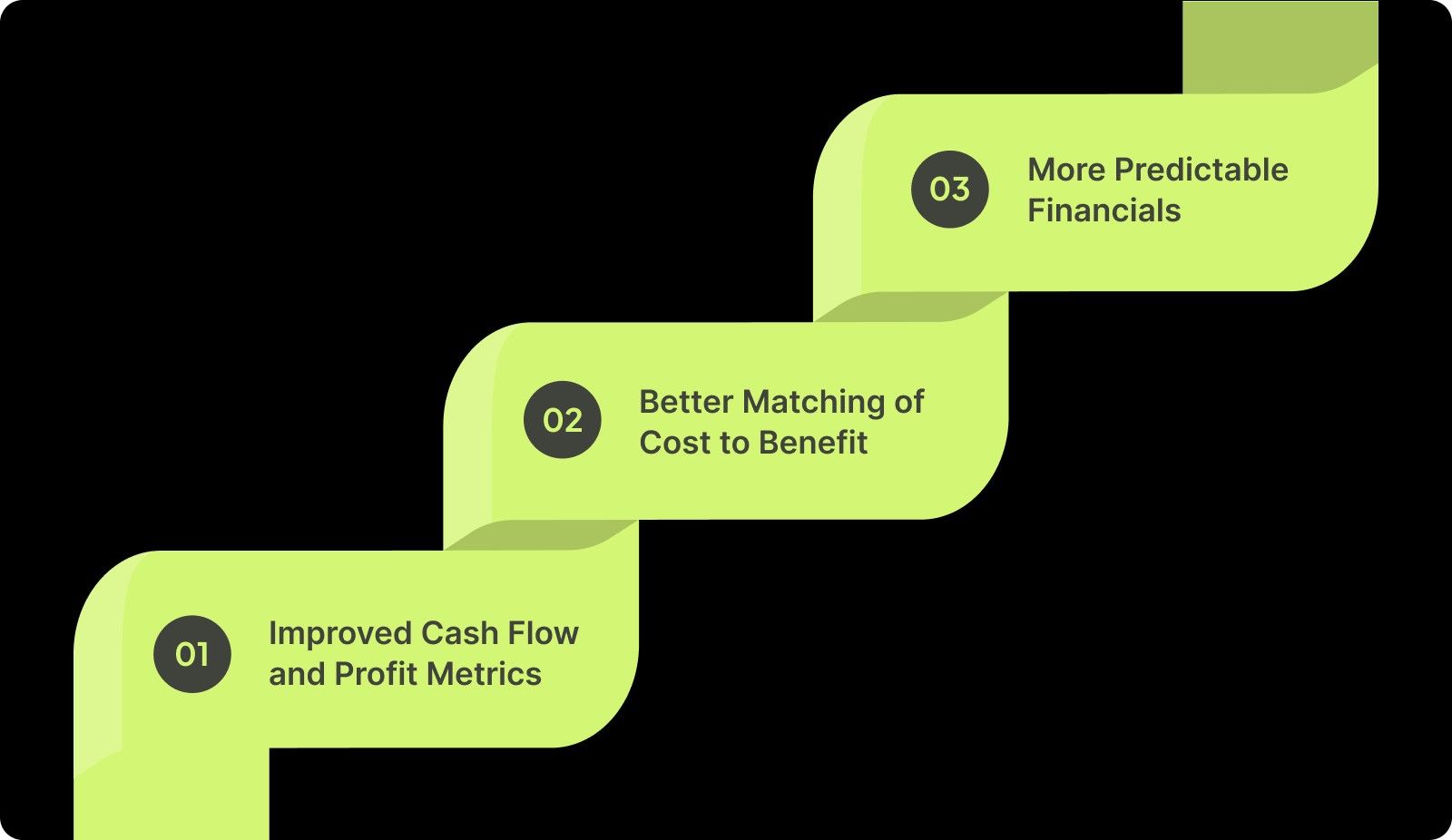
3 Benefits of Capitalizing Software Costs

Here are the three key advantages that make capitalization a best practice:

1. Improved Cash Flow and Profit Metrics

Capitalizing software development costs allows companies to avoid significant upfront expenses on their income statement, thereby significantly improving short-term cash flow. This is especially beneficial for companies in growth phases, as it enables them to retain cash for other investments.

2. Better Matching of Cost to Benefit

One of the core principles of software capitalization is that it aligns costs with the revenue and benefits generated by the software over time. Rather than recognizing all development expenses in a single period, ensure they are matched with the income or efficiencies generated by the software over its useful life.

This improves the accuracy of financial reports, providing stakeholders with a more realistic view of the company’s financial health.

3. More Predictable Financials

Since these costs are amortized over a period rather than recognized all at once, they provide smoother, more predictable financial statements. For companies with multiple software projects, this approach also enables greater consistency in planning and budgeting, reducing uncertainty about long-term costs.

For instance, companies using Entelligence AI’s automated PR reviews and sprint assessments have reported greater financial predictability.

These features allow teams to meet deadlines and reduce time spent on repetitive tasks, ultimately making financial forecasting easier.

Also Read: Introducing the Entelligence AI Code Review in Your IDE!

How Entelligence AI Enhances Software Development and Capitalization?

Entelligence AI helps engineering teams ensure precise tracking of capitalizable costs. By automating key processes and aligning efforts with company goals, we ensure that development efforts are both productive and financially sound.

Here's how Entelligence AI drives more innovative software development and accurate cost capitalization:

  1. AI-Powered Code Reviews: Real-time, in-IDE feedback helps developers catch issues early, reducing review cycles and ensuring only high-quality, capitalizable code is submitted for deployment. This aligns coding practices with organizational objectives by improving productivity and minimizing errors.

  2. Real-Time Performance Insights: Gain immediate visibility into individual and team contributions and adjust workloads based on actual capacity. These insights ensure that resources are allocated effectively, making it easier to track capitalized development costs tied to performance.

  3. Automated Documentation: Automatically generate and sync architecture diagrams, code explanations, and API documentation with the latest codebase. This reduces manual effort in maintaining documentation and ensures accurate tracking of capitalized costs.

  4. Executive Dashboards: Provide leadership with clear visibility into engineering output, linking team performance directly to business objectives and financial outcomes. These dashboards help track key metrics critical to accurate software cost capitalization and to aligning development progress with organizational goals.

  5. Recognition and Engagement: Celebrate top performers with AI-driven leaderboards that highlight contributions linked to key results.

This reinforces the alignment between engineering efforts and company-wide objectives, ultimately ensuring capitalized costs reflect valuable work.

Final Thoughts

Adopting a capitalization model for software costs leads to more predictable financials and improved long-term planning. To achieve this, proper tracking and documentation are required. When implemented effectively, it ensures smoother management of the profit and loss statement.

Entelligence AI supports engineering organizations by providing real-time visibility into development workflows and automating key processes such as code reviews and documentation. It offers metrics that make tracking capitalizable costs much more practical and accurate.

If you're looking to organize your software development workflow and improve your team's cost-tracking accuracy, Entelligence AI is the perfect solution. Start a 14-day free trial today to experience the benefits of real-time performance insights, automated reviews, and more.

FAQs

1. When should a company expense or capitalize software development costs?

A company should capitalize costs for software developed for internal use or for sale once technological feasibility is established. Development costs in the planning or research phase should be expensed.

2. Does software developed using agile or iterative methods qualify for capitalization?

Yes. Software developed using agile methods can qualify for capitalization, provided it meets the criteria of development reaching technological feasibility and is aligned with FASB or GASB guidelines.

3. What happens if I decide to abandon a software project after partially capitalizing costs?

Suppose a software project is abandoned after costs have been capitalized. In that case, the capitalized costs may need to be written off as an impairment, reflecting the loss of value due to abandonment.

Internal software development and R&D are significant investments for many firms. However, the percentage of firms capitalizing software development costs declined by just about 1% between the two years.

Capitalizing software development costs offers an alternative: Recording costs on the balance sheet and amortizing them over time. It smooths Profit and Loss (P&L), improves cash‑flow visibility, and aligns expense recognition with long‑term value.

In this article, you will learn what software capitalization means, when and how to amortize it appropriately. This practical guidance will help engineering and accounting teams adopt a capitalization‑ready workflow.

At a Glance

  • Capitalizing software development costs smooths P&L statements, improves cash flow, and aligns costs with the long-term value of software.

  • Internal-use and external-use software have different capitalization rules, with specific criteria defined by FASB and GASB standards.

  • Only direct costs, such as developer salaries, third-party services, and licenses, can be capitalized. Indirect costs, such as overhead and maintenance, must be expensed.

  • Proper tracking and documentation of capitalized costs are critical for compliance, reducing financial reporting risks and audit complications.

What is Software Capitalization?

Capitalization of software is the practice of treating software development or acquisition costs as an asset on the balance sheet rather than expensing them immediately. This approach allows businesses to spread the cost over the software's useful life, rather than recognizing it all upfront in their profit-and-loss statement.

Financial statements reflect the software's long-term value rather than treating it as a one-time expense, providing a more accurate picture of economic health.

By capitalizing costs, companies can maintain consistent cash flow and improve tax planning, as amortizing software costs reduces taxable income over time. It’s important to differentiate between internal-use software and external-use software:

  • Internal-use software: Software developed for a company’s own operations, such as tools for accounting, HR, or internal collaboration. These costs can often be capitalized once the software reaches a particular stage of development.

  • External-use software: Software developed for sale, lease, or licensing to external customers, such as commercial software applications. Costs related to external-use software can be capitalized only after reaching the technological feasibility stage (e.g., when a working prototype or detailed design has been created).

How companies can determine which costs actually qualify for capitalization. Accounting bodies like the Financial Accounting Standards Board (FASB) and the Governmental Accounting Standards Board (GASB) set specific rules and guidelines for costing.

Also Read: Introducing Entelligence Deep Review Agent

When and How Costs Qualify for Capitalization?

Capitalizing software development costs is more than just a financial strategy. This is needed to ensure that your financial statements accurately reflect the value of the software being developed.

Companies must follow FASB and GASB guidelines, which set the rules for what counts as capitalizable and when it should be done.

FASB Guidelines for Capitalization of Software Implementation Costs

Under FASB standards, software development costs for both internal-use software and external-use software must be capitalized once certain milestones are met:

FASB Guidelines for Capitalization of Software Implementation Costs

1. Internal-Use Software: This software is developed for an organization’s internal operations (e.g., HR systems and accounting software). According to FASB ASC 350-40, costs related to this can be capitalized once the project moves past the preliminary stage and application stage.

The costs that can be capitalized include:

  • Developer salaries are directly tied to creating software.

  • Costs for third-party services, such as custom development or system implementation.

  • Materials and licenses used in the software's development.

2. External-Use Software: Software sold, leased, or licensed to external customers (e.g., SaaS products). Under FASB ASC 985-20, capitalization can begin only after "technological feasibility" has been established.

This typically occurs after the product design is complete and the software can perform its intended functions. Costs eligible for capitalization in external-use software include:

  • Development and testing costs are incurred after feasibility is established.

  • Third-party licensing costs are directly tied to the software.

GASB Guidelines for Software Implementation Costs (Governmental Entities)

GASB, which governs accounting for state and local government entities, has similar guidelines but with some differences in application.

The main distinction is that GASB rules apply to software developed for internal use in government agencies. GASB tends to focus on the usage of software for public service, which can affect the types of expenses considered eligible.

In both FASB and GASB guidelines, not all costs related to software development can be capitalized. Here’s the distinction:

  • Direct Costs: Costs directly attributable to software development.

  • Indirect Costs: These are general operational costs that cannot be directly tied to the development process and should be expensed.

Tracking software development costs accurately is a challenge many engineering teams face. Misclassifying direct vs. indirect costs can lead to financial reporting issues and compliance risks.

Entelligence AI helps organize this process by offering real-time visibility into development workflows, making it easier to track and categorize both direct and indirect costs. The platform automates key tasks, including code reviews, sprint assessments, and documentation, ensuring accurate cost tracking.

The critical follow-through is to track and document these costs during development systematically. Proper accounting from the start ensures compliance and simplifies audit and reporting processes.

Also Read: Entelligence Market Analysis

Accrual Accounting vs. Cash-Basis Accounting

When capitalizing software development costs, a company's accounting method can significantly affect how those costs are recognized.

Under accrual accounting, expenses are recorded when they are incurred, regardless of when cash is exchanged. This means that companies can capitalize software costs as they are incurred during the development process, matching costs with the future benefits.

In contrast, cash-basis accounting records expenses only when cash is paid. This method may make it harder to capitalize software costs properly since expenditures may not align with the timing of their recognition in financial reports.

For businesses using cash-basis accounting, it's often more challenging to track and capitalize on software costs accurately. Expenses are recognized when payments are made rather than when the costs are incurred.

With the accounting method as our guide, we transition to its practical application, the capitalization workflow. This process is designed to ensure costs are classified and recorded for compliance.

Read Also: Best Qodo Alternatives: Top Tools for Your Engineering Team

Step-by-Step Process of Capitalization Software Workflow

Without a defined process, capitalizing software costs can lead to inaccurate financials and audit complications. The structured workflow below is designed to eliminate that uncertainty.

It details each essential phase, from expenditure authorization to amortization and efficient capitalization practice for your development projects.

Here’s how engineering and finance teams can manage this effectively:

1. Project Initiation

The first step in the process is to classify the software project as either internal-use or external-use clearly. This distinction directly impacts whether the costs should be capitalized and which rules to follow: Internal-use software or External-use software.

Action Step

Clearly document to ensure the classification aligns with accounting guidelines to determine whether it’s internal-use or external-use software.

2. Tracking Time and Costs

Once the project is classified, it’s time to start tracking costs. Effective cost tracking is critical to ensure accurate capitalization. The key here is segregating costs that are directly related to development from general business expenses:

  • Developer Hours: Time spent by internal developers working directly on the software is a direct cost and should be capitalized.

  • Third-party Costs: If you hire external contractors or consultants for the project, their fees are typically capitalized.

  • Materials and Licenses: Any materials or tools purchased to develop or test the software, such as software licenses or third-party tools, should be capitalized.

Example: If a team of developers works for 500 hours on a project, and you are paying contractors for 200 hours at $50/hour, the total cost of $25,000 would be capitalized.

Action Step

Create a detailed cost-tracking system that categorizes all relevant expenses. Ensure the tracking system captures both internal and external resources to prevent cost misclassification.

3. Documentation and Accounting Entry Guidelines

Once the costs are tracked, it’s time to ensure proper documentation and account for the capitalized expenses.

Many companies struggle to maintain clear, organized records, leading to errors in capitalizing developer salaries, third-party services, and other direct costs.

Vectorial AI, a client of Entelligence AI, faced similar challenges in documenting architectural changes. By using our platform's automatic tracking and updation software development processes, the company organized its documentation and accounting practices.

As a result, this brand achieved 10 times faster development with 100% architectural visibility.

Action Step

Work closely with both your finance and engineering teams to ensure all capitalized costs are recorded accurately and in the correct accounting categories.

4. Transition Point

Once the software is placed in service and ready for use, capitalized costs are amortized, typically using a straight-line method over the software's estimated useful life. For internal-use software, this is usually 3 to 5 years, depending on the software's expected lifespan and the company’s internal policies.

If the software becomes obsolete or is replaced before the end of its expected life, the company must evaluate the remaining capitalized costs. In such cases, the asset may be impaired, and the remaining capitalized costs may need to be written off.

For external-use software (software developed for sale, lease, or licensing), revenue-based amortization may apply instead of the straight-line method. This approach aligns software cost amortization with revenue from sales or licensing.

Action Step

Track when the software is ready for use and ensure the transition to amortization occurs at the right time. This helps avoid any errors in financial reporting.

Why do companies capitalize software costs in the first place? Beyond mere compliance, capitalization is a strategic financial decision that gives significant benefits for both near-term management and long-term growth.

Also Read: Static Code Analysis: A Complete Guide to Improving Your Code

3 Benefits of Capitalizing Software Costs

Now, you have moved beyond the "how"; the strategic "why" for capitalizing software costs lies in its concrete benefits. This approach supports sustainable growth.

3 Benefits of Capitalizing Software Costs

Here are the three key advantages that make capitalization a best practice:

1. Improved Cash Flow and Profit Metrics

Capitalizing software development costs allows companies to avoid significant upfront expenses on their income statement, thereby significantly improving short-term cash flow. This is especially beneficial for companies in growth phases, as it enables them to retain cash for other investments.

2. Better Matching of Cost to Benefit

One of the core principles of software capitalization is that it aligns costs with the revenue and benefits generated by the software over time. Rather than recognizing all development expenses in a single period, ensure they are matched with the income or efficiencies generated by the software over its useful life.

This improves the accuracy of financial reports, providing stakeholders with a more realistic view of the company’s financial health.

3. More Predictable Financials

Since these costs are amortized over a period rather than recognized all at once, they provide smoother, more predictable financial statements. For companies with multiple software projects, this approach also enables greater consistency in planning and budgeting, reducing uncertainty about long-term costs.

For instance, companies using Entelligence AI’s automated PR reviews and sprint assessments have reported greater financial predictability.

These features allow teams to meet deadlines and reduce time spent on repetitive tasks, ultimately making financial forecasting easier.

Also Read: Introducing the Entelligence AI Code Review in Your IDE!

How Entelligence AI Enhances Software Development and Capitalization?

Entelligence AI helps engineering teams ensure precise tracking of capitalizable costs. By automating key processes and aligning efforts with company goals, we ensure that development efforts are both productive and financially sound.

Here's how Entelligence AI drives more innovative software development and accurate cost capitalization:

  1. AI-Powered Code Reviews: Real-time, in-IDE feedback helps developers catch issues early, reducing review cycles and ensuring only high-quality, capitalizable code is submitted for deployment. This aligns coding practices with organizational objectives by improving productivity and minimizing errors.

  2. Real-Time Performance Insights: Gain immediate visibility into individual and team contributions and adjust workloads based on actual capacity. These insights ensure that resources are allocated effectively, making it easier to track capitalized development costs tied to performance.

  3. Automated Documentation: Automatically generate and sync architecture diagrams, code explanations, and API documentation with the latest codebase. This reduces manual effort in maintaining documentation and ensures accurate tracking of capitalized costs.

  4. Executive Dashboards: Provide leadership with clear visibility into engineering output, linking team performance directly to business objectives and financial outcomes. These dashboards help track key metrics critical to accurate software cost capitalization and to aligning development progress with organizational goals.

  5. Recognition and Engagement: Celebrate top performers with AI-driven leaderboards that highlight contributions linked to key results.

This reinforces the alignment between engineering efforts and company-wide objectives, ultimately ensuring capitalized costs reflect valuable work.

Final Thoughts

Adopting a capitalization model for software costs leads to more predictable financials and improved long-term planning. To achieve this, proper tracking and documentation are required. When implemented effectively, it ensures smoother management of the profit and loss statement.

Entelligence AI supports engineering organizations by providing real-time visibility into development workflows and automating key processes such as code reviews and documentation. It offers metrics that make tracking capitalizable costs much more practical and accurate.

If you're looking to organize your software development workflow and improve your team's cost-tracking accuracy, Entelligence AI is the perfect solution. Start a 14-day free trial today to experience the benefits of real-time performance insights, automated reviews, and more.

FAQs

1. When should a company expense or capitalize software development costs?

A company should capitalize costs for software developed for internal use or for sale once technological feasibility is established. Development costs in the planning or research phase should be expensed.

2. Does software developed using agile or iterative methods qualify for capitalization?

Yes. Software developed using agile methods can qualify for capitalization, provided it meets the criteria of development reaching technological feasibility and is aligned with FASB or GASB guidelines.

3. What happens if I decide to abandon a software project after partially capitalizing costs?

Suppose a software project is abandoned after costs have been capitalized. In that case, the capitalized costs may need to be written off as an impairment, reflecting the loss of value due to abandonment.

Your questions,

Your questions,

Decoded

Decoded

What makes Entelligence different?

Unlike tools that just flag issues, Entelligence understands context — detecting, explaining, and fixing problems while aligning with product goals and team standards.

Does it replace human reviewers?

No. It amplifies them. Entelligence handles repetitive checks so engineers can focus on architecture, logic, and innovation.

What tools does it integrate with?

It fits right into your workflow — GitHub, GitLab, Jira, Linear, Slack, and more. No setup friction, no context switching.

How secure is my code?

Your code never leaves your environment. Entelligence uses encrypted processing and complies with top industry standards like SOC 2 and HIPAA.

Who is it built for?

Fast-growing engineering teams that want to scale quality, security, and velocity without adding more manual reviews or overhead.

What makes Entelligence different?
Does it replace human reviewers?
What tools does it integrate with?
How secure is my code?
Who is it built for?

Drop your details

We’ll reach out before your next deploy hits production.

We’ll reach out before your next deploy hits production.